
Health
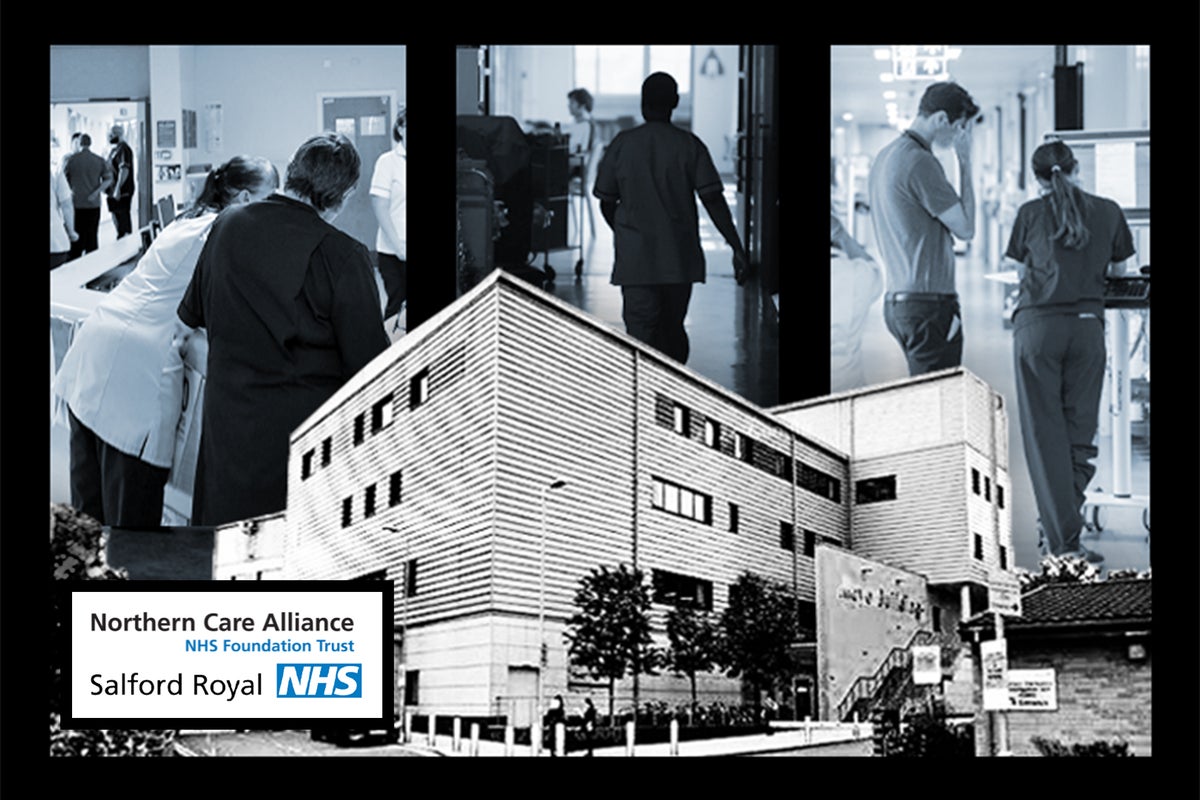
Patient deaths and harm at under-fire NHS trust ‘could be next major health scandal’
Key Points
Patient deaths and harm at under-fire NHS trust ‘could be next major health scandal’ Exclusive: Whistleblowers claim patients have been left dying in A&E corridors, others have had their cancer diagnosis delayed, while cuts to appointments in ‘chaotic’ departments mean care is delayed. A dozen staff and former employees tell Rebecca Thomas they are finally speaking out after years of raising concerns have been met with inaction - Bookmark - CommentsGo to comments Patients have died or have...
Patient deaths and harm at under-fire NHS trust ‘could be next major health scandal’
Exclusive: Whistleblowers claim patients have been left dying in A&E corridors, others have had their cancer diagnosis delayed, while cuts to appointments in ‘chaotic’ departments mean care is delayed. A dozen staff and former employees tell Rebecca Thomas they are finally speaking out after years of raising concerns have been met with inaction
- Bookmark
- CommentsGo to comments
Patients have died or have been harmed because of care failures at an under-fire NHS trust which staff fear could become the next major health scandal, whistleblowers have claimed.
An investigation by The Independent and Channel 4 into Northern Care Alliance NHS Foundation Trust, which treats over a million patients across Greater Manchester, has uncovered allegations that patients have died in surgery without adequate investigation, while others had their cancer diagnosis delayed.
Some patients are alleged to have been left dying or in pain in overcrowded A&E corridors or have been forced to undergo invasive treatments that might have been avoided if their care had not been delayed.
Some staff claim they have been encouraged not to submit reports to managers when safety issues arise, while others say their accounts of serious harm and death are shut down or not investigated properly.
Other allegations include:
- Kidney patients being forced onto dialysis due to treatment delays
- Wards so understaffed that nurses cannot care safely for patients
- ‘Unsafe’ cuts to appointment times from 30 to 15 minutes in a bid to drive down waiting lists
Retired consultant, Dr Glyn Smurthwaite, who blew the whistle over rogue spinal surgeon John Bradley Williamson, who harmed dozens of patients at the trust between 2009 and 2014, including some who had misplaced screws causing chronic pain, warned that the deterioration in patient care and the trust’s attitude to harm was not a recent development.
“I believe this is potentially bigger than the Mid Staffs scandal in terms of the magnitude of harm. For decades, Salford Royal [before the creation of the NCA] had seemingly executive-led and failing governance processes,” he said.
“The organisation has a malevolent intent to defocus from the true problem and just tick a box. We’ll do an investigation because the system forces us to generate an investigation… but they’ll close it, investigate it, file it, and no one will ever see it, and there’s probably no meaningful outcome from it.”
The Mid Staffordshire Hospital scandal was one of the worst care disasters in NHS history and saw between 400 and 1,200 people die due to care failures between January 2005 and March 2009, prompting calls for widespread culture change to put patients first.
Senior consultant, Dr Vanessa Lawton, who wrote to the Care Quality Commission watchdog to voice her concerns in April and is now speaking publicly for the first time, said she had retired earlier than planned because she could no longer work in the trust’s gynaecology department. She described it as “unstable and chaotic, with poor cultures, lacking safety for patients and psychological safety for staff”.
Another clinician working in the A&E medical team told The Independent: “I just feel that I'm gonna get involved with something or something's gonna happen, and it will be career-ending, and it will be devastating, and it's not something that I want to be associated with anymore.
“It's worse than anything I've ever, ever experienced ever before, and I've been nursing for 40 years, and something needs to be said. We can't carry on like this.”
The warnings come months after this publication revealed the trust’s gynaecology department had to review the care of hundreds of women due to “administration delays” linked to one consultant, meaning some had their cancer diagnosis delayed. Now, the trust faces a new independent external review of gynaecology surgeries due to safety concerns.
Concerns about the trust’s culture were raised with local politicians and Andy Burnham’s mayoral office in at least 2024 and 2025. Emails, seen by The Independent, from a group of former staff, claim whistleblowers had been “bullied into life-altering illnesses, early retirement or a fearful silence”.
In further email in 2025, they warned: “Trust-wide systems which permitted so many patients to be harmed for decades within the current NCA are probably unlikely to be due to an individual 'rotten apple' or confined to just one department.”
‘Incidents downgraded’
According to multiple testimonies from NCA staff, Datix reports, which staff are required to submit when they believe a patient has been harmed, are often downgraded or closed without adequate investigation.
Dr Lawton, a consultant at Salford Royal Hospital for 20 years, said she felt obliged to blow the whistle after claiming she witnessed issues at Salford and Oldham Hospital.
She said: “Incidents that are being submitted through Datix are not being investigated appropriately or even honestly. Many are not investigated at all; they’re just closed down and left blank… there’s a real keenness to close [them down], even when patients have been harmed.”
Dr Lawton also raised concerns about the slashing of appointment times, which she said the trust introduced to increase the number of appointments.
In one shocking example, Dr Lawton found a woman in her early 50s, who was seen for a 15-minute weekend appointment due to post-menopausal bleeding, was not examined as she should have been. She wasn’t examined during a second appointment either and several months later, she returned to the hospital with advanced cervical cancer and died.
According to Dr Lawton, an investigation into the woman’s death did not consider the impact of the shorter appointments, and she alleges it “omits many of the important issues”.
Another consultant who left the trust earlier this year said the shorter appointments meant doctors have little time to complete the required tasks.
“Of course, you rush patients this way; this is not care. We used to see around eight patients in a clinic, and they pushed us to see 14 patients. It's not safe. Of course. There is no way not to miss things, you know? And these things can be important,” they said.
In a response to allegations about how it handles incident reports, the trust said it has established processes to learn from events and make improvements where needed and said it has brought in an independent senior nurse to ensure patient safety issues are acted on.
‘People lining the corridors’
The issues do not appear confined to the gynaecology department. In another example, a group of A&E clinicians complained about overcrowding and patients being cared for in corridors. It is understood managers recently asked the group to close the complaint, but they refused.
Andrea, not her real name, a member of the A&E medical team, said: “Overcrowding and poor care: people in corridors dying or people in corridors deteriorating on a hard trolley. They're a fire risk. Lying there for days, I mean, the longest we've ever had somebody wait for a bed is four days in a corridor.”
“It’s definitely unsafe, and it's inhumane,” she added.
Last year, hundreds of admin staff across the trust launched a grievance over unmanageable work demands and backlogs in patient care, as revealed by The Independent earlier this year.
Now, new documents show fresh allegations from the team, including claims that delays in care due to short staffing meant kidney patients ended up on dialysis, which might have been avoided if they had treatment sooner.
Another document summarising staff grievances alleged: “We reassert our members’ concern and view that the lack of ability to complete tasks directly caused by lack of staff, as an active decision of the organisation, is causing patient harm.”
The NCA said it has to provide care for patients in corridors and other temporary spaces due to pressures on the hospital, but that it was committed to ending the practice.
‘It’s a shambles’
Former staff told The Independent that the trust’s attitude to investigating patient safety and harm has been ongoing for years.
Rebecca, not her real name, who retired in 2021, described the then-trust leadership’s approach to patient safety as “absolutely toxic" and claims her efforts to raise concerns were ignored.
She claimed: “I’d write a report every night warning of unsafe staffing levels… and nothing was done for it. In a few meetings, people spoke up, especially anaesthetists, and said, you know, this is another Mid Staffordshire waiting to happen. They were deemed then a troublemaker.”
She had submitted reports on incidents such as patients dying on the surgical table, that later got downgraded without investigation.
Kelly, not her real name, a senior nurse who left the trust in 2024, said: “It's the next Mid Staffs, if we're not already there, really.
“There was plenty of patient harm while I was there. There were plenty of Datix raised for patients that were stuck in corridors with no dignity, no respect. Staff walking through; they got no curtains. It was a shambles.”
The trust said sickness has had a significant impact on staffing levels and it was focussed on trying to address this.
‘Malevolent intent’
NCA was formed in 2017 following a merger between the then “outstanding” rated Salford Royal Hospital NHS FT, and Pennine Acute NHS Foundation Trust and now runs Salford Royal Hospital, Fairfield General Hospital, Royal Oldham Hospital, and Rochdale Infirmary.
Nine years on, it is now rated as “requires improvement” and faces enforcement action from NHS England over care failings.
Responding to staff concerns, Northern Care Alliance NHS Foundation Trust said it had changed the way it run the organisation, putting more clinicians into leadership positions and giving them a direct role in making decisions and driving improvements.
It added: “Like many NHS organisations, we’re facing challenges. We’re clear about what those challenges are and recognise the concerns colleagues have raised. We are working to address those concerns and will continue to listen when colleagues tell us we haven’t got something right, so that we can keep learning and improving.
“We have clear processes to investigate incidents and learning from these is an area we need to prioritise. By doing this, we can drive forward improvements and maintain our focus on safety.
“We’ll continue to work with our partners, including our local authorities and Integrated Care Board, as part of our ongoing commitment to making improvements.”
The Cabinet Office was approached for comment.
Join our commenting forum
Join thought-provoking conversations, follow other Independent readers and see their replies
Comments
[Image text:] Northern Care Alliance
NHS Foundation Trust
Salford Royal NHS
NHS (ORG)
A&E (ORG)
Rebecca Thomas (PERSON)
The Independent and Channel 4 (ORG)
Northern Care Alliance NHS Foundation Trust (ORG)
Greater Manchester (LOCATION)
Glyn Smurthwaite (PERSON)
John Bradley Williamson (PERSON)
Salford Royal (ORG)
NCA (ORG)
The Mid Staffordshire Hospital (ORG)
Vanessa Lawton (PERSON)
the Care Quality Commission (ORG)