
Weather
Why can rain cause flooding in a drought?
Key Points
Why can rain cause flooding in a drought? Heavy showers are expected to hit the UK on Thursday following months of dry weather - Bookmark - CommentsGo to comments Heavy rain is forecast to hit drought-stricken areas of the UK this week, sparking fears it could trigger flooding. While cooler and wetter conditions are welcome after five back-to-back heatwaves bringing widespread drought and hosepipe bans, heavy rain on dry ground can increase the risk of flooding.
Why can rain cause flooding in a drought?
Heavy showers are expected to hit the UK on Thursday following months of dry weather
- Bookmark
- CommentsGo to comments
Heavy rain is forecast to hit drought-stricken areas of the UK this week, sparking fears it could trigger flooding.
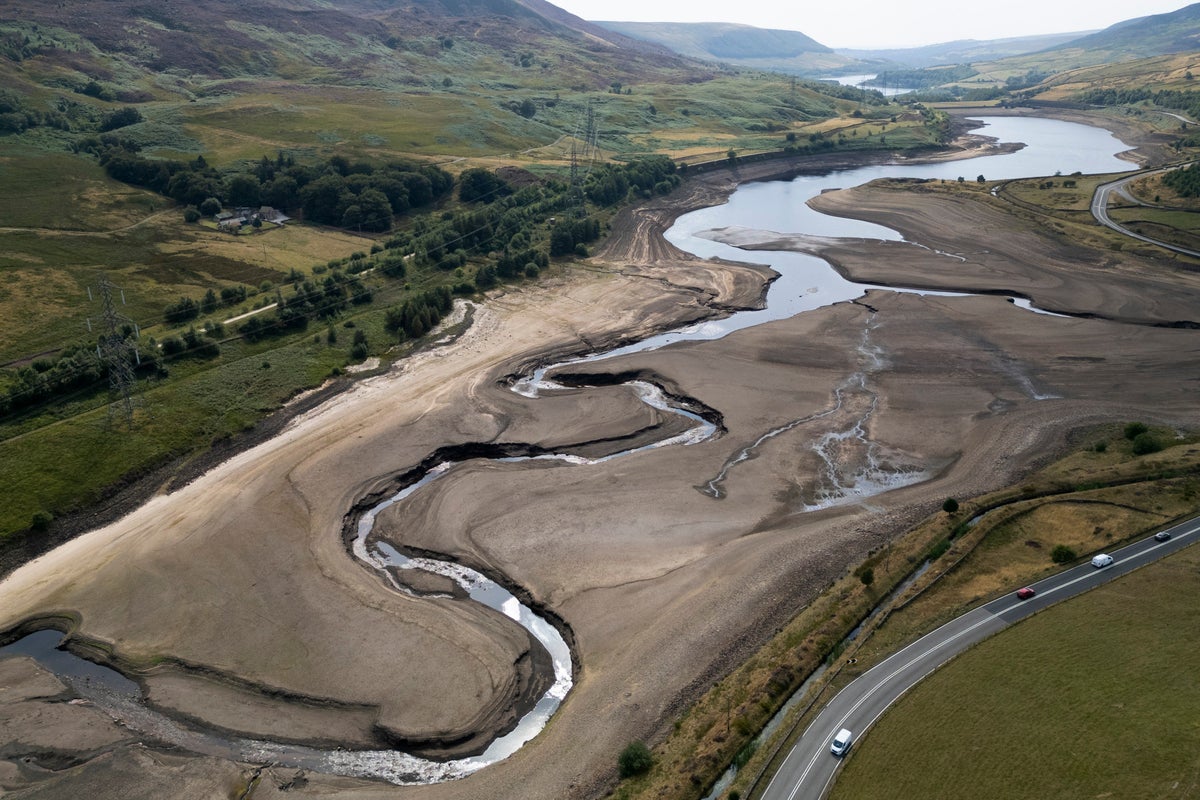
While cooler and wetter conditions are welcome after five back-to-back heatwaves bringing widespread drought and hosepipe bans, heavy rain on dry ground can increase the risk of flooding.
The Met Office said that a rainy front will begin to sweep down from Northern Ireland and Scotland towards the south of England and Wales this week, kicking off a wetter week with cooler conditions that are much closer to average for the time of year.
Heavy showers are expected to hit the UK on Thursday, bringing the chance of surface flooding in places where rainfall is particularly intense, it added.
Here, the Independent explores why flooding is a risk following months of dry weather.
What is a flash flood?
According to the Met Office, a flash flood is caused when the underlying ground cannot cope with the amount of rainfall, or drain it away fast enough.
“Roads can become like rivers and if there is a lot of water, it can flood buildings and carry cars away. So, if the rain is falling too fast for the ground or drains to cope, there is a risk of flash flooding,” according to the Met Office.
Why is there a risk of flooding during a drought?
Normally flooding happens when ocean waves come on shore, snow melts too fast, or when dams and river banks break.
But flooding is also common after a drought.
That’s because when there is a lack of rain, triggering drought conditions, the ground becomes very hard and baked dry.
As a result, when heavy showers hit the solid and dry earth rainwater is absorbed at a slower rate, leaving the water to sit and gather on the surface.
Who could be affected by flooding in the UK?
In the UK millions of people are at risk of flooding in both urban and rural areas, according to the Red Cross.
While some people who live in a flood-prone area will have experienced flooding before, scientists warn that climate change is making flooding more frequent.
The Environment Agency says 5.7 million (one in six) properties in England are at risk from flooding, with parts of northern Britain seeing the biggest increases in flood severity in Europe due to climate change.
The Red Cross warns even areas like London can experience flash flooding, and it did so in the summer of 2021.
Because flash floods are unpredictable, it's advised that everyone thinks about the actions they would take to be prepared.
Join our commenting forum
Join thought-provoking conversations, follow other Independent readers and see their replies
Comments