
Science
NASA images show crater on the moon caused by SpaceX Falcon 9 crash
Key Points
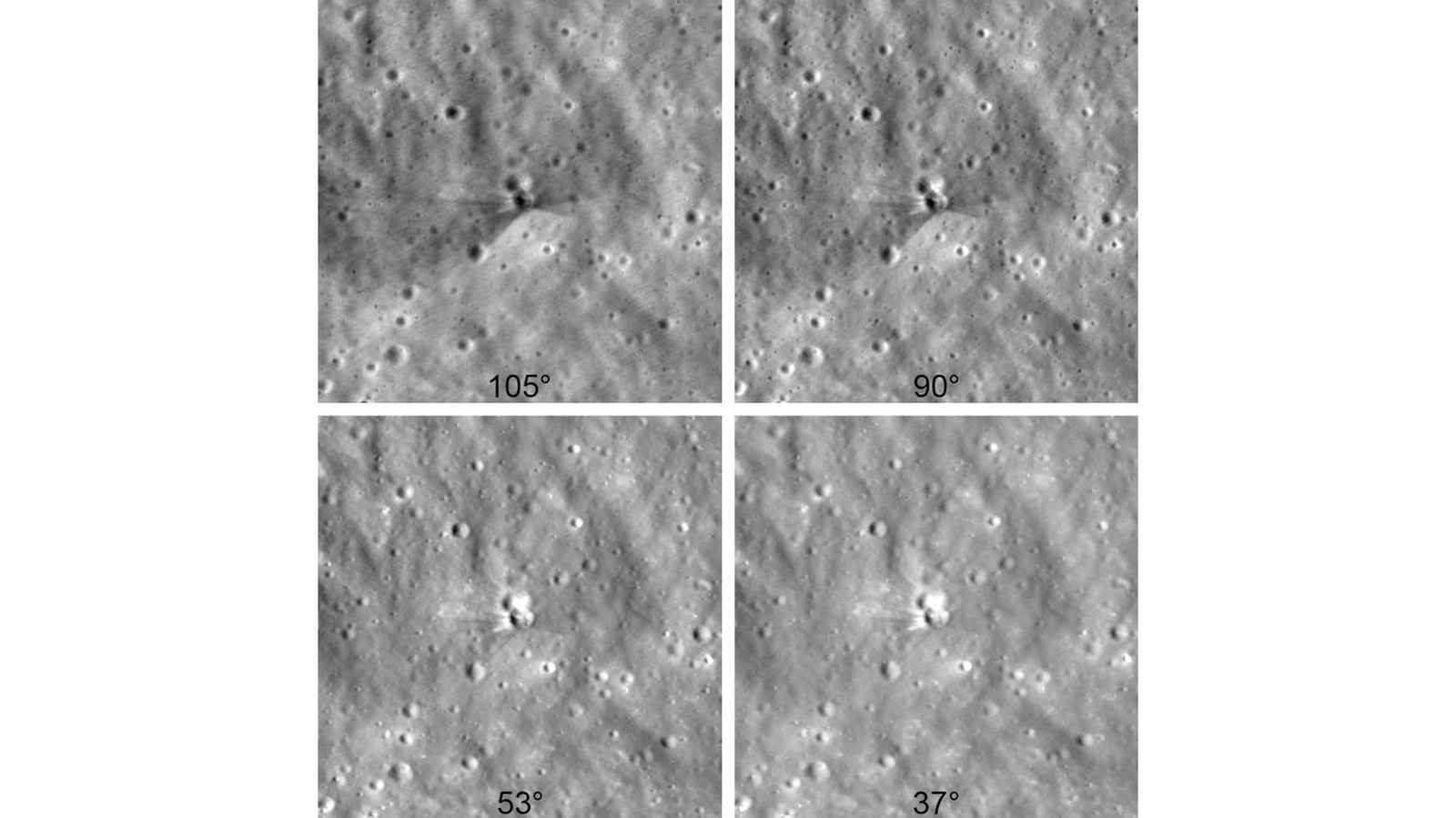
NASA images show crater on the moon caused by SpaceX Falcon 9 crash They were taken by the Lunar Reconnaissance Orbiter. In the early hours of August 5, the upper stage of a SpaceX Falcon 9 rocket crashed into the lunar surface. Now, NASA has released a series of images captured by the Lunar Reconnaissance Orbiter (LRO) from August 11 to 12, showing a new crater on the moon caused by the wandering rocket.
NASA images show crater on the moon caused by SpaceX Falcon 9 crash
They were taken by the Lunar Reconnaissance Orbiter.
In the early hours of August 5, the upper stage of a SpaceX Falcon 9 rocket crashed into the lunar surface. Now, NASA has released a series of images captured by the Lunar Reconnaissance Orbiter (LRO) from August 11 to 12, showing a new crater on the moon caused by the wandering rocket.
To capture the images, NASA engineers had to tilt the spacecraft sideways so its cameras would point downward as it passed 60 miles above the crater. Specifically, they used LRO's Narrow-Angle Camera, which can see features on the lunar surface as small as three feet wide.
It wasn't an easy feat, as the spacecraft flew from pole to pole every two hours at a speed of 1 mile per second, while the Moon rotated on its axis underneath. NASA had to wait for the LRO and the crash site to align, and that took six days. The agency did, however, release before-and-after photos, which you can see on the official site.
Meanwhile, the photos above show the crash site from different angles. The darker streak radiating out of the crater is made of older materials from near the surface: Dust and rocks whose colors and components have already been altered by years of exposure to solar winds and cosmic rays. The lighter materials near the rim came from deeper underground.
Independent astronomer Bill Grey first drew attention to a rocket on a collision course with the Moon in April. He used orbit-computing software to figure out where and when the rocket was crashing. Grey and his colleagues also used a physics simulator to analyze the data, predicting that the upper stage wouldn't make much of an impact. The rocket was 39 feet long and 13 feet wide, weighing around 4,000 kilograms. It slammed into the Moon at 5,400 mph and, based on NASA's calculations, created a crater 60 feet wide and 12 feet deep.
The Falcon 9 rocket in this crash came from the January 15, 2025 Blue Ghost mission, which carried two lunar landers to orbit. It used most of its fuel bringing the landers to their intended orbit, so it couldn't make its way back to Earth. Gravity and solar activity brought it to the Moon instead.
[Image text:] 105
.06
53
37