
Weather
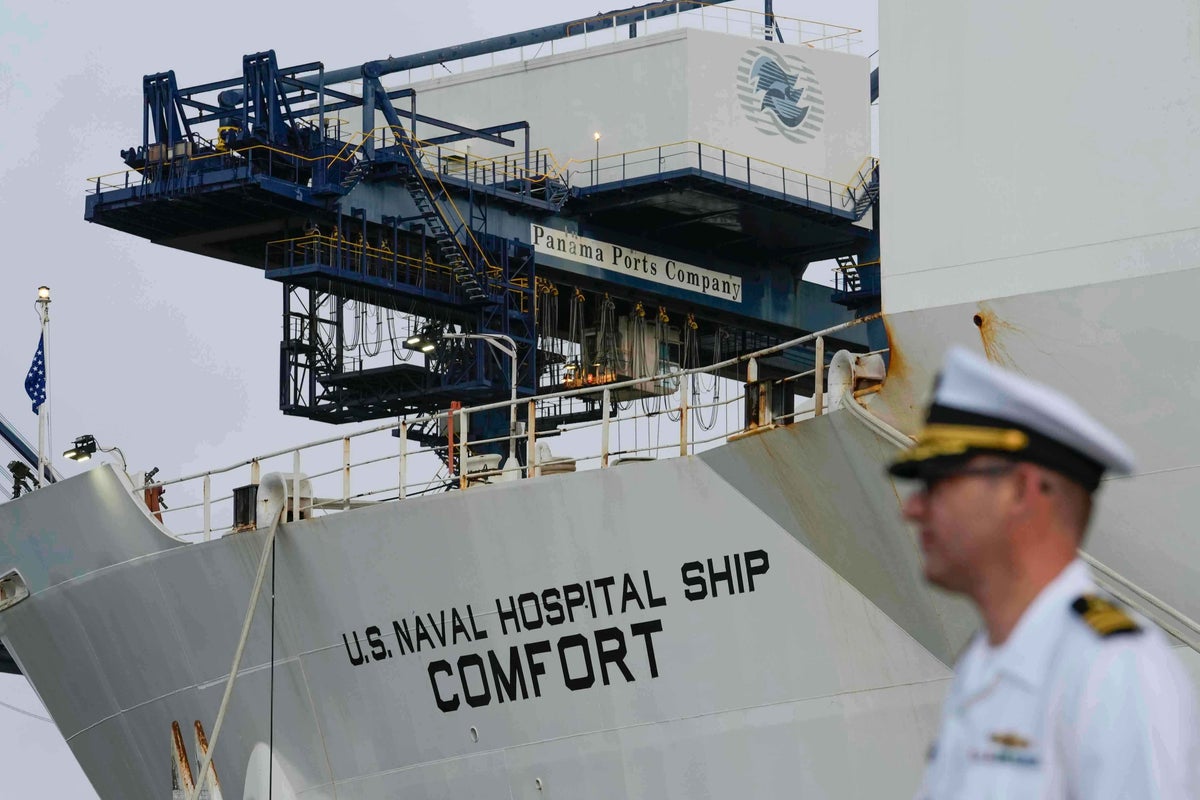
US sends hospital ship as potentially historic El Niño bears down on Latin America
Key Points
US sends hospital ship as potentially historic El Niño bears down on Latin America The United States plans to send a military hospital ship to Peru’s Pacific coast next year to help with the effects of El Nino - Bookmark The United States plans to send a Navy hospital ship to Peru next year as governments across Latin America brace for a potentially severe El Niño that could bring drought, floods, wildfires and other extreme weather. U.S. Ambassador to Peru Bernie Navarro said the USNS...
US sends hospital ship as potentially historic El Niño bears down on Latin America
The United States plans to send a military hospital ship to Peru’s Pacific coast next year to help with the effects of El Nino
- Bookmark
The United States plans to send a Navy hospital ship to Peru next year as governments across Latin America brace for a potentially severe El Niño that could bring drought, floods, wildfires and other extreme weather.
U.S. Ambassador to Peru Bernie Navarro said the USNS Comfort is expected to arrive on Peru’s northern Pacific coast in February 2027, around the time El Niño is forecast to reach its peak.
The deployment is part of expanded cooperation between Washington and Lima to help Peru prepare for the climate pattern. Navarro announced the plan following talks in Miami with Peruvian Foreign Minister Carlos Espá.
Espá outlined a broader strategy involving U.S. equipment, technical assistance and aerial operations to help Peru prepare for and respond to El Niño. Officials did not disclose the assistance's value.
The Comfort previously conducted missions in Peru in 2018 and 2019.
El Niño is caused by periodic warming of waters in the equatorial Pacific and can dramatically disrupt weather worldwide. Forecasts indicate the developing event could rival or surpass the powerful 1997 El Niño, which contributed to destructive flooding, extreme heat and other disasters.
Peruvian President Keiko Fujimori, who took office July 28, has made preparations for the phenomenon a priority.
Across Latin America, governments are racing to reinforce water and energy systems, prepare emergency crews and protect vulnerable communities before conditions worsen.
Unlike earthquakes and hurricanes, El Niño develops over months, giving authorities valuable time to prepare. But experts warn governments have repeatedly failed to turn early scientific warnings into action.
“Now is the time for decisions, for effective preparedness and the political consistency to really be proactive this time,” said Rodney Martinez of the World Meteorological Organization.
“El Niño is confirmed. El Niño is ongoing. It’s not simply a possibility,” he said.
Previous major El Niño events have caused billions of dollars in damage across Latin America, bringing drought to some areas and torrential rain, flooding and landslides to others. Agriculture, drinking water supplies and hydroelectric power generation can all be severely disrupted.
The WMO says below-average rainfall is already affecting Central America, parts of the Caribbean and northern South America, with dry conditions expected to spread into parts of the Amazon basin.
Countries are preparing for sharply different threats.
Brazil has mobilized more than 4,600 federal personnel for wildfire prevention and response and deployed specialized aircraft. Colombia has strengthened water monitoring and wildfire preparations as officials brace for possible shortages.
Ecuador, meanwhile, is preparing for heavy rainfall and flooding along its Pacific coast. Authorities have directed local governments to develop contingency plans and are clearing drainage channels, stabilizing vulnerable hillsides and preparing emergency shelters.
Panama is preparing for possible effects on the Panama Canal, where reduced rainfall can threaten the freshwater supplies required to operate the crucial global shipping route.
The stakes are particularly high for countries dependent on hydroelectric power. Drought can drain reservoirs and force governments to turn to alternative power sources, as Ecuador experienced during a recent energy crisis that resulted in rolling blackouts.
Colombia Environment Minister Irene Vélez said governments know what El Niño can do. The bigger concern this time is its potential strength.
“What is new is its intensity,” Vélez said. “And because of that intensity, what is also new is how long it could last and the area it could affect.”
Despite increasingly reliable forecasts, Martinez warned that some governments still wait until disaster is underway before responding.
“The reality is that this preparation doesn’t happen until they have the emergency,” he said.
His message to governments was straightforward: “Be prepared in advance, in a serious way. The information is there. Now is the time for decisions.”
[Image text:] Panama Ports Company
U.S.NAVAL HOSPITAL SHIP
COMFORT