
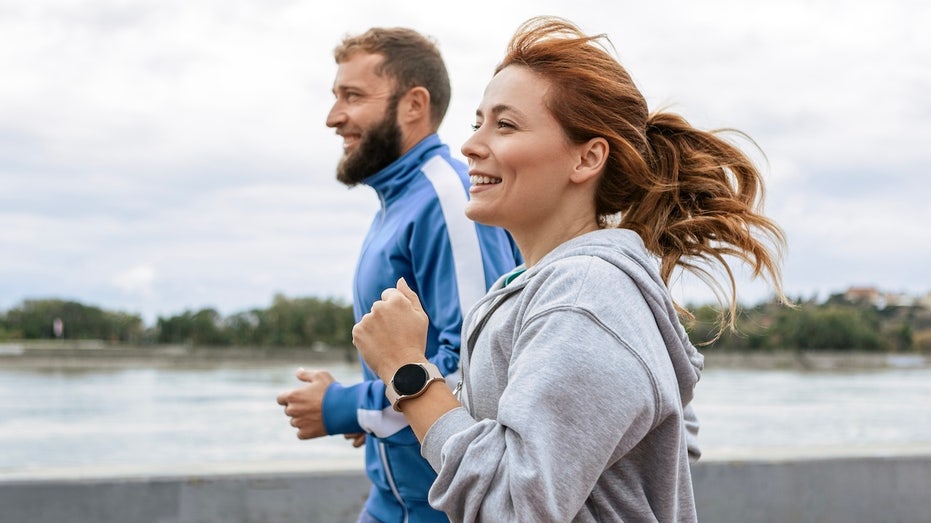
Even as new data shows cancer’s continuing toll in the U.S., a surgical oncologist says some simple lifestyle measures could help lower the likelihood of developing the disease.
An estimated 2,114,850 new cancer cases will be diagnosed in the U.S. in 2026 — about 5,800 per day, according to the American Cancer Society.
Dr. Loren Rourke, a Texas-based breast surgical oncologist and author of "Real Talk, Real Hope: Breast Cancer Your Way," emphasized that while no lifestyle choice can guarantee cancer prevention, healthy habits can help reduce certain risk factors.
From maintaining a healthy weight to staying active, Rourke shared the following five everyday strategies that support the body and improve overall health.
Being obese or overweight is associated with an increased risk of at least 13 types of cancer, according to the National Cancer Institute.
Rourke estimates that excess body weight is likely the third-biggest risk factor for breast cancer, after female gender and aging.
OZEMPIC-STYLE DRUGS LINKED TO MAJOR SLOWDOWN IN CANCER SPREAD, NEW STUDY FINDS
Growing research suggests glucagon-like peptide-1 (GLP-1) medications — including Ozempic and Wegovy — may be associated with a lower risk of cancer diagnoses and recurrence.
Rourke said one possible reason GLP-1s could prove beneficial for cancer risk is that the drugs promote weight loss and reduce chronic inflammation.
"We know that a lower BMI equals a better prognosis with breast cancer," she told Fox News Digital. "So if the secondary effect of taking a GLP-1 means that you’re going to lose weight, that’s a benefit, because we know you’re going to do better with breast cancer."
GLP-1 drugs are not yet approved to prevent cancer, and more research is needed to determine whether they independently reduce disease risk.
The American Cancer Society states that physical activity is linked to a lower risk of several cancers.
The official guideline recommend 150–300 minutes of moderate activity or 75–150 minutes of vigorous activity per week for adults.
DOCTORS SAY 8 FORGOTTEN HABITS COULD HELP FIGHT STRESS, OBESITY AND CHRONIC DISEASE
"I think people underestimate overall fitness," Rourke said. "We tend to think about it for heart health, but it’s not just heart health — it’s mental health and reducing your risk of having lots of chronic medical problems that span from one end to the other, in addition to other cancers."
Even if staying physically fit doesn’t keep cancer at bay, it may help improve outcomes if the disease develops, she noted.
"One in eight women get breast cancer. So if it comes knocking, you want to be ready," she said.
"Women come to me and say, ‘I’ve done everything. I’ve exercised every day. I’ve eaten a healthy diet, and here I am sitting in your office.’ And I say, ‘Well, that healthy body is now ready for this fight.’"
"If you can bring a healthy body and a healthy mind to the disease, you are going to do better."
To lower the risk of cancer and premature death, the American Cancer Society recommends sticking to a diet rich in vegetables, whole fruits, whole grains and legumes, while limiting red/processed meats, sugary drinks and highly processed foods.
Rourke agrees with these guidelines, but noted that even people who follow healthy eating patterns can face cancer diagnoses.
CANCER SURVIVORS SAW MAJOR IMPROVEMENTS IN SLEEP AND WELL-BEING WITH ONE WEEKLY PRACTICE
"I have vegans sitting in my office. I have people who don’t eat any sugar in my office. They’re all getting breast cancer," she said.
"What I say is, [eat] a healthy, balanced diet, limited processed foods, as close to farm-to-table as you can get," the doctor advised. "Just healthy eating, reasonable portions … nothing in excess."
"If you practice that, that’s going to suit you for so many things in your future."
The doctor added that it’s not necessary to take an extreme approach to dietary choices: "Do you need to give up all sugar? No. Do you need to go to the extreme? No."
Cigarette smoking is responsible for about 20% of all cancers and about 30% of cancer deaths in the U.S., according to the American Cancer Society. The habit can cause cancer in numerous parts of the body, and quitting can reduce cancer risk at any age, experts say.
CLICK HERE FOR MORE HEALTH STORIES
Meanwhile, alcohol consumption has been linked to an estimated 5% of U.S. cancer cases and 4% of cancer deaths in 2019, according to the National Cancer Institute.
CLICK HERE TO SIGN UP FOR OUR HEALTH NEWSLETTER
The U.S. surgeon general issued guidance last year following research that linked alcohol to at least seven types of cancer, naming it as the "third leading preventable cause of cancer" in the country, after tobacco and obesity.
Rourke advised that alcohol should only be consumed in moderation, although even light drinking has been shown to raise the risk of certain cancers.
"Too many Americans are living with an outdated assumption that some amount of alcohol is not only harmless, but also good for you," Fox News senior medical analyst Dr. Marc Siegel previously told Fox News Digital. "Increasing evidence shows that isn't true."
TEST YOURSELF WITH OUR LATEST LIFESTYLE QUIZ
"Even though traditional advice has been up to one drink a day for women and two drinks per day for men, in fact, no amount of alcohol is healthy," he added.
Early detection programs have enabled doctors and patients to detect disease earlier than ever before, which increases survival rates, Rourke noted.
"I think now there’s more awareness," she said. "People know if they have someone in their family and what kind of cancer they had."
"I think people are much more educated in general, and that is promoting wellness, health, early detection and screening."
Rourke also expressed concern about relying too heavily on artificial intelligence when investigating possible symptoms.
"If you are worried about something, call your primary care doctor [or] gynecologist," she advised. "If you feel like something’s wrong, follow through with it and get it checked out. Never ignore your inner voice."