
Health
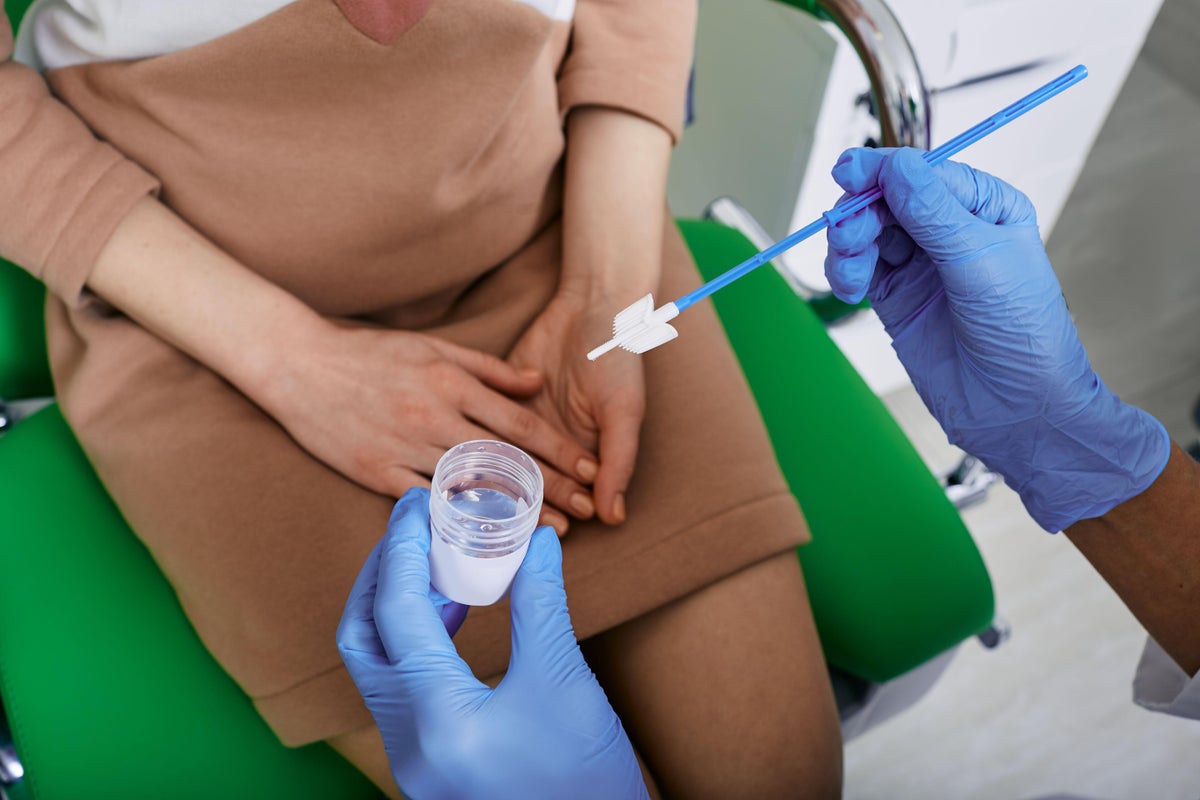
Experts respond to claims that smear tests use ‘cancer-causing’ chemicals
Key Points
Experts respond to claims that smear tests use ‘cancer-causing’ chemicals More than 3,000 women are diagnosed with cervical cancer each year in the UK - Bookmark - CommentsGo to comments Experts have responded to claims that suggest the brush used in cervical cancer smear tests is sterilised in a “cancer-causing” chemical. Posts circulating on social media imply that the test, which saves thousands of lives every year, is dangerous. But experts from University College London and the...
Experts respond to claims that smear tests use ‘cancer-causing’ chemicals
More than 3,000 women are diagnosed with cervical cancer each year in the UK
- Bookmark
- CommentsGo to comments
Experts have responded to claims that suggest the brush used in cervical cancer smear tests is sterilised in a “cancer-causing” chemical.
Posts circulating on social media imply that the test, which saves thousands of lives every year, is dangerous.
But experts from University College London and the Medicines and Healthcare products Regulatory Agency (MHRA) warn there is no credible evidence that the chemical used to sterilise the swabs will endanger patients, and urge patients to go to their cervical screening appointments.
About 3,000 women are diagnosed with cervical cancer each year in the UK, according to Cancer Research UK. But that figure would be higher if it wasn’t for cervical screening.
So, why are there claims online that the test could be dangerous?
How are swabs sterilised?
Ethylene oxide gas is commonly used to sterilise all sorts of medical devices, including swabs and speculums.
But claims made online have implied this chemical can “cause cancer”.
Professor Andrea Sella, professor of inorganic chemistry at University College London, said the “sterilisation process involves exposing a material to ethylene oxide for a few seconds or minutes, and then removing the gas entirely before the now sterile item is packaged”.
He said: “There is nothing left of the ethylene oxide once it is packaged, and there is no conceivable harm that can come from using an item sterilised in this way.”
Are the swabs safe?
Although overexposure to ethylene oxide can be dangerous, there is no credible evidence it endangers patients who come into contact with sterilised medical devices.
It is true that ethylene oxide can be carcinogenic or cause other health issues at certain levels of exposure, such as lung damage in severe cases of inhalation, but medical devices sterilised with it are not unsafe.
A spokesperson for the Medicines and Healthcare products Regulatory Agency (MHRA) said: “There is no credible evidence that the swabs used in cervical smear tests are associated with cancer”.
Negative health effects would involve higher, prolonged levels of exposure.
Why it’s important not to miss a cervical screening
More than 3,000 women are diagnosed with cervical cancer each year in the UK. It has been estimated that the number would be 5,000 higher if it weren’t for cervical screening.
The number of women participating in cervical screening has been falling, and in 2024, only 66 per cent of those eligible for screening were up to date.
It tests for a virus called human papillomavirus (HPV), which can cause changes in the cervix and, in some cases, can lead to cervical cancer.
Main symptoms of cervical cancer
NHS
Symptoms of cervical cancer include:
- vaginal bleeding that's unusual for you – including bleeding during or after sex, between your periods or after menopause, or having heavier periods than usual
- changes to your vaginal discharge
- pain during sex
- pain in your lower back, between your hip bones (pelvis), or in your lower tummy
There are about 100 types of HPV, and only 30 can affect the genital area. Many people never show symptoms as they can arise years after an infection, and the majority of cases go away without treatment.
Vaccinating against HPV is almost 90 per cent effective at preventing cervical cancer in women in their twenties who were offered it at age 12 to 13, according to Cancer Research UK.
But the best way to prevent cervical cancer in those not vaccinated when they were young is through screening, reducing the risk by 80 per cent.
Between 2020 and 2024, no women aged 20 to 24 died from cervical cancer in England, with help from the HPV vaccine and cervical screening.
False, misleading or unevidenced health claims can cause harm if people make treatment decisions based on them. Trustworthy information can be found from sources such as the NHS and the World Health Organisation.
Join our commenting forum
Join thought-provoking conversations, follow other Independent readers and see their replies
Comments