
Weather
The surprising reason hurricanes get human names — and why some are banned forever
Key Points
The surprising reason hurricanes get human names — and why some are banned forever Humans have always named the things around them, but formally naming hurricanes, military operations and global health emergencies is a relatively modern practice - Bookmark - CommentsGo to comments As hurricane season gathers pace, tropical cyclones across the Pacific are quickly working their way through names beginning with Amanda and Boris. Humans have always named the things around them, but formally...
The surprising reason hurricanes get human names — and why some are banned forever
Humans have always named the things around them, but formally naming hurricanes, military operations and global health emergencies is a relatively modern practice
- Bookmark
- CommentsGo to comments
As hurricane season gathers pace, tropical cyclones across the Pacific are quickly working their way through names beginning with Amanda and Boris.
Humans have always named the things around them, but formally naming hurricanes, military operations and global health emergencies is a relatively modern practice.
From Hurricane Katrina to COVID-19 and military campaigns such as Operation Epic Fury, the names do more than distinguish one event from another. They can shape how people understand and remember them.
“Look around in your home. Who or what has a name? Your family members, your pets. You may even have named certain objects of significance,” said Shannon Murphy, chief executive of naming consultancy Nameistry. “If it’s got a name, it has meaning in some way.”
For storms, naming can be a matter of public safety.
The World Meteorological Organization says names are one of the fastest ways to communicate warnings, improve preparedness and prevent confusion when several storms are active at once. They also make storms easier for scientists and historians to track.
Regional meteorological bodies maintain predetermined alphabetical lists. Some recycle lists every several years, while others introduce new ones annually. Atlantic lists skip Q, U, X, Y and Z because of the difficulty of finding enough suitable names.
The U.S. once used only female names for tropical storms, but since 1979 lists have alternated between male and female names.
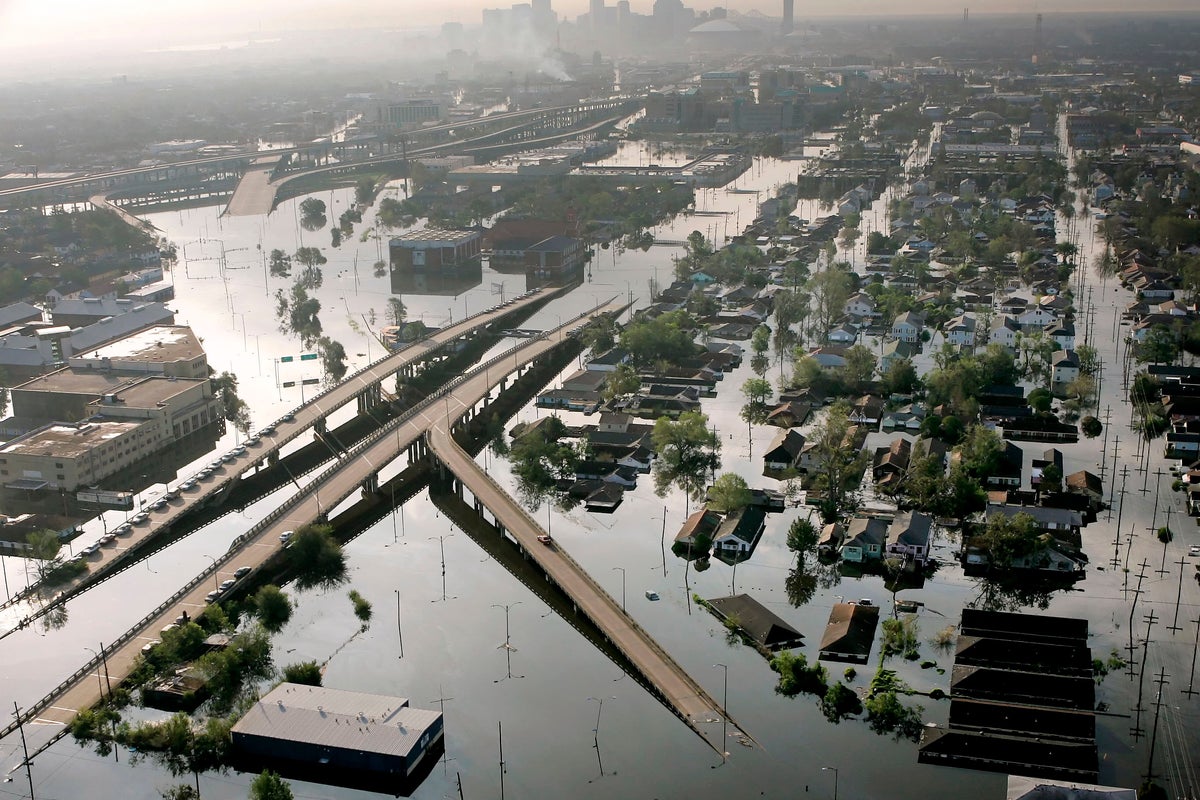
Particularly deadly or destructive hurricanes can have their names permanently retired. Katrina, which devastated the Gulf Coast in 2005 and killed nearly 1,400 people, was replaced by Katia. Sandy, which killed 182 people after striking the Caribbean and U.S. East Coast in 2012, was replaced by Sara.
“There have been names that are hard to pronounce,” said Robbie Berg, a warning coordination meteorologist at the National Hurricane Center. “We want them to roll off the tongue pretty easily.”
Military operations have a very different naming history.
Originally, code names were primarily practical tools designed to conceal plans and distinguish operations. During World War II, British Prime Minister Winston Churchill recognized that they could also carry enormous political and emotional weight.
“In the Second World War, names such as Overlord, Torch or Husky were planning code-names,” said Ruben Stewart, senior fellow for land warfare at the International Institute for Strategic Studies.
Churchill warned in a 1943 memo that operation names should not sound boastful or frivolous. He argued that commanders should avoid names that could leave a grieving mother or widow saying her loved one had died in an operation called “Bunnyhug” or “Ballyhoo.”
The lesson stuck.
The U.S. military eventually embraced evocative two-word titles, while Britain generally retained single-word code names. The 1991 Gulf War campaign, for example, was Operation Desert Storm to the Americans and Operation Granby to the British.
Some names proved more successful than others.
Operation Killer during the Korean War created what Stewart called “obvious public-affairs problems.” Decades later, the 1989 U.S. invasion of Panama was called Operation Just Cause — an example, Stewart said, of a name being “deliberately framed for legitimacy.”
More recently, military and government operation names have become increasingly vivid.
The U.S. conflict with Iran that began in February was dubbed Operation Epic Fury, a name President Donald Trump said he selected from 20 possibilities.
Immigration enforcement campaigns have carried names including Catahoula Crunch and Operation Dirtbag, while Florida’s immigration detention facility became widely known as “Alligator Alcatraz.”
“A name can signal purpose, reassure domestic audiences, sustain coalition legitimacy, deter adversaries and give service personnel a shorthand identity for what they are doing,” Stewart said.
But getting a name wrong can have consequences.
The U.S. military initially called its post-9/11 campaign Operation Infinite Justice. It was quickly renamed Operation Enduring Freedom amid concerns about offending Muslims because Islamic theology holds that infinite justice belongs to God.
Public health officials have learned similar lessons.
Diseases were once commonly named for locations, animals or individuals. The World Health Organization now discourages that practice because names can stigmatize countries, communities or industries.
“There is a deliberate move away from terms like ‘swine flu’ or ‘Spanish flu,’ which underscores how powerful a name and its associations can be,” Murphy said. “Once it sticks, it’s hard to unstick it.”
Exactly how much a name changes public behavior remains difficult to measure. But as extreme weather becomes a greater communications challenge, researchers say understanding the psychology behind names could become increasingly important.
“As our climate becomes more extreme,” said Andrew Charlton-Perez, a meteorologist at the University of Reading, “there is always the need to think about how to better communicate to avoid harm.”
Britain and Ireland have already taken naming one step closer to the public. People can submit suggestions for future storm names — giving ordinary citizens a chance to name the weather before it makes headlines.
Join our commenting forum
Join thought-provoking conversations, follow other Independent readers and see their replies
Comments
Pacific (LOCATION)
Amanda (PERSON)
Boris (PERSON)
Hurricane Katrina (EVENT)
COVID-19 (ORG)
Operation Epic Fury (ORG)
Shannon Murphy (PERSON)
Nameistry (ORG)
The World Meteorological Organization (ORG)
Atlantic (LOCATION)
U.S. (LOCATION)
Katrina (EVENT)
the Gulf Coast (LOCATION)
Katia (PERSON)
Sandy (PERSON)