
Health
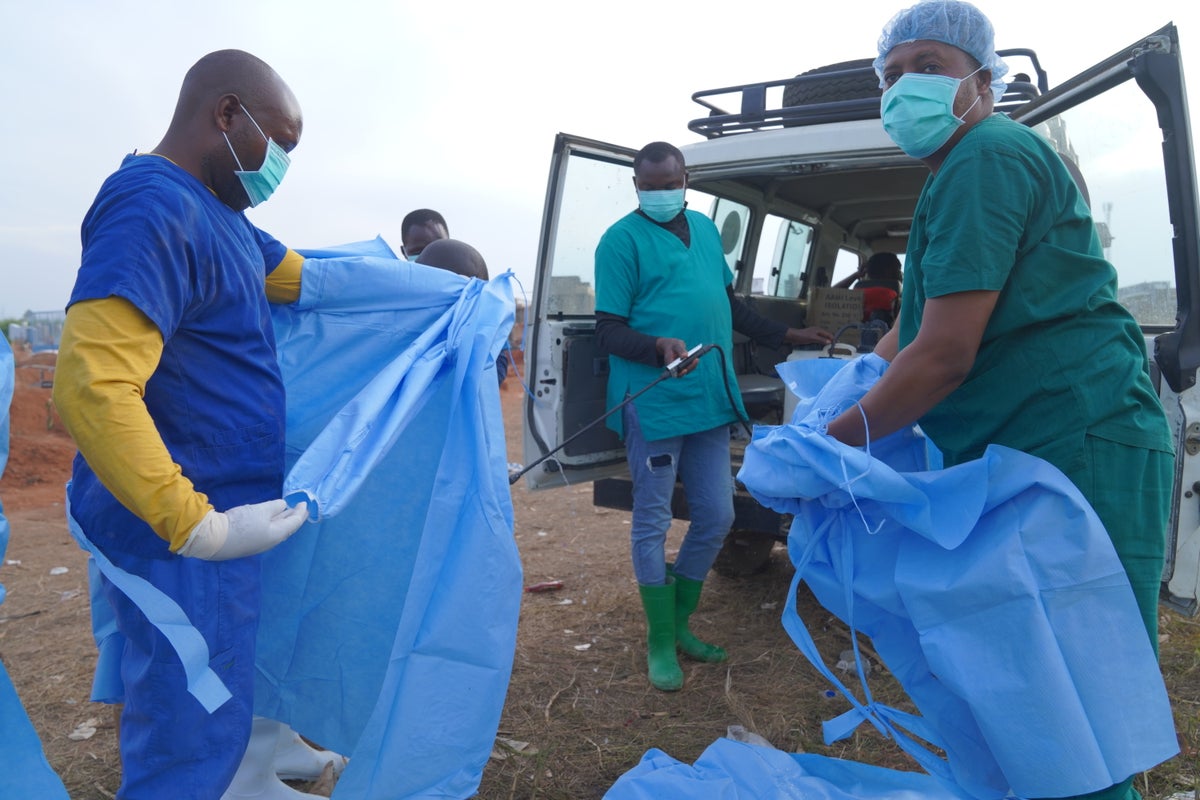
Congo’s Ebola crisis deepens as deaths pass 2,500 and health workers are attacked
Key Points
Congo’s Ebola crisis deepens as deaths pass 2,500 and health workers are attacked A UN official has confirmed over 2,500 people have died during the Ebola epidemic - Bookmark - CommentsGo to comments The Ebola outbreak in the Democratic Republic of Congo has claimed more than 2,500 lives and is expanding exponentially across a region larger than France, a senior official has warned. Speaking via video call from Bunia, a city in the north-eastern part of the country, senior United Nations...
Congo’s Ebola crisis deepens as deaths pass 2,500 and health workers are attacked
A UN official has confirmed over 2,500 people have died during the Ebola epidemic
- Bookmark
- CommentsGo to comments
The Ebola outbreak in the Democratic Republic of Congo has claimed more than 2,500 lives and is expanding exponentially across a region larger than France, a senior official has warned.
Speaking via video call from Bunia, a city in the north-eastern part of the country, senior United Nations Ebola coordinator Julien Harneis issued an urgent plea for additional funding, warning that current financial reserves will be depleted within weeks.
The crisis is being compounded by local hostility towards medical staff, as well as responders falling ill and dying from the infection.
This 17th Ebola epidemic became the largest in the country's history by case numbers in late July, eclipsing the previous worst outbreak that lasted from 2018 to 2020. It is caused by the Bundibugyo species of the virus, for which no approved treatments or vaccines exist.
"The Ebola outbreak is growing exponentially," Harneis said.
"The epidemic is spreading to an area that is bigger than France, and the outbreak is growing faster and wider than the Ebola response. And all of this is happening in an area that has had three decades of conflict and is generating huge humanitarian needs."
Roughly 160 healthcare workers have contracted Ebola during the crisis, resulting in 43 deaths.
"And then, when we do respond, apart from the threat from the virus, healthcare workers and frontline workers have been attacked by youths, ambulances have been burned and stoned, and the healthcare facilities have been attacked," Harneis stated.
"Fear translates into angry young men who start throwing stones at their object of fear, the ambulance," he added.
Aid workers report that local communities have fallen prey to conspiracy theories claiming the virus is a hoax, while strict health protocols preventing families from personally burying loved ones have fuelled further resentment.
More than 260 incidents targeting health workers have been recorded over the last six months, leaving eight dead, Harneis said, "which is obviously terrifying because people are already risking their lives to deal with Ebola."
Furthermore, international aid cuts in recent years have curtailed humanitarian capacity. Operations have also been hampered by difficulties paying tens of thousands of response personnel, as government restrictions on commercial flights disrupted the delivery of physical cash to local banking services.
Join our commenting forum
Join thought-provoking conversations, follow other Independent readers and see their replies
Comments