
Science
Scientists turn to OnlyFans and ‘Fat Marmot Week’ to fund research after federal cuts
Key Points
Scientists turn to OnlyFans and ‘Fat Marmot Week’ to fund research after federal cuts Researchers must secure three years of funding, over $200,000, to guarantee that field research continues next summer - Bookmark High in the Colorado mountains, marmots experienced a difficult winter after a severe lack of snow cover caused the deaths of two-thirds of one monitored population during hibernation. Those that survived spent the summer fattening up for the upcoming hibernation period while also...
Scientists turn to OnlyFans and ‘Fat Marmot Week’ to fund research after federal cuts
Researchers must secure three years of funding, over $200,000, to guarantee that field research continues next summer
- Bookmark
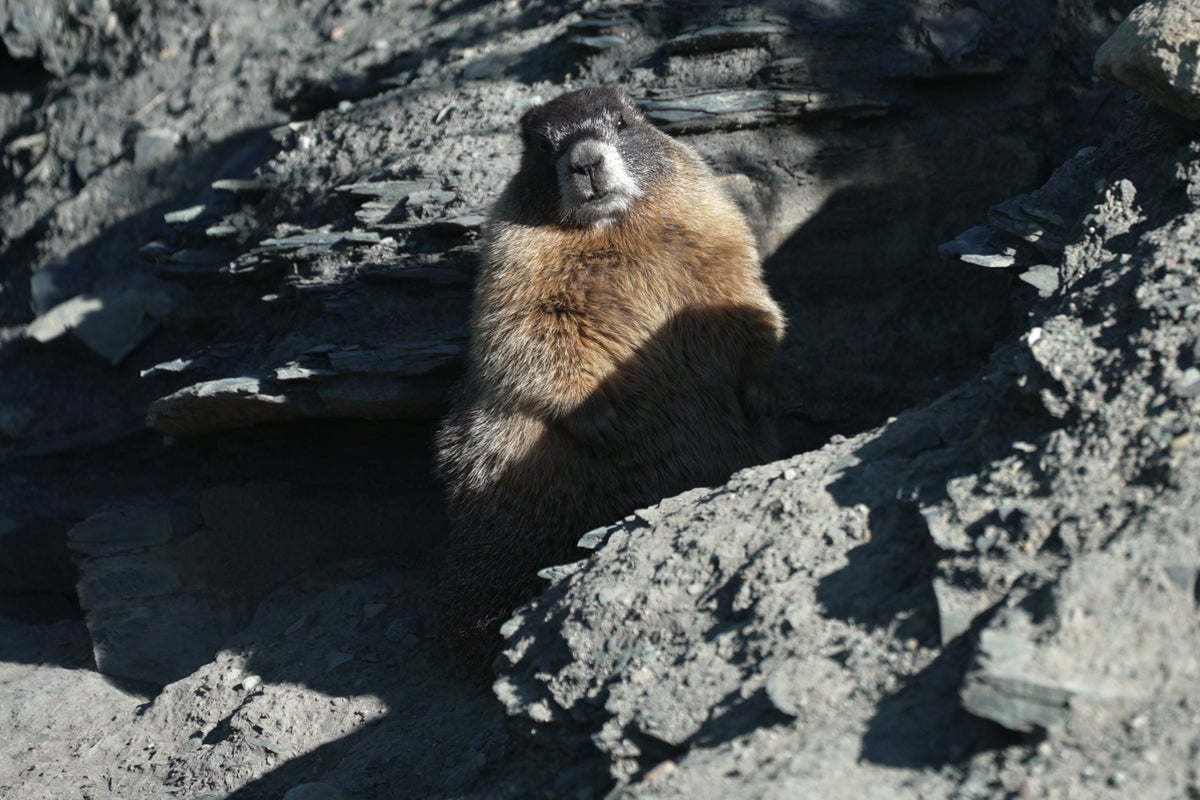
High in the Colorado mountains, marmots experienced a difficult winter after a severe lack of snow cover caused the deaths of two-thirds of one monitored population during hibernation.
Those that survived spent the summer fattening up for the upcoming hibernation period while also preparing for the inaugural Fat Marmot Week.
Modeled on Alaska's Fat Bear Week online contest, Fat Marmot Week—which begins Monday—is mostly intended as a fun event, but it carries a vital purpose: raising donations for long-running rodent research facing federal budget cuts.
"In some sense, we’re going to be laughing our way down as the Titanic sinks," said Dan Blumstein, leader of the project launched decades ago at the Rocky Mountain Biological Laboratory in Gothic, Colorado. "Because what else are you going to do?"
Marmots are cat-sized, furry ground squirrels that inhabit burrows across North America, Europe, and Asia. The roughly 15 species worldwide include groundhogs, which have their own annual celebration on Feb. 2 in the U.S. and Canada.
Yellow-bellied marmots are common throughout the Rocky Mountains, where hikers regularly spot them sitting on boulders or moving through alpine wildflowers.
The animals are accustomed to humans along popular trails, and bold individuals are known to swipe snacks from passersby.
Emily Renkey, a master’s student at the University of California, Los Angeles, noted that marmots display distinct personalities and are "flexibly social," with some residing in colonies of up to 30 individuals and others remaining solitary.
"We kind of understand these marmots just by looking at them sometimes, because we can kind of tell who’s who just by how they behave and how they interact with one another," said UCLA doctoral student Katie Adler.
Renkey explained that certain marmots are difficult to study because they avoid wire traps baited with oats and peanut butter.
"Others, you could trap three or four times in the same morning," she said.
Move over, Fat Bear Week
Unlike bears, which wake periodically from torpor during winter, marmots undergo a much deeper state of hibernation. Their body temperature drops from near-human levels to around 41 degrees Fahrenheit (5 degrees Celsius), barely warmer than the winter temperature inside their burrows.
"You pick up a hibernating marmot and it’s this fuzzy ball and it feels like a cold rock with fur. It’s completely surreal," Blumstein said. "They breathe once a minute or two."
To prepare for winter, the animals feed heavily, doubling their weight to up to 13 pounds (6 kilograms) before shedding all of that bulk over more than six months underground.
"Marmots come out of the ground really skinny, relative to what they look like now, at least," Adler said.
Sparse snowfall and high temperatures caused by climate change deprived marmots of an insulating blanket of snow over their burrows last winter. Researchers believe cold temperatures inside the burrows killed many of the animals.
"We had over 160 animals and we ended with 60 at the start of this season," Blumstein said. "Most of them died because of the lack of snow cover."
Snowpack levels in the Upper Colorado River Basin—covering Wyoming, Colorado, Utah, and New Mexico—hit record lows this year. A new study confirms that human-driven climate change made the snow drought about 14 times more likely.
Researchers at the Rocky Mountain Biological Laboratory have observed broader ecological shifts, including declines in pollinators such as bees, alongside sagebrush spreading into valley areas previously dominated by wildflowers.
Changes in precipitation patterns also alter downstream water flows essential to regional communities and agriculture.
"The snowmelt here impacts the Colorado River which impacts our drinking water," Renkey said. "What happens in these mountains doesn’t stay in these mountains. It impacts all of us."
Located about 20 miles (32 kilometers) south of Aspen, the study in Gothic is run by researchers from UCLA and the University of Ottawa in Ontario. Established in 1962, it ranks among the world's longest-running investigations of individual mammals.
‘Marmoteers’ turn to OnlyFans
The research team members affectionately call themselves "marmoteers."
"It allows graduate students and other people to come in and suddenly capitalize on this knowledge and ask questions. Without doing all the grunt work," Blumstein said.
Federal spending cuts led Blumstein’s UCLA department to lose one-third of its graduate students. Fat Marmot Week represents one strategy to raise interest and funding, featuring rodents such as Stonehenge, who chirps at mountain bikers, and Citroen, whose partner leads a matriarchal colony. Voting starts Monday.
The team has also posted marmot videos on the adult content platform OnlyFans. Capitalizing on the attention, a supporter created a meme coin cryptocurrency named $OnlyMarms and donates transaction fees to the study, raising roughly $100,000.
Researchers must secure three years of funding—over $200,000—to guarantee that field research continues next summer.
"People have to find funding in ways that we’ve never really thought of before," Adler said. "Like reaching out to the broader community to get people engaged."
Colorado (LOCATION)
Fat Marmot Week (EVENT)
Alaska (LOCATION)
Fat Bear Week (ORG)
Titanic (LOCATION)
Dan Blumstein (PERSON)
the Rocky Mountain Biological Laboratory (LOCATION)
Gothic (LOCATION)
North America (LOCATION)
Europe (LOCATION)
Asia (LOCATION)
U.S. (LOCATION)
Canada (LOCATION)
the Rocky Mountains (LOCATION)
Emily Renkey (PERSON)