
Science
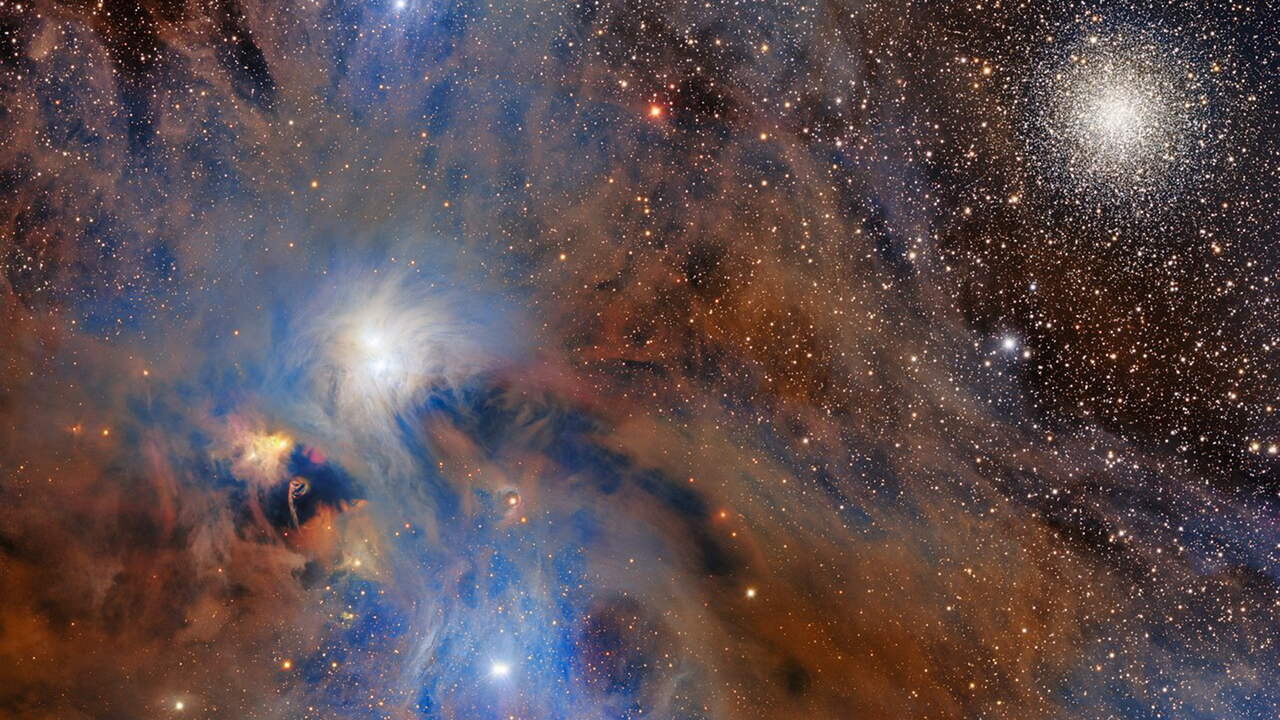
'Starry Night' telescope photo captures some of the oldest stars in the universe — Space photo of the week
Key Points
'Starry Night' telescope photo captures some of the oldest stars in the universe — Space photo of the week The Corona Australis Molecular Cloud shines in a stunning new image revealing glowing nebulae, newborn stars and the Chandelier Cluster. Quick facts What it is: The Corona Australis Molecular Cloud Where it is: 430 light-years away, in the constellation Corona Australis When it was shared: July 16, 2026 In a scene reminiscent of Vincent van Gogh's "The Starry Night," scientists have...
'Starry Night' telescope photo captures some of the oldest stars in the universe — Space photo of the week
The Corona Australis Molecular Cloud shines in a stunning new image revealing glowing nebulae, newborn stars and the Chandelier Cluster.
Quick facts
What it is: The Corona Australis Molecular Cloud
Where it is: 430 light-years away, in the constellation Corona Australis
When it was shared: July 16, 2026
In a scene reminiscent of Vincent van Gogh's "The Starry Night," scientists have captured swirling nebulae, dark dust lanes and sparkling star clusters in remarkable detail.
This spectacular new image from the Dark Energy Camera (DECam) on the National Science Foundation's Victor M. Blanco 4-meter Telescope in Chile shows the Corona Australis Molecular Cloud, one of the closest active star-forming regions to our solar system. It's a place where temperatures fall to around minus 440 degrees Fahrenheit (minus 260 degrees Celsius), allowing dense pockets of gas and dust to collapse and form new stars.
The portrait also combines star-forming regions with an ancient globular cluster far beyond them, all within a single field of view. The 570-megapixel DECam's 74 detectors and 3-foot-wide (1 meter) lens make it one of the world's most powerful wide-field astronomical instruments.
Related stories
- James Webb telescope spies a monstrous molecular cloud shrouded in mystery — Space photo of the week
- 'It's huge, and it's been hidden for this whole time': Gigantic, glow-in-the-dark cloud near Earth surprises astronomers
- James Webb telescope finds a cosmic cloud of creation buried in the Sword of Orion — Space photo of the week
On the left side of the image is the glowing nebula NGC 6729, nestled within the molecular cloud. The blue is a reflection nebula, which is caused by dust reflecting starlight, while the orange shows an emission nebula, which forms when ultraviolet radiation from a young star ionizes gas with its youthful radiation. At the heart of NGC 6729 is R Coronae Australis, a binary star system whose stars complete an orbit of each other every 43 to 47 years.
Glittering like a firework on the upper right is NGC 6723, a globular cluster approximately 29,000 light-years from Earth. Also called the Chandelier Cluster, it contains hundreds of thousands of stars that formed billions of years ago, with some almost as old as the universe itself. However, astronomers suspect that there are several populations of similarly aged stars within the cluster, indicating a complex evolutionary history.NGC 6729 and NGC 6723 are favorite targets for astronomers and astrophotographers because of their relatively close proximity to Earth. However, because they're found below the constellation Sagittarius, they're best seen from the Southern Hemisphere. If you’ve got the right vantage point, a good backyard telescope will help you see this chaotic cradle of star formation.
Get the world’s most fascinating discoveries delivered straight to your inbox.
Jamie Carter is a Cardiff, U.K.-based freelance science journalist and a regular contributor to Live Science. He is the author of A Stargazing Program For Beginners and co-author of The Eclipse Effect, and leads international stargazing and eclipse-chasing tours. His work appears regularly in Space.com, Forbes, New Scientist, BBC Sky at Night, Sky & Telescope, and other major science and astronomy publications. He is also the editor of WhenIsTheNextEclipse.com.
You must confirm your public display name before commenting
Please logout and then login again, you will then be prompted to enter your display name.
the Chandelier Cluster (LOCATION)
Corona Australis (PERSON)
Vincent van Gogh's (PERSON)
the Dark Energy Camera (ORG)
the National Science Foundation's (ORG)
Victor M. Blanco 4-meter (PERSON)
Telescope (LOCATION)
Chile (LOCATION)
the Corona Australis Molecular Cloud (LOCATION)
James Webb (PERSON)
Earth (LOCATION)
Coronae Australis (PERSON)
Sagittarius (ORG)
the Southern Hemisphere (LOCATION)
Jamie (PERSON)