
Education
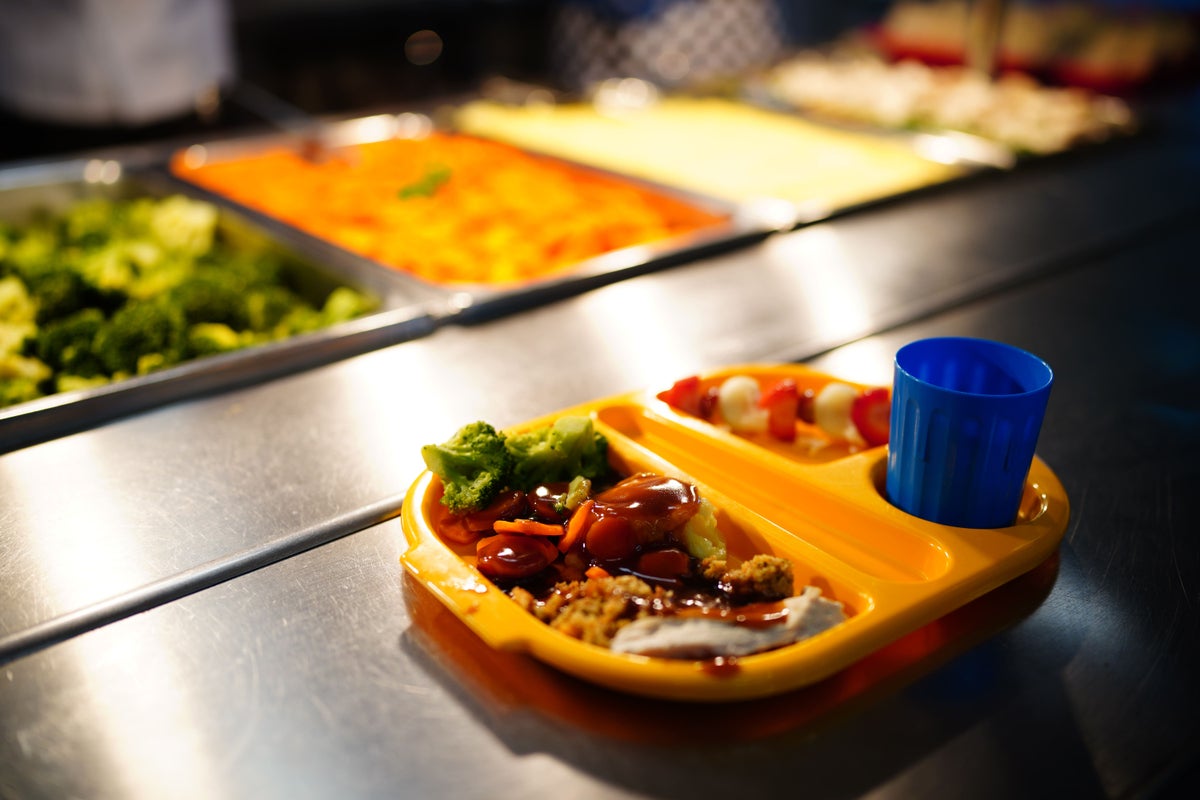
Most secondary schools in England still offer too many unhealthy food options
Key Points
Most secondary schools in England still offer too many unhealthy food options Schools were found to sell crisps, chocolate and pastries instead of nuts, fruit and vegetables as snacks - Bookmark - CommentsGo to comments Most secondary schools in England are serving chicken nuggets, hash browns, chocolate desserts and crisps too often, a new report has revealed. School food standards have been breached by hundreds of schools, according to analysis of almost 400 state secondaries by Bite Back,...
Most secondary schools in England still offer too many unhealthy food options
Schools were found to sell crisps, chocolate and pastries instead of nuts, fruit and vegetables as snacks
- Bookmark
- CommentsGo to comments
Most secondary schools in England are serving chicken nuggets, hash browns, chocolate desserts and crisps too often, a new report has revealed.
School food standards have been breached by hundreds of schools, according to analysis of almost 400 state secondaries by Bite Back, a food charity set up by the chef Jamie Oliver.
Three out of four of the 391 secondary schools in England had at least one food item that broke the rules.
More than 200 schools sold food that was high in fat, sugar or salt, such as crisps, chocolate and pastries. These snack foods were being offered to pupils at all meal times, including breakfast, but schools are only allowed to sell nuts, seeds, fruit and vegetables as snacks.
Fried starchy food, such as hash browns, is only supposed to be offered twice a week. But the report revealed hash browns were available to buy more often than that at 144 schools, which is more than a third of schools surveyed.
There were also 224 schools (57 per cent) providing meat products such as burgers, nuggets, sausages and goujons more often than the twice a week permitted by the standards.
D’Arcy Williams, chief executive of Bite Back, said: “These findings are very alarming and expose a system that is fundamentally failing our children.
“It is shocking to find crisps and chocolate being pushed at breakfast time or processed meats like sausage rolls and bacon baps being served far more frequently than the rules allow.
“Young people have been telling us for years that their school food is ‘beige, bland and boring’ and now we have more evidence that they are being surrounded by unhealthy food throughout the school day. Schools should be a sanctuary for health and learning, yet the current postcode lottery of food quality is undermining that mission.”
More than half of children (56 per cent) who rely on free school meals are reliant on “grab and go” food such as pizza, pastries, crisps and sugary drinks for their school lunch, according to a separate Bite Back survey of 2,000 students. That’s in comparison to 36 per cent of children who do not have free school meals.
But only one in three students said grab-and-go school food gives them enough energy, and many are not happy with the food that is being served.
“By the time the lunch bell rings, the grab-and-go section is always the busiest place in school,” Shalom, a pupil aged 16, told Bite Back.
“Students run past the main meal to avoid long queues and wasted free time.
“The shelves are filled with packaged sandwiches, pizza slices, paninis and fizzy drinks, the smell of pastry and cheese dampening the air. It looks tempting at first, but week after week, it becomes beige, bland and boring.”
It comes as ministers prepare to overhaul the standard of food served in schools, a move anti-obesity and child health organisations have been calling for years to change.
Polling by Bite Back found 72 per cent of parents support government measures to implement checks that ensure the incoming updated standards are being followed.
The government’s proposed school food standards would increase the availability of nutritious options such as fruit, vegetables, wholegrains and pulses while further restricting high-sugar foods, drinks and other unhealthy options.
The Department for Education has been approached for comment.
Join our commenting forum
Join thought-provoking conversations, follow other Independent readers and see their replies
Comments