
Education
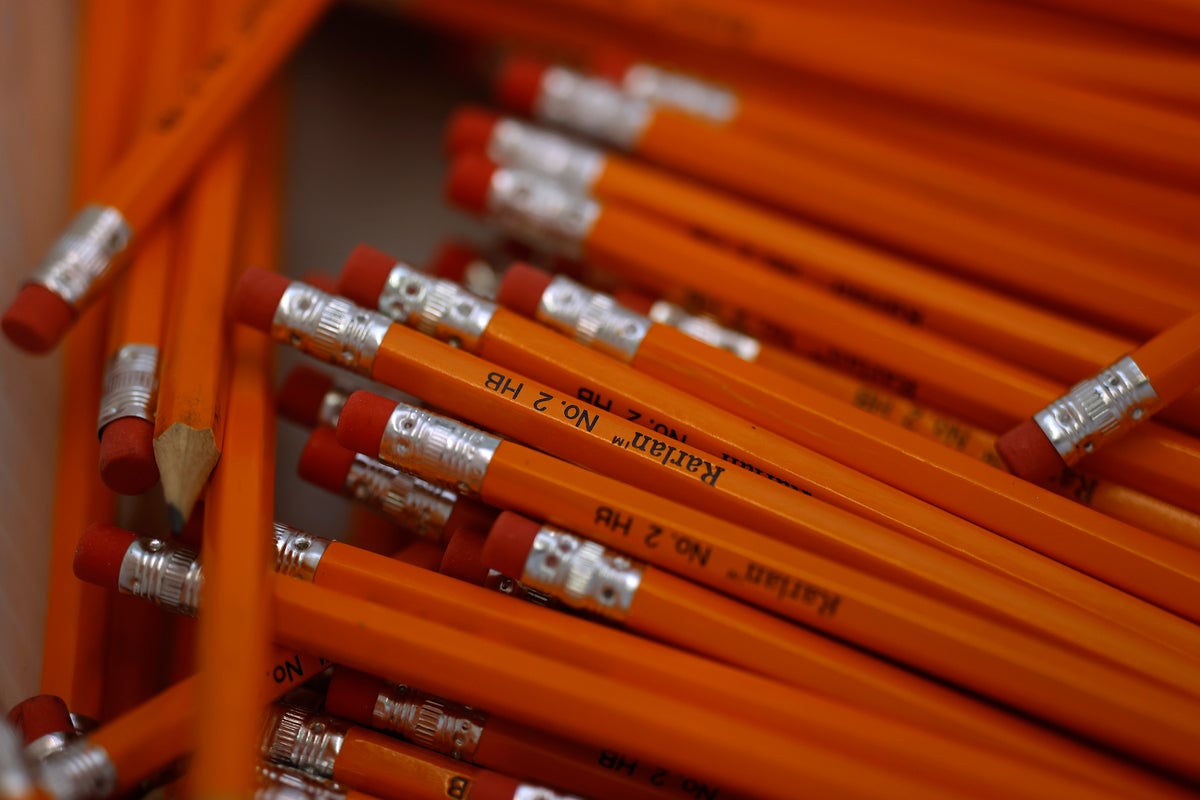
How the No. 2 pencil became a staple of American schools
Key Points
How the No. 2 pencil became a staple of American schools The writing instrument was not invented in the United States, yet American industry and innovation made it iconic - Bookmark For generations of Americans, the sharpened No. 2 pencil has long symbolized youth and growing up. Still a staple of back-to-school shopping lists, it helps children trace their initial letters, erase their mistakes and doodle in the margins during moments of daydreaming. For decades, clammy hands clutched the...
How the No. 2 pencil became a staple of American schools
The writing instrument was not invented in the United States, yet American industry and innovation made it iconic
- Bookmark
For generations of Americans, the sharpened No. 2 pencil has long symbolized youth and growing up. Still a staple of back-to-school shopping lists, it helps children trace their initial letters, erase their mistakes and doodle in the margins during moments of daydreaming.
For decades, clammy hands clutched the ridged yellow wood on exam day. "Bring two sharp No. 2 pencils," generations of Americans were instructed, as they readied themselves to fill in answer bubbles on the SATs and additional standardized tests that could shape their futures. Whether Scantron devices genuinely required No. 2 markings remains open to debate, but those were nonetheless the set rules.
The writing instrument was not invented in the United States, yet American industry and innovation made it iconic.
“The idea of painting a pencil yellow and putting an eraser on top is specifically American,” says Caroline Weaver, a pencil historian and author of “The Pencil Perfect: The Untold Story of a Cultural Icon.” Until the mid-1800s, pencils in America had no eraser, and the eraserless pencil is still standard in the rest of the world.
One of America's early pencilmakers was John Thoreau, father of Henry David Thoreau. The writer worked for his dad’s Massachusetts pencil company in the mid-1800s before moving to a cabin in the woods and composing “Walden.”
The young Thoreau is credited with pioneering the concept of grading pencils on a scale of 1 to 4, with No. 2 striking a balance of graphite and clay that is dark enough, yet not too smudgy for writing. (“Pencils have never contained lead. This is a myth!” says Weaver.)
The rest of the world uses a similar scale to grade pencils, known as “HB,” measuring hardness and blackness.
The other end of the pencil contains another American invention. The ferrule is a metal piece that has held the eraser for more than a century — except during World War II, when rationing forced a shift to plastic and even cardboard.
In an increasingly digital world, pencils are less commonplace. Most school testing has moved online. Students use laptops and touch screens as early as kindergarten.
But all this tech has produced a backlash. In the age of AI, many schools and colleges are requiring handwritten exams and paper tests to safeguard against cheating — or just to give kids a break from screens.
And so many will pick up a No. 2 — like generations before. In that way, Weaver says, the pencil represents democracy itself. No matter who you are or where you live, you have written with a No. 2, sharpened its point or possibly, in moments of stress or boredom, chewed on one.
[Image text:] CEM
No.2HB
Rarlan'"
KarlanNo.2 H
ON
Sey
En
8