
Health
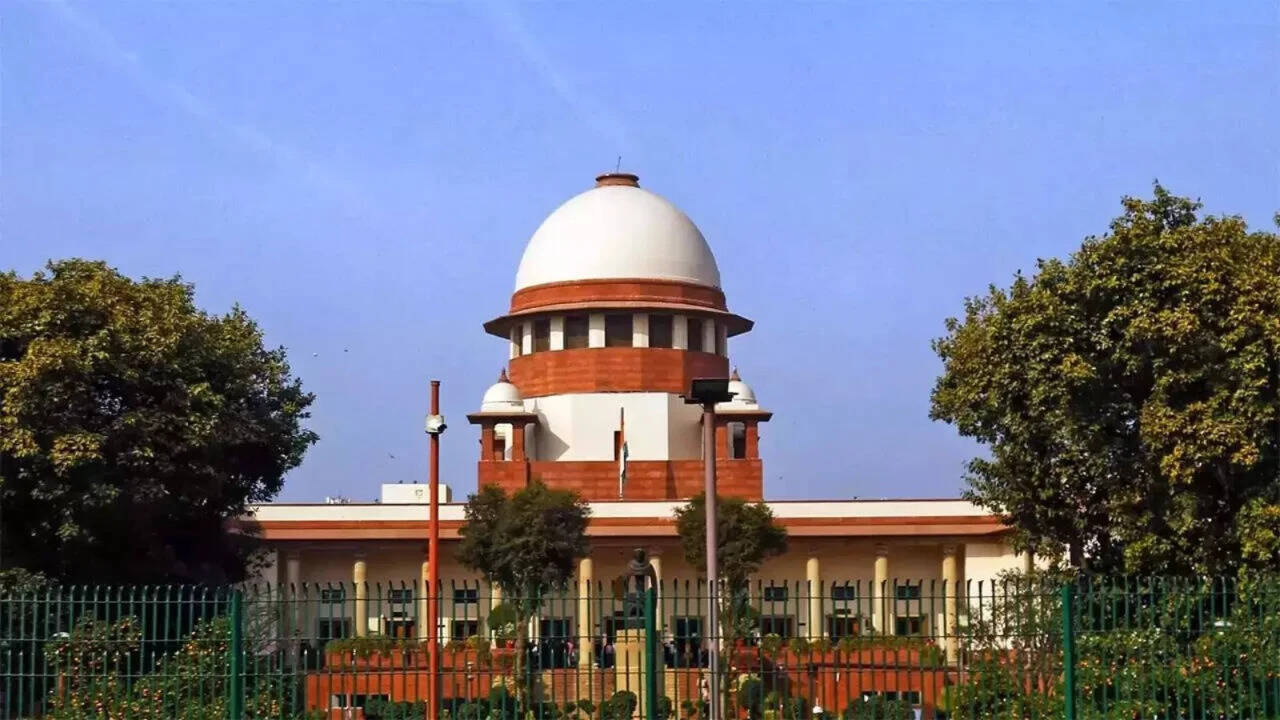
'Failure of judicial system': SC on 45-year-old case
Key Points
SC frees bedridden convict as double murder case takes 44 years through courts NEW DELHI: It took a lower court 22 years to complete trial in a double murder case and another 22 years for Jharkhand high court to decide the appeal, and during the long proceedings, five of six accused died and the sole surviving bed-ridden convict in his 70s is fighting a legal battle in Supreme Court from jail. Terming the inordinate delay in deciding the case a failure of the judicial system, a bench of...
SC frees bedridden convict as double murder case takes 44 years through courts
NEW DELHI: It took a lower court 22 years to complete trial in a double murder case and another 22 years for Jharkhand high court to decide the appeal, and during the long proceedings, five of six accused died and the sole surviving bed-ridden convict in his 70s is fighting a legal battle in Supreme Court from jail.Terming the inordinate delay in deciding the case a failure of the judicial system, a bench of Justices J B Pardiwala and K Vinod Chandran suspended the sentence of the convict and allowed him to come out of jail on bail. It also decided to examine the reason why the trial court and HC took so long in deciding the case of double murder, which took place in 1981.The said case projects failure of the judicial system, when a crime went unpunished and the accused were put to the torture of a prolonged trial of 22 years and then after conviction, the appeal filed having been dismissed after yet another two decades and two years, SC said.Advocate Fauzia Shakil, appearing for the convict, submitted that the petitioner will suffer grave prejudice and irreparable loss if bail is not granted to him inasmuch as there cannot be any adequate compensation for his prolonged incarceration in the event of his eventual acquittal by SC.“Despite the horrendous crime of a double murder, we cannot close our eyes to the ordeal suffered by the accused in the last 45 years.
Especially noting his medical condition and the affidavit of the state that the petitioner is admitted in the hospital, though in custody, we suspend the sentence and direct that the petitioner shall be released forthwith on condition of his not committing any crime when on bail and on his personal surety,” it said.“It is very disturbing to note that although the incident is of the year 1981 yet the judgement and order passed by the trial court holding the petitioner guilty of the alleged crime is of 2002. We fail to understand why it took 22 years for the trial court to complete the trial... Even HC took 22 years to decide the appeal preferred by the petitioner challenging the judgement and order of conviction passed by the trial court. This delay highlighted above is something very disturbing,” SC noted in its order.
Asked by the court to give an explanation for the delay, the registrar general of HC told the court that the delay was also caused as the accused were absconding for six years. But the court noted that there is no explanation for the 12 years it took for the trial to be completed when the charges were framed in 1991.“We were concerned with pendency of the criminal appeals as pointed out in the report of HC and we hence thought it fit to permit the petitioner to implead Centre in the above matter. The learned advocate-on-record appearing for HC would serve a copy of the affidavit of compliance filed by the registrar general to the office of the attorney general/solicitor general,” the court said.