
Health
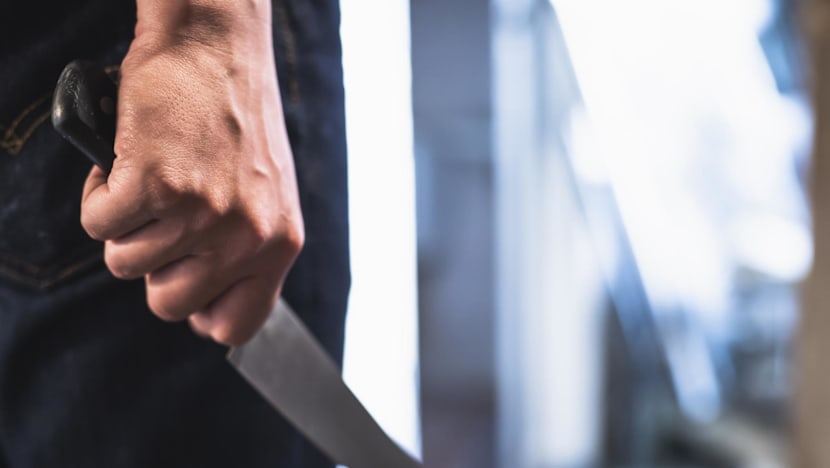
Fight, flight or freeze: Would you step in when danger strikes?
Key Points
Fight, flight or freeze: Would you step in when danger strikes? A Singaporean’s decision to subdue a knife-wielding man has put citizen bravery in the spotlight. CNA looks at what drives our responses to danger and when intervening could do more harm than good.
Fight, flight or freeze: Would you step in when danger strikes?
A Singaporean’s decision to subdue a knife-wielding man has put citizen bravery in the spotlight. CNA looks at what drives our responses to danger and when intervening could do more harm than good.
SINGAPORE: Faced with someone wielding a knife, would you intervene, move to safety or call the police?
It is easy to imagine what we might do in such a situation, but when confronted with an actual threat, psychologists say our responses can be far less predictable.
For 56-year-old Osman Sidin, the decision was not hypothetical.
Mr Osman was on his way to a medical appointment when he heard shouts for help from a crowd outside Clementi Mall on Aug 10.
He saw a man holding a knife who had already stabbed himself several times, and decided to act.
He grappled with the man and pinned him to the ground.
Mr Osman had an advantage that many bystanders might not: A background in silat, a traditional Southeast Asian martial art. But even so, choosing to rush forward in a moment of danger is a risky call.
His actions raise a difficult question: What makes one person move towards danger while others hesitate?
When CNA asked members of the public what they would do if they witnessed such an incident, their responses varied.
“I will run away. That's the best, that's the wise decision for me,” said one man.
Others said they would call the police or try to help contain the situation if other people were around.
One woman said she would intervene if the situation allowed: “If I could tell they're not armed, if I have a bag or something which I might have, I'll just whack it over the guy's head.”
FIGHT, FLIGHT OR FREEZE
When people encounter immediate danger, the body can enter an automatic survival state, said clinical psychologist Dr Annabelle Chow.
“When there's immediate danger, our body kicks into a survivalistic, automatic, and default state,” she said. “So that means it goes into fight, flight, or freeze.”
“In a state of panic, for example, when there's blood, there's noise, there's screaming, there's a weapon … our brain has so many decision points that we have to make, and fear has a real, real effect on our body as well,” said Dr Chow.
Some people may freeze or feel unable to move, while others may flee or even move towards the danger, she added, pointing out that it is difficult for people to “reliably hypothesise” how they would react in an emergency.
How someone responds can depend on the circumstance – including how dangerous it is, whether weapons are involved, and whether that person has the skills to help, said Dr Chow.
In Mr Osman’s case, for example, his knowledge of silat may have given him greater confidence in his ability to handle the situation, said Dr Chow.
But what people think they would do when calm can still be very different from how they would react in a real crisis.
Dr Chow experienced this herself years ago when her son fell into a swimming pool.
“I always thought that I would kick into action and be able to just bring him up, right? But unfortunately, I froze.”
She said others have shared similar experiences – believing they would respond one way, only to react differently in a real situation.
“It’s quite important to offer yourself some self-compassion that your brain was under stress and it reacts the way that it knows how,” she said.
But preparing and rehearsing what to do in an emergency could improve the chances of responding effectively. Dr Chow likened this to cardiopulmonary resuscitation training.
“If you learn the steps, you practise, you have the muscle memory, you have the mental memory. You have a better chance,” she said.
COURAGE OR RECKLESSNESS
Being prepared to act is one thing; knowing when to act is another.
Physical intervention can sometimes stop an immediate threat, as it did in Mr Osman’s case.
But approaching an armed person also carries risks – both to the person intervening and to others at the scene.
“Both courage and recklessness can stem from fear. You can be courageous but fearful, and you can be reckless and fearful,” said Dr Chow.
The difference lies in how a person exercises judgment and acts on it, she said.
Courage involves assessing whether you have the skills to manage the situation and whether intervening could put more people at risk.
Recklessness, on the other hand, could involve acting with impaired judgment and potentially putting more people at risk.
For an ordinary person faced with a weapons attack, Dr Chow pointed to the “run, hide and tell” guidance recommended by the authorities.
“Run away from the situation, hide so that you are safe, but also tell someone that you know can offer responsible help,” she said.
This is in line with Singapore’s SGSecure guidance in the event of a firearms or weapons attack, which prioritises getting away from the threat where possible rather than confronting the attacker directly.
But that does not mean bystanders cannot help.
They can warn others of the danger, call the police, help people get to safety or assist the injured once the immediate threat has passed.
In other words, helping does not necessarily mean putting yourself in harm’s way. It can also mean recognising what can be done safely and effectively to help those around you.