
World News
'Significant' fencing safety issues at pool where toddler drowned, inquest hears
Key Points
Backyard pool where toddler drowned had fencing with 'significant' safety issues, inquest hears In short: A backyard swimming pool where a 19-month-old toddler drowned may never have been subject to an application for compliance, an inquest has heard. The pool, which the court heard was likely built before 1972, had "significant" safety issues including a gate with a missing top hinge. The inquest is continuing.
Backyard pool where toddler drowned had fencing with 'significant' safety issues, inquest hears
In short:
A backyard swimming pool where a 19-month-old toddler drowned may never have been subject to an application for compliance, an inquest has heard.
The pool, which the court heard was likely built before 1972, had "significant" safety issues including a gate with a missing top hinge.
What's next?
The inquest is continuing.
It is likely a backyard swimming pool where a toddler drowned was never required to be subject to an application for an approval, a coronial inquest has heard.
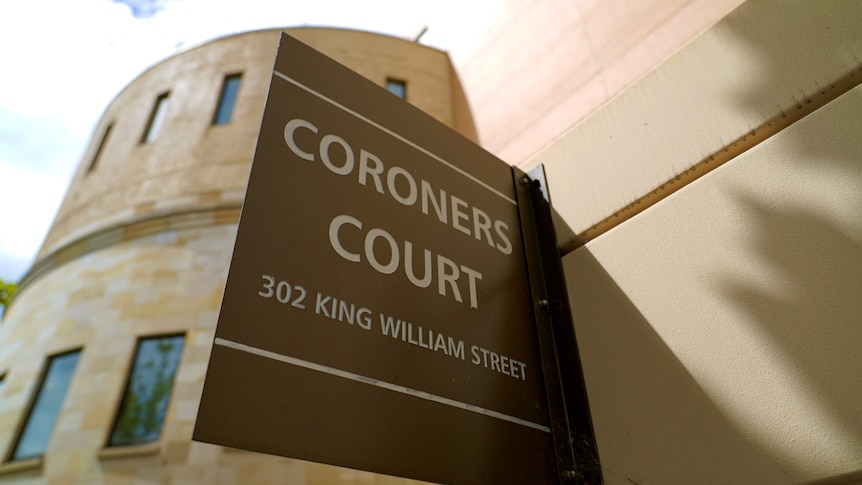
South Australia Deputy State Coroner Emma Roper is investigating the death of a 19-month-old boy after he drowned in the pool at his family's rented home in Salisbury, in Adelaide's north in November 2022.
Warning: This story contains details some readers may find distressing.
In his opening address, counsel assisting the coroner Darren Evans said on the day of the drowning, the boy — whose name has been suppressed — was with his mother, as well as his four siblings who he had been asking to go outside with him.
Mr Evans said it was about 5:20pm when the boy's siblings noticed he was missing.
"The family looked for him … his sister then found him floating in the swimming pool outside," he said.
Mr Evans said the girl found her brother near the pool's steps, before she "grabbed him by the hands and pulled him out".
"Their mother came and turned [the boy] upside down to drain water from his mouth," Mr Evans said.
"Neighbours heard a commotion and came over to assist, calling triple zero, and then commencing CPR with advice over the phone."
The court heard when paramedics arrived, the boy had been moved onto the living room floor, and that after about 30 minutes "a return of spontaneous circulation was achieved".
He was taken to the Women's and Children's Hospital, but died seven days later, as a result of a severe hypoxic-ischaemic encephalopathy injury post cardiac arrest.
"There was no further treatment that could reverse the brain injury … it was identified that his condition was not compatible with life," Mr Evans told the court.
Ms Roper said the circumstances of the boy's death were "likely to have had and will continue to have a profound impact upon his siblings".
"It may be that it remains unknown who opened the pool gate on the day of his death, but it appears to be open at the time he's retrieved from the water,"she said.
Faulty pool gate
The court heard when police attended the family's home, the boy's mother told officers the pool gate was "usually closed" and that she did not know how it came to be open or how her son got in.
It heard the top hinge on the pool gate was missing at the time, and there was a bicycle lock that had been put around it to keep it shut.
"[The boy's] father says that he noticed this was broken but did not raise it with the landlords, as he thought it was simple enough to fix himself with a new hinge," Mr Evans said.
Police commissioned a review of the pool by Salisbury Council pool inspector Jeff Shillabeer, who gave evidence that he found a number of "significant" issues with the safety of the fencing.
Mr Shillabeer said the "most notable" of those were the fact the gate did not close by itself, there was a gap greater than 10cm under the fence, and that there were climbable objects around the pool including a rabbit hutch and brick barbecue.
The court heard when he attended the property for a re-inspection in January 2023, all safety issues had been rectified by the property owners.
'Grand-fathered' safety compliance
The deputy coroner will consider whether improvements could be made to the regulation of older pools — particularly where the home is rented out — including whether the state government should implement a regular inspection regime, which is already in place in other states.
The court heard the pool was "likely" constructed prior to 1972, and therefore never required to be subject to an application for an approval or be entered onto the council's records.
Mr Evans said the requirement of pool fencing was only enforced under law after that time.
"The legislative regime continues to allow for grand-fathered safety compliance for pools installed in previous decades,"Mr Evans said.
Mr Shillabeer said councils were only required to inspect a pool when a new one was built, and that there was no legislative requirement for an inspection after a transfer of sale.
He also told the court that, in his role as an inspector, he had carried out checks of pools following the death of a child at least five times.
The inquest continues.
[Image text:] CORONERS
COURT
302 KING WILLIAM STREET