
Science
One in four NFL players will get CTE, alarming new study finds
Key Points
The Independent's journalism is supported by our readers. When you purchase through links on our site, we may earn commission. One in four NFL players could get CTE, alarming new study finds Chronic traumatic encephalopathy is a progressive brain disease linked to repeated head impacts - Bookmark - CommentsGo to comments At least one in four NFL players could develop chronic traumatic encephalopathy, a progressive brain disease linked to repeated head impacts, new research suggests.
The Independent's journalism is supported by our readers. When you purchase through links on our site, we may earn commission.
One in four NFL players could get CTE, alarming new study finds
Chronic traumatic encephalopathy is a progressive brain disease linked to repeated head impacts
- Bookmark
- CommentsGo to comments
At least one in four NFL players could develop chronic traumatic encephalopathy, a progressive brain disease linked to repeated head impacts, new research suggests.
Researchers found CTE in 215 of 878 former NFL players who died between 2016 and 2021, meaning 24.5 percent have died with CTE. The study was led by Dr. Daniel Daneshvar, a physician and researcher at Mass General Brigham and Harvard Medical School, along with researchers from Boston University and other institutions.
That figure may underestimate how common CTE is among former NFL players. Researchers examined the brains of 235 of the 878 players who died during the study period, leaving 643 brains unexamined.
CTE is caused by repeated head impacts and can only be definitively diagnosed after death. It is extremely rare without repeated head trauma. The disease can cause memory loss, confusion, mood changes, impaired decision-making, impulsive behavior and addiction, according to the American Brain Foundation.
CTE was first identified in boxers nearly a century ago and has since been found in other athletes exposed to repeated head impacts, including hockey, rugby, soccer, wrestling and bobsledding. Researchers have also found evidence suggesting military personnel exposed to repeated blasts may be at risk.
If the study’s findings were applied to today’s NFL, at least 400 of the league’s 1,696 active roster players could eventually develop CTE – and that does not include practice-squad players or those sidelined by injuries, according to the New York Times.
The NFL has long downplayed the risks of repeated head injuries, arguing that there was not enough evidence to determine how dangerous CTE was, what caused it, or how common it was.
Hundreds of former NFL players have been diagnosed with CTE, often after their families donated their brains after their deaths because of concerning symptoms. But most cases remain private, with only a handful becoming known, including those of Pro Football Hall of Famers Junior Seau, Ken Stabler and Frank Gifford.
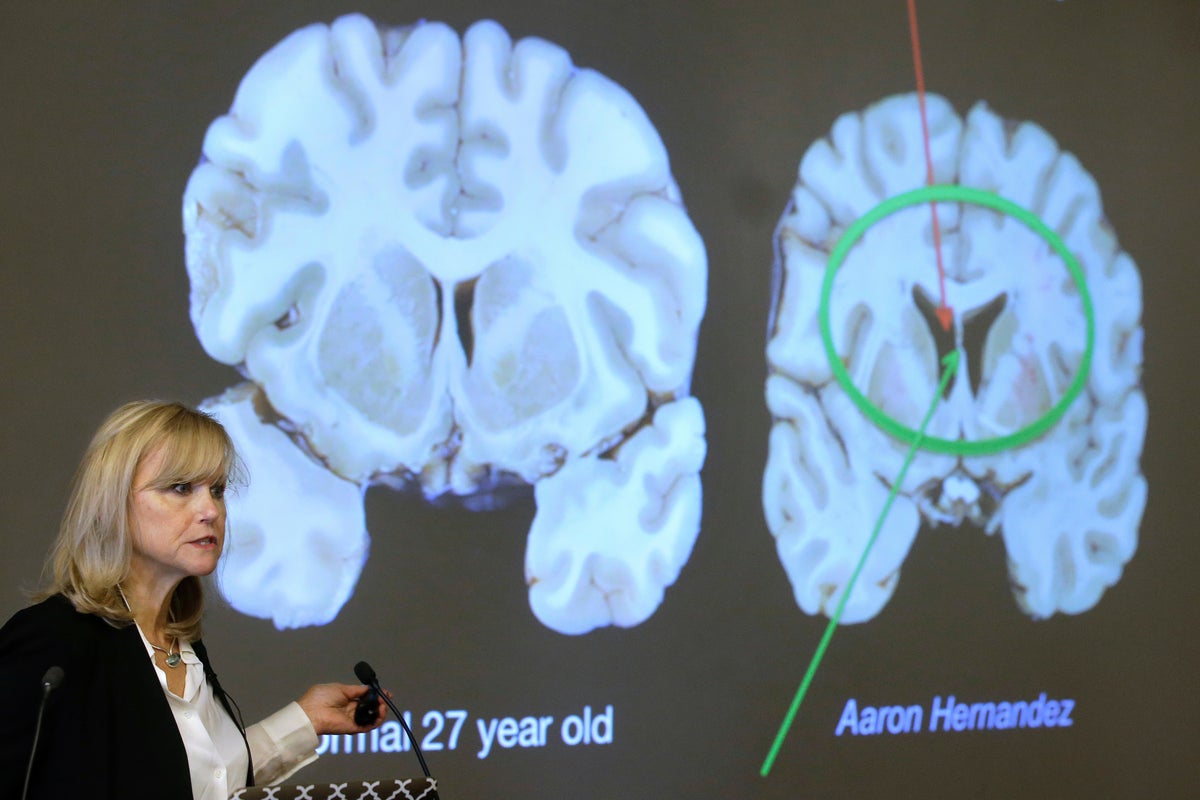
Some CTE cases have drawn widespread attention because of violent criminal behavior. Aaron Hernandez and Phillip Adams were both diagnosed with CTE after their deaths, following murders they committed. In July 2025, Shane Tamura, a former football player who never reached the NFL, killed four people in a New York City building that houses the league’s headquarters. An autopsy later found that Tamura also had CTE.
The NFL has taken steps to reduce head impacts by banning dangerous hits, limiting contact practices, changing kickoffs and improving helmets, while soft-shell Guardian Caps are required in some practices but remain optional during games.
However, a separate 2025 Harvard study found that safety equipment cannot eliminate the risk of brain injuries or CTE and called for stronger concussion protocols and longer recovery periods. The study concluded that the only certain way to prevent football-related head injuries is to avoid tackle football.
Daneshvar says CTE is preventable because its main risk factor is known to be the cumulative force of head impacts over a lifetime, including those sustained before reaching the NFL.
“We can change that cumulative force without changing the game of football,” he told the NYT, suggesting that this could mean keeping children out of tackle football and eliminating contact during practices at all levels.
The Independent has contacted the NFL and the NFL Players Association for comment.
Join our commenting forum
Join thought-provoking conversations, follow other Independent readers and see their replies
Comments
[Image text:] a27 year old
XXX
Aaron Hemandez
NFL (ORG)
CTE (ORG)
Independent (ORG)
Daniel Daneshvar (PERSON)
Mass General Brigham (ORG)
Harvard Medical School (ORG)
Boston University (ORG)
the American Brain Foundation (ORG)
the New York Times (ORG)
Pro Football Hall of Famers Junior Seau (ORG)
Ken Stabler (PERSON)
Frank Gifford (PERSON)
Aaron Hernandez (PERSON)
Phillip Adams (PERSON)
Shane Tamura (PERSON)