
Business & Finance
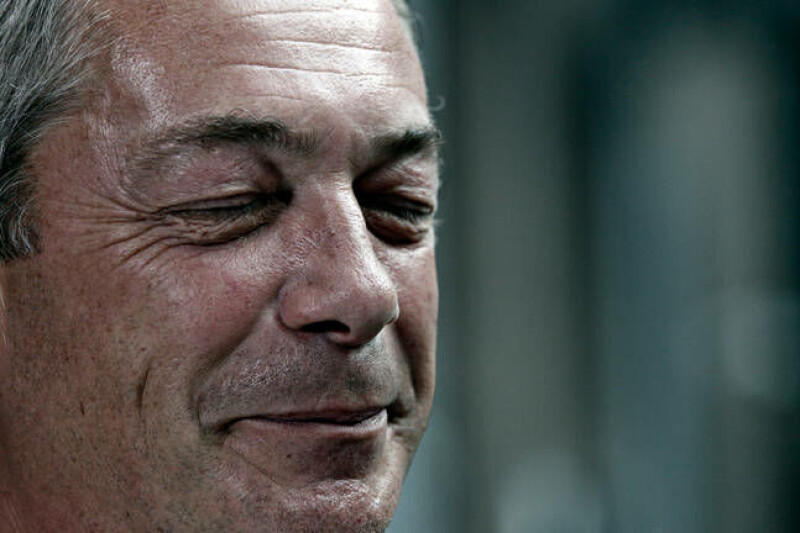
Nigel Farage wants to scrap ‘suffocating’ UK GDPR
Key Points
Reform UK says it wants to scrap the UK GDPR after eight years of the regulations “strangling” small businesses. The party’s leader Nigel Farage and economy chief Robert Jenrick announced additional pledges on Tuesday evening, which include scrapping the UK’s data protection regulation for a “light-touch” alternative more akin to New Zealand’s approach. The UK’s Information Commissioner has powers to issue multi-million-pound fines to businesses that violate UK GDPR, which in 2021 replaced...
Reform UK says it wants to scrap the UK GDPR after eight years of the regulations “strangling” small businesses. The party’s leader Nigel Farage and economy chief Robert Jenrick announced additional pledges on Tuesday evening, which include scrapping the UK’s data protection regulation for a “light-touch” alternative more akin to New Zealand’s approach. The UK’s Information Commissioner has powers to issue multi-million-pound fines to businesses that violate UK GDPR, which in 2021 replaced the pre-Brexit Data Protection Act 2018. New Zealand’s equivalent, however, only has the power to issue fines up to NZ$50,000 under its Privacy Act 2020. The legislation is weaker in some areas compared to the UK GDPR, but imposes similar restrictions on handling and transferring data. Building a more prosperous business environment features heavily among Reform UK’s policies, we're told. “Small businesses are the beating heart of our economy, yet they have been suffocated by years of punishing taxes, suffocating EU red tape and a big-state obsession that rewards dependency over hard work,” said Farage via news wire PA. “While the establishment parties drive small firms to the brink of closure, Reform UK is offering a bold, common-sense rescue plan.” Jenrick added: “GDPR has strangled small businesses and tech firms alike in a web of unnecessary regulation. “Ten years after the Brexit referendum, we should not still be following ridiculous EU privacy laws that hurt British businesses.” “For decades governments have focused on big corporations while leaving small businesses to fall by the wayside. No more,” Jenrick added. “Reform UK believes the 6 million small businesses in the UK are the backbone of our high streets and our economy, and we will back them to the hilt.” The party is currently embroiled in a data protection-related legal battle brought against it by the Good Law Project. The campaign group sued Reform UK in March 2025 after it claimed the party was refusing to disclose to people the data it stored about them and failing to respond to requests to delete that data. The party tried to have the case thrown out, but a High Court judge ruled in June that the case should proceed to trial. Reform UK did not respond to our request for information about its pledges. Big on business, or a big load of pipe dreams? Farage’s GDPR-related pledge was made as part of a broader list of promises to create a more pro-enterprise business environment for smaller organizations that it said were confined by “damaging” regulations. The party vowed to reverse the National Insurance increase announced in 2024 by then-chancellor Rachel Reeves, as well as a range of tax-related easements. Farage said Reform would scrap income tax on full-time workers’ overtime pay, referred to as a “hard work bonus,” loosen inheritance tax related to farms, and increase the VAT registration floor from £90,000 to £150,000 ($122,662-$204,437). He also said he would alter the Seed Enterprise Investment Scheme to make it more tax-efficient for parents and grandparents to invest in their children’s business, and scrap the 2035 Zero Emission Vehicle mandate. A Labour spokesperson described the pledges as “unworkable and unserious.” They accused Farage and Reform of trying to undo the Online Safety Act and distract from the recent story of the party leader accepting a £5 million ($6.8 million) gift from an overseas crypto-billionaire. Shadow chancellor Sir Mel Stride said Reform’s pledges “collapse on contact with reality,” and would cost billions of pounds to implement. Of the party’s data protection plans, Sir Mel said “there is little detail on how their proposals to scrap GDPR would work.” GDPR was first tabled after lawmakers grew conscious of the need to update data protection regulations in the post-social media and cloud computing world, and in the wake of scandals, such as Cambridge Analytica, to protect individuals’ rights to their own information. Aside from its intention to reform the UK GDPR, Farage’s party has not introduced many tech-specific policies, other than to make the UK a leader in emerging technologies, such as AI. Reform UK isn’t the only party looking to tweak the UK GDPR, however. Labour’s plans date back to 2024 and came into effect last year with the Data (Use and Access) Act 2025. The legislation tweaked the UK GDPR, loosening restrictions related to data-sharing between critical sectors and automated decision-making, while also paving the way for a digital ID rollout, which is another matter entirely. ®