
Politics
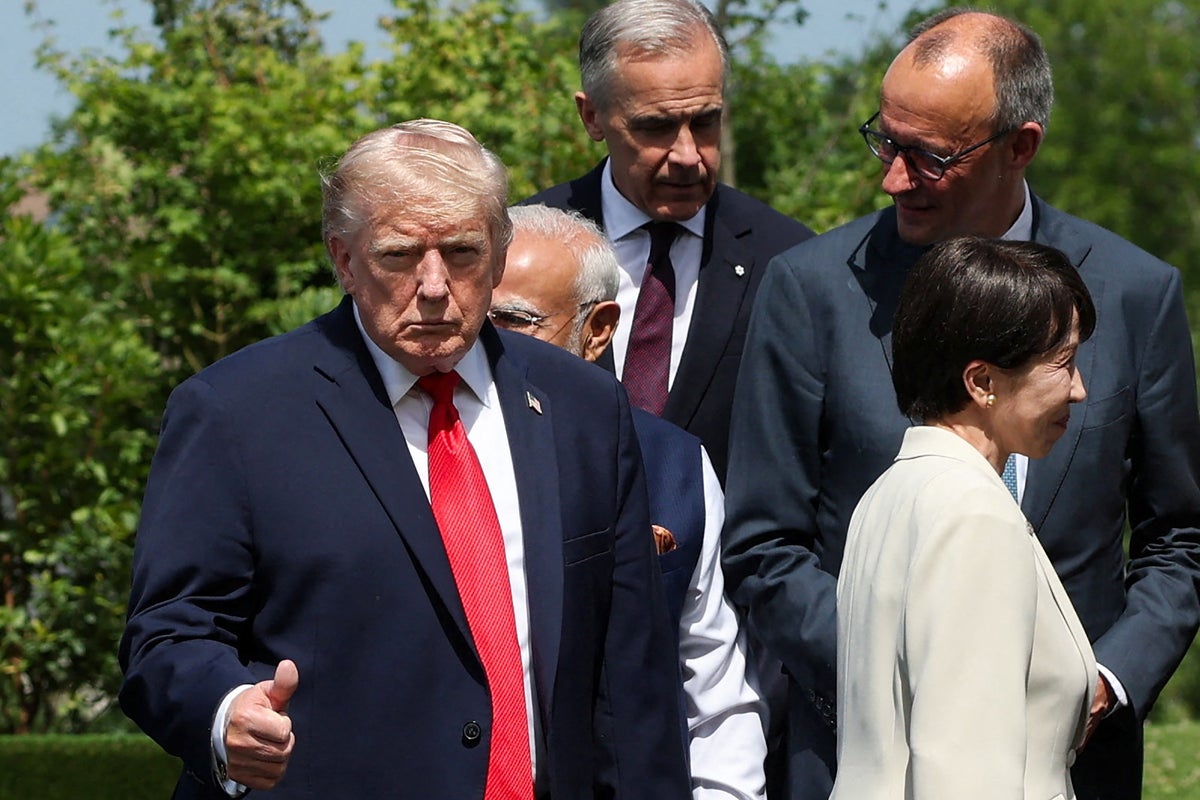
Why Trump’s hatred of the ICC threatens relations with a key US ally
Key Points
Why Trump’s hatred of the ICC threatens relations with a key US ally Washington is running a campaign to ‘dismantle’ the international court to protect top Israeli officials like Benjamin Netanyahu from prosecution over alleged Gaza war crimes - Bookmark - CommentsGo to comments The Donald Trump administration’s targeting of the International Criminal Court with sanctions and insulting remarks is damaging America’s already shaky diplomatic relationship with key ally Japan. Bilateral...
Why Trump’s hatred of the ICC threatens relations with a key US ally
Washington is running a campaign to ‘dismantle’ the international court to protect top Israeli officials like Benjamin Netanyahu from prosecution over alleged Gaza war crimes
- Bookmark
- CommentsGo to comments
The Donald Trump administration’s targeting of the International Criminal Court with sanctions and insulting remarks is damaging America’s already shaky diplomatic relationship with key ally Japan.
Bilateral relations have soured since Mr Trump made an inappropriate “joke” about the 1941 Japanese attack on Pearl Harbour during a meeting with prime minister Sanae Takaichi in March, but the two leaders have otherwise been on cordial terms. The US president has lauded Ms Takaichi as a “powerful woman” and publicly endorsed her ahead of Japan’s snap election earlier this year.
Washington’s decision to sanction Japanese national and ICC president Tomoko Akane is set to test the strength of that relationship, however.
The State Department said last week it had targeted Ms Akane and ICC senior trial lawyer Abdoulaye Seye, a Senegal national, with sanctions that froze any assets they had in US jurisdictions or that came into contact with the US financial system.
US secretary of state Marco Rubio said that the Trump administration would “dismantle” the ICC “brick by brick, if necessary”, using “all the tools at our government’s disposal”. “The campaign will feature a whole-of-government response to systematically disable the ICC’s ability to operate, target American servicemen or officials, or otherwise threaten American sovereignty,” he said in an op-ed published in July.
The sanctioning of Ms Akane and Mr Seye continues an escalating campaign by the US to protect top Israeli officials, including prime minister Benjamin Netanyahu, from ICC prosecution over the war on Gaza. Mr Trump said so explicitly last month.
“He’s not trying to defend me,” the US president said, referring to Mr Rubio’s remarks about the ICC. “He's trying to defend Bibi and various other people.”
The US has so far sanctioned half of the court’s 18 judges, senior staff of both its deputy prosecutors, the former chief prosecutor, and a prosecution office staffer.
Tokyo, meanwhile, is one of the largest financial contributors to the ICC of any treaty member nation. When she was appointed in 2024, Ms Akane said she felt a “profound sense of responsibility” as Japan’s first president of the world court.
On Tuesday, Ms Takaichi denied that she had responded weakly to the sanctioning of Ms Akane.
Tokyo had “pressed the US at various levels until the last moment” not to sanction Ms Akane, she claimed. The US action was “incompatible with Japan’s position”, she added, and a matter that her administration “takes very seriously”.
“We will closely monitor the situation and take the necessary approaches at the necessary time.”
The statement came after several lawmakers accused the prime minister of giving a “far weaker” response than other countries.
The EU deeply regretted the US sanctions and expressed “unwavering support” for the ICC. Australia, in a more muted response, said it “does not support sanctioning the ICC or its officials”.
A cross-party group of Japanese lawmakers called on the Takaichi government to lodge a clear protest and demand an immediate withdrawal of the sanctions.
Even Ms Akane herself asked the prime minister to use Tokyo’s diplomatic influence to counter the US campaign against the ICC.
“I can state categorically that there is absolutely no reason for me to be sanctioned,” she told a press conference at The Hague, calling the sanctions against the court’s officials a “crisis for the rule of law”.
The strain in US-Japan ties comes at a strategically challenging time in East Asia as Mr Trump attempts to revive diplomatic engagement with North Korea, leaving both South Korea and Japan anxious.
The US last week cancelled scheduled military drills with South Korea citing unavailability of forces due to the Iran war. Before that Mr Trump had curtailed a major joint annual exercise, stating that he did not want to antagonise Pyongyang.
Alex Whiting, a Harvard Law School professor, said the Trump administration’s threat to dismantle the ICC appeared to be “a dramatic escalation of hostility toward the court, with the apparent objective of destroying the institution”.
“Ultimately, these measures will undermine US interests, emboldening the perpetrators of grave international crimes and further distancing the US from its important allies,” Prof Whiting, former investigations and prosecutions coordinator at the ICC, told the Just Security forum.
Join our commenting forum
Join thought-provoking conversations, follow other Independent readers and see their replies
Comments
Trump (PERSON)
US (LOCATION)
Washington (LOCATION)
Israeli (ORG)
Benjamin Netanyahu (PERSON)
Gaza (LOCATION)
Donald Trump (PERSON)
the International Criminal Court (ORG)
America (LOCATION)
Japan (LOCATION)
Japanese (ORG)
Pearl Harbour (LOCATION)
Sanae Takaichi (PERSON)
Ms Takaichi (PERSON)
ICC (ORG)