
Health
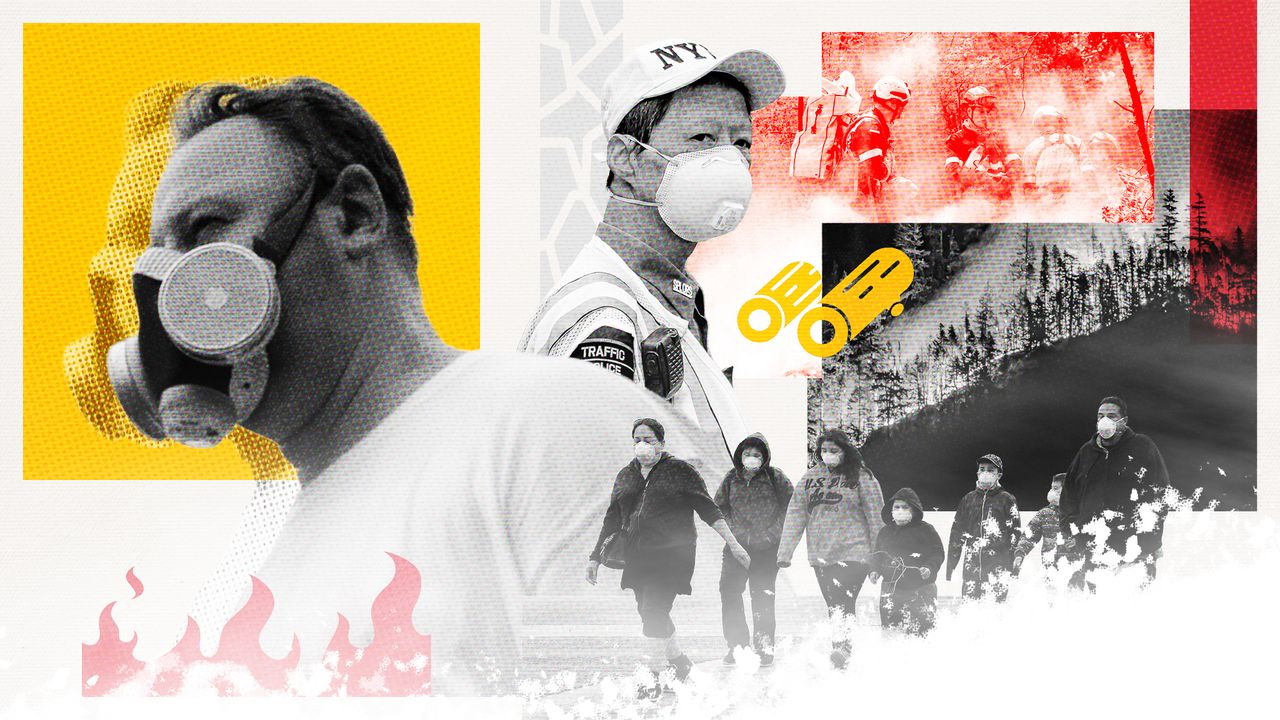
'Wildfire smoke is the fastest-growing environmental threat in the US': How a warming world will poison the air we breathe
Key Points
'Wildfire smoke is the fastest-growing environmental threat in the US': How a warming world will poison the air we breathe Wildfires are projected to increase dramatically due to climate change. That could trigger a massive increase in heart attacks, premature births and early deaths, research reveals. As wildfires raged through Ontario, Canada in mid-July, millions of people in the Midwest and on the East Coast found themselves under a shroud of yellow skies, darkened by smoke from the...
'Wildfire smoke is the fastest-growing environmental threat in the US': How a warming world will poison the air we breathe
Wildfires are projected to increase dramatically due to climate change. That could trigger a massive increase in heart attacks, premature births and early deaths, research reveals.
As wildfires raged through Ontario, Canada in mid-July, millions of people in the Midwest and on the East Coast found themselves under a shroud of yellow skies, darkened by smoke from the infernos. The air quality index in Grand Rapids, Michigan hit 616 on July 16, breaking the previous record for the city of 350; any number over 301 indicates hazardous, emergency conditions.
Smoke events like this are only likely to worsen in the coming decades: Wildfires are one of the most imminent impacts of climate change.
Not only do the flames themselves directly threaten lives, but the smoke can trigger heart attacks, asthma attacks and premature births, as well as worsen heart disease or lung ailments such as chronic obstructive pulmonary disease (COPD). And those effects can spread as insidiously as smoke travels.
A 2025 study found that the record-breaking 2023 Canadian wildfire season may have shortened the lives of 87,000 people exposed to the smoke plumes worldwide. Another 2025 study found that wildfire smoke contributed to 41,380 excess deaths per year in the U.S. between 2011 and 2020 and that the number will rise to 71,420 excess deaths by 2050 if global temperatures rise 5 to 8.3 degrees Fahrenheit (2.8 to 4.6 degrees Celsius) by the end of the century.
In North America, the health impacts of this extra fire are likely to be significant. Wildfire season is getting longer and more intense in the West and Southwest, while regions not historically prone to wildfires will need to deal with the impacts of smoke plumes that can travel thousands of miles.
"Wildfire smoke is the fastest-growing environmental threat [to health] in the U.S.," said Marshall Burke, a professor of global environmental policy at Stanford University who was the senior author of the study predicting the grim rise in excess deaths. "It's just changing so rapidly."
Longer fire season, bigger blazes
Even a rapid drop in greenhouse gas emissions wouldn't fully mitigate the growing risk of wildfires. Because these gases persist in the atmosphere for decades, a more fire-friendly future is already locked in.
"No one foresees changes in the near future, at least, that are going to result in decreases in wildfire," said Mary M. Johnson, a principal research scientist in environmental health at the Harvard T.H. Chan School of Public Health. Wildfires are "predicted to increase in size, intensity and frequency."
Global data suggests that without climate change mitigation, fires will increase in all vegetation types by the end of the 21st century. Even if warming is held to 2.2 F (1.5 C) over pre-industrial temperatures — an increasingly challenging goal to meet — fires outside of tropical latitudes will become more frequent.
In the U.S., the picture is bleak. Between 1984 and 2015, the number of large wildfires in the U.S. West doubled, according to the National Oceanic and Atmospheric Administration (NOAA). The seasonality of fire is also shifting. A February 2026 study published in the journal Geophysical Research Letters found that climate change is nudging fire season in the boreal forests of Alaska and Canada forward as winter snow vanishes earlier, leaving spring vegetation dry and ripe to burn. In the U.S. West, on the other hand, fire season is stretching later because of summer drought.
"It's about dryness," GRL study senior author Hongliang Zhang, an air quality researcher at China's Fudan University, told Live Science.
Climate change warms the atmosphere, and a warmer atmosphere can hold more water. But changes in precipitation patterns can still lead to increased dryness and drought, Zhang said. With climate change weighing the scales toward more intense bouts of rainfall, a particular location could see more precipitation but still experience a simultaneous increase in dry or drought periods, he added.
Zhang and his colleagues found that under a scenario in which temperatures rise by about 7.9 F (4.4 C) by 2100 — a high-emission scenario in which we do little to curb carbon output — fire season would move forward by about a week in Canadian and Alaskan forests, with some of the northernmost regions of Canada and Alaska seeing shifts of up to 23 days. California, with its Mediterranean-like climate, would experience a peak burning shift later in the season. In the Southwest, fire season under this scenario would start a week later but end more than a month later than it does now.
How wildfire smoke is poisoning the air
All of this spells bad news for human health in the U.S. More frequent and intense fires will fuel dramatic increases in air pollution. For instance, a 2020 study suggests that particulate smoke pollution levels will double or triple in the Pacific Northwest and Northern California under unmitigated warming by the end of the century. And even though the West is the U.S. region most prone to fire, wildfire smoke pollution won't stay there. Instead, it will travel across the country, worsening air quality on the East Coast and in the Midwest, Burke and his colleagues found. Depending on the level of warming, smoke emissions will increase 262% to 482% between 2046 and 2055 compared to 2011 to 2020, the researchers found.
Climate change also brings an uptick in severe weather, including winds, Johnson told Live Science. More wind means smoke can travel many thousands of miles. For example, the smoke from the 2023 Canadian wildfires reached Europe and Asia, and that trend is likely to worsen.
"There really isn't any place in the world now where you can say, 'I'm not going to be exposed to smoke,'" she said.
When wildlands burn, they produce PM2.5, a fine particulate matter that is small enough to slip into the bloodstream. Epidemiological studies have linked exposure to PM2.5 to a range of health issues, including dementia, kidney disease and lung cancer. The particles increase oxidative stress on cells in lab dishes, induce cell death, and cause DNA damage that can lead to cancerous mutations, among other impacts.
The damage is evident during big fires. For instance, exposure to wildfire smoke raises the risk of heart attack, stroke and other cardiovascular emergencies, according to a study of California emergency department visits during the 2015 wildfire season. Cumulative exposure over time, however, is how wildfire smoke causes the most deaths. Between 2006 and 2020, PM2.5 from wildfire smoke exposure was responsible for an average of 24,100 deaths per year in the United States, a study published in the journal Science Advances in February found. Smoke exposure worsened the death rate for every health condition studied, with neurological disease deaths rising most significantly.
Wildfire smoke may also fuel premature births. Just a week of wildfire smoke exposure raised the risk of preterm birth by 3.4%, a 2022 study found — and in a world where smoke exposure could span weeks, that could translate to a significant uptick in the rate of premature birth. Other studies tell a similar story: a 2024 study found risk of premature birth rises with every incremental increase in exposure to PM2.5 from wildfires during pregnancy. And a 2025 study found that preterm birth risk increased in the U.S. West with smoke exposure, regardless of whether that exposure was measured by high-smoke days, exposure to 4-day waves of smoke, or by the concentration of particulate matter in the air.
Wildfire smoke may also affect cognition: A 2022 study found that cumulative exposure to wildfire smoke over the school year was linked to slightly lower test scores for elementary and middle schoolers. And research using data from cognitive brain-training apps has also shown that performance on a cognitive task declines on high smoke days in adults. Over the long term, PM2.5 exposure from wildfires is linked to dementia risk.
Toxic cocktail
Researchers are still working to understand why wildfire smoke is so dangerous to the body. Smoke can contain a toxic stew of ingredients, especially when homes and buildings burn. Air testing after the 2025 Palisades fire in Los Angeles found high levels of silver and chromium-6 nanoparticles, the latter of which are carcinogenic.
Johnson and her team have found that smoke exposure leads to epigenetic changes associated with the immune system. In other words, the person's DNA doesn't change, but the way it's translated into building proteins and cells in the immune system shifts. And epigenetic shifts can be passed along to the next generation. One shift is a decline in regulatory T cells, immune cells that help the body tolerate itself and harmless allergens. The immune changes probably play a role in why wildfire smoke exacerbates chronic diseases, Johnson said.
More smoke days can also affect health indirectly, by keeping people from going outdoors. In California, the heaviest smoke days actually have fewer emergency department visits overall, Burke said. On the smokiest days, when the air is noticeably hazy and may even smell like a campfire, emergency department visits for asthma-related reasons rise, but visits related to injuries or car accidents decline even more, probably because everyone is staying home. That may sound like a net benefit, but if forced quarantines happen repeatedly, they can worsen physical and mental health over time, making people more sedentary or less able to socialize.
"It's keeping people from doing things they would otherwise love to do," Burke said.
On the flip side, emergency department visits rise on days when the Air Quality Index indicates a moderate risk or a risk to sensitive groups.On these days, the air may not seem noticeably bad, and people may go out without realizing the amount of pollution they are inhaling until they start to feel ill.
Related stories
"That's really consistent with this broader air pollution literature that, especially recently, has shown there is no safe exposure level to air pollution," Burke said.
With an increasingly wildfire-friendly climate in its future, Americans will be less healthy. There are ways to reduce the impact, however. Burke and his team have found that controlled burns put off less pollution than wildfires, while reducing the fuel load that turns wildland fires into smoke-churning infernos. An investment in managing fuels could ultimately be an investment in improving the country's health.
"It is within our power to correct that problem," Burke said.
This article is for informational purposes only and is not meant to offer medical advice.
Stephanie Pappas is a contributing writer for Live Science, covering topics ranging from geoscience to archaeology to the human brain and behavior. She was previously a senior writer for Live Science but is now a freelancer based in Denver, Colorado, and regularly contributes to Scientific American and The Monitor, the monthly magazine of the American Psychological Association. Stephanie received a bachelor's degree in psychology from the University of South Carolina and a graduate certificate in science communication from the University of California, Santa Cruz.
You must confirm your public display name before commenting
Please logout and then login again, you will then be prompted to enter your display name.
US (LOCATION)
Ontario (LOCATION)
Canada (LOCATION)
Midwest (LOCATION)
the East Coast (LOCATION)
Grand Rapids (LOCATION)
Michigan (LOCATION)
Canadian (ORG)
U.S. (LOCATION)
North America (LOCATION)
West (LOCATION)
Southwest (LOCATION)
Marshall Burke (PERSON)
Stanford University (ORG)
Mary M. Johnson (PERSON)