
Science
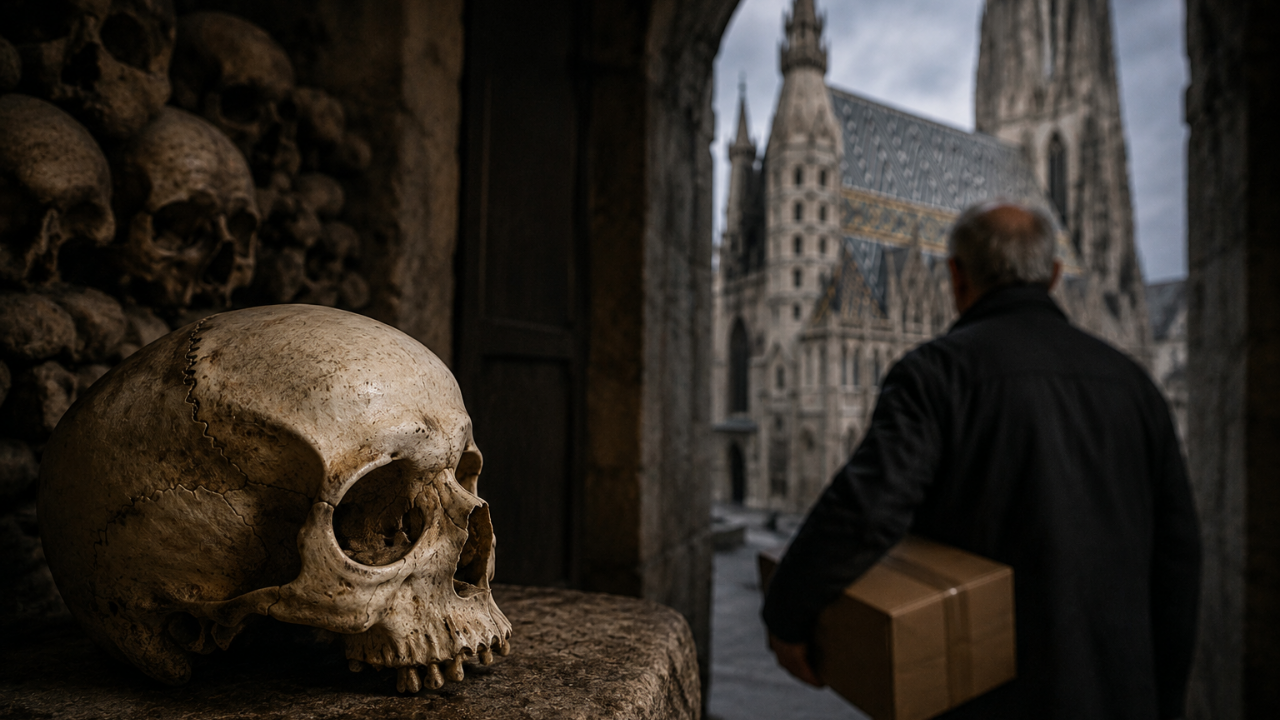
German tourist stole skull from Vienna cathedral, returned it 60 years later
Key Points
For around six decades, a human skull taken from the catacombs beneath Vienna's St. Stephen's Cathedral remained far from its original resting place. The skull had reportedly been stolen by a young German tourist during a visit to the cathedral's underground burial chambers and kept for much of his life. Then, near the end of his life, the man decided to return it.
For around six decades, a human skull taken from the catacombs beneath Vienna's St. Stephen's Cathedral remained far from its original resting place. The skull had reportedly been stolen by a young German tourist during a visit to the cathedral's underground burial chambers and kept for much of his life. Then, near the end of his life, the man decided to return it. According to a report by the Austrian newspaper Krone, the skull unexpectedly arrived back at St. Stephen's Cathedral in a parcel, accompanied by a letter from an elderly man in northern Germany. In the letter, he confessed that he had taken the skull as a young tourist around 60 years earlier and said that, as his life was drawing to a close, he wanted to make peace with himself. The extraordinary return brought an end to a story that had apparently begun with an act of youthful recklessness and concluded decades later with an attempt at remorse and restitution.
An unexpected package
The unusual discovery began when Franz Zehetner, an official associated with St. Stephen's Cathedral, found a large, tied parcel on his desk without a specific sender. What appeared at first to be an ordinary mysterious package turned out to contain something far more startling: a human skull.
Inside was also a letter explaining how it had ended up there. The elderly man who sent the parcel wrote that he had stolen the skull while visiting the cathedral's catacombs as a young German tourist. After keeping it for approximately 60 years, he had decided to send it back.
According to Krone, the man wrote that he had reached the end of his life and wanted to settle his conscience. The confession transformed the strange package from an unexplained discovery into the conclusion of a decades-old theft. Zehetner was reportedly moved by the gesture, despite the extraordinary circumstances surrounding the skull's disappearance and return.
A decades-old theft
The theft reportedly took place during a guided visit to the catacombs beneath St. Stephen's Cathedral, one of Vienna's best-known landmarks. The underground chambers contain the remains of thousands of people and form an important part of the cathedral's history. For the young visitor, however, one of those human remains became an unusual and inappropriate souvenir. For decades, the skull remained outside the cathedral. There is little information about where it was kept during those years or why the man waited so long before returning it. What is known from his letter is that the decision came when he was elderly and reflecting on his life.
The return also raised an obvious question: to whom had the skull belonged? Unfortunately, experts could not determine the identity of the person whose skull was taken or match it with other remains in the cathedral's catacombs. According to the reports, the catacombs contain remains from different periods of Vienna's history, including bones associated with secondary burials. As a result, the identity of the person whose skull was removed may never be known. After its return, however, the remains were finally given a dignified resting place.
Back where it belonged
The catacombs beneath St. Stephen's Cathedral represent a hidden layer of Vienna's long history and contain the remains of countless people. Its owner remains unknown, and the circumstances of the person's original death and burial may never be established.
What is known is that the remains became separated from their original resting place when a young visitor decided to take them away. Six decades later, they found their way back. Zehetner viewed the man's eventual decision to return the skull as more than simply correcting an old mistake. After approximately 60 years away from the cathedral, the remains were finally returned and laid to rest again.
A final act of remorse
The story is unusual not only because of what was stolen, but because of how long the man apparently carried the consequences of his decision. According to his confession, the skull had remained away from the cathedral for most of his adult life. His identity has not been publicly revealed, leaving his letter as the only known account of the theft.
What began, according to the man's confession, as a reckless act during a tourist visit eventually ended with an anonymous parcel, a written confession and the return of human remains that had been away from the cathedral for around 60 years. For the unknown person whose skull was taken, the journey finally came to an end beneath the same cathedral from which it had disappeared. And for the man who stole it, sending the skull back appears to have been a final attempt to make peace with a decision he had made when he was young.