
Technology
How practical AI skills are helping workers tackle real job demands
Key Points
How practical AI skills are helping workers tackle real job demands Through NTUC LearningHub, learners are leveraging AI to analyse data, automate routine tasks and improve workplace decision-making. At 64, Mr Mohan K Velayutham has spent decades in the workforce. He began his career as a storekeeper in the electronics industry, where accurate record-keeping and stock control were part of the job.
How practical AI skills are helping workers tackle real job demands
Through NTUC LearningHub, learners are leveraging AI to analyse data, automate routine tasks and improve workplace decision-making.
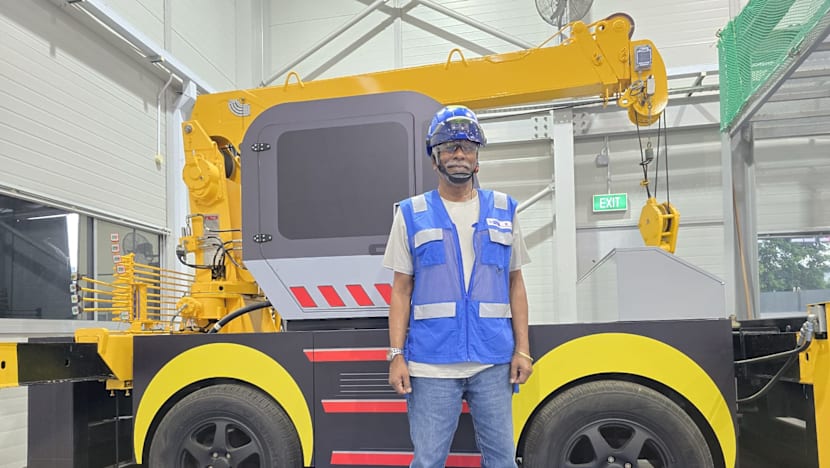
At 64, Mr Mohan K Velayutham has spent decades in the workforce. He began his career as a storekeeper in the electronics industry, where accurate record-keeping and stock control were part of the job. He later moved into workplace safety and health (WSH), combining his operational experience with a growing interest in how technology could help people work more safely.
With artificial intelligence (AI) reshaping industries, Mr Mohan has also embraced a new phase of learning. Through NTUC LearningHub, he completed the Querying Data with Microsoft Transact-SQL (SF) course to strengthen his understanding of data, which he sees as a foundation for applying AI more effectively in his role as a WSH officer and trainer.
NTUC LearningHub, a continuing education and training provider in Singapore since 2004, supports workers in building skills for lifelong employability and career resilience. The course is part of the AI Specialised pathway, one of four structured tracks offered by NTUC LearningHub under the NTUC AI-Ready SG initiative. The curated tracks provide learners with a structured way to build AI competencies across different roles and career stages.
Like Mr Mohan, Ms Chia Xin Ning and Mr Desmond Low are applying new AI skills in their day-to-day work. Their experiences show how workers can build on existing knowledge and use AI in practical ways, creating greater value in their roles.
TURNING WORKPLACE DATA INTO SAFETY LESSONS
Mr Mohan leverages AI tools to develop realistic workplace scenarios, toolbox meeting discussion points and quiz questions. This allows him to spend less time preparing training materials and more time coaching workers on safe work practices.
His training has also become more targeted. By using AI to analyse workplace safety information and incident records, he can identify recurring hazards and patterns of unsafe behaviours, and in turn tailor his sessions around the risks workers are most likely to encounter.
AI also serves as a brainstorming partner for Mr Mohan in preparing for risk assessments. It helps identify potential hazards and control measures, while summarising safety reports and investigation documents. “I then validate every recommendation against WSH regulations and my own knowledge of the field before incorporating it into the final assessment,” he said.
Mr Mohan plans to enrol in more AI-related courses and work towards AI certification. His goal is to combine his practical experience with AI capabilities to help organisations improve workplace safety, deliver more effective training and encourage greater adoption of AI across the WSH profession.
STREAMLINING EVERYDAY TEAM PROCESSES
For Ms Chia, 41, taking on more responsibilities prompted a new phase of learning.
After building a career in design, she stepped into a managerial role as creative experience manager and department head. Leading a team broadened her perspective and highlighted the need for a deeper understanding of the wider business and technical considerations that shape design decisions.
She enrolled in various NTUC LearningHub courses, including Service Design for Retail 360 Customer Experience with CX and UX, Querying Data with Microsoft Transact-SQL, and Certified Scrum Product Owner.
Drawing on her new skills, Ms Chia used AI-assisted coding to build internal productivity tools for her design team, which help automate routine administrative tasks, organise information and streamline workflows, giving designers more time to focus on higher-value creative work.
“Instead of using AI to generate content only, we think about where AI can support the entire workflow, from organising knowledge and accelerating research to improving collaboration and reducing repetitive work,” she said.
The courses also changed the way she approaches problem-solving. Rather than seeing design purely through its visual or experiential impact, she now considers how creative decisions connect with broader business and technical needs. This perspective has helped her contribute more meaningfully to discussions with clients and internal stakeholders.
“I can now bridge conversations between business goals, user needs and technical feasibility more confidently, ensuring that AI is introduced where it genuinely creates value,” she said.
BRINGING SHARPER FOCUS TO ENGINEERING DECISIONS
For Mr Low, 36, AI has become a useful second pair of eyes when reviewing technical documents, contracts and project risks.
A senior engineer whose work spans planning, design and site implementation, he has increasingly used technology and analytics to improve engineering processes. He enrolled in NTUC LearningHub’s Deep Learning Models and AI Using Python courses to refresh and strengthen his understanding of AI concepts.
In practice, he uses AI to summarise lengthy materials, cross-check drafts against requirements and contractual clauses, flag potentially missing items, identify clauses that may introduce project risks and highlight inconsistencies for further review.
“Rather than replacing my expertise, AI enables me to review documents more efficiently and focus my attention on critical decisions, technical assessment and risk management,” he said. “This has improved both productivity and the quality of my work.”
The courses also changed how he evaluates AI-generated output. Instead of accepting it at face value, he applies the same professional judgment and critical thinking that underpin his engineering work. “AI can help surface insights and speed up analysis, but engineers remain responsible for exercising professional judgment and making the final decisions,” he said.
The experiences of the three professionals reinforce a clear lesson: AI training delivers the greatest impact when workers can translate new capabilities into meaningful improvements in how they work. As the training engine of NTUC AI-Ready SG initiative, NTUC LearningHub equips workers with practical AI skills they can use at work, while helping them build capabilities for an AI-enabled economy.
Take the first step towards building AI skills with NTUC LearningHub.