
Environment
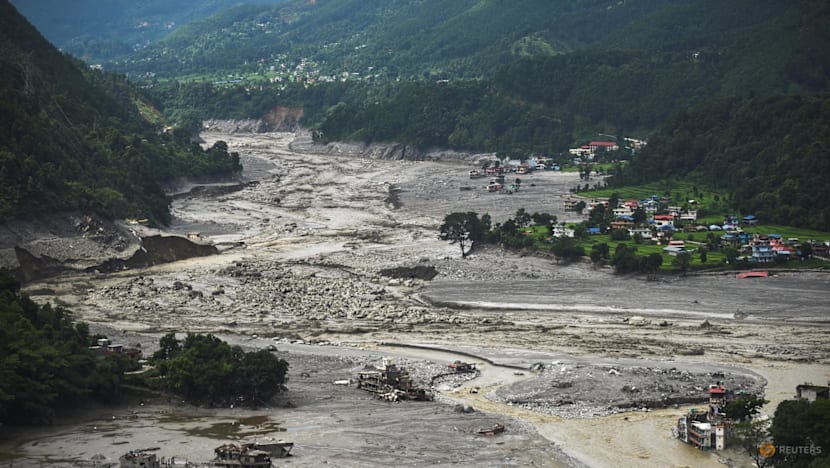
Nepal PM demands climate action after Himalayan disaster
Key Points
Nepal PM demands climate action after Himalayan disaster "It is now time for us to strongly raise with the international community the issue of the disasters we are experiencing as a result of climate change," said Nepali Prime Minister Balendra Shah. KATHMANDU, Nepal: Nepali Prime Minister Balendra Shah said last week's deadly Himalayan flood was "not an ordinary" event but driven by climate change, as he demanded international action. The huge wave of freezing water and debris, sparked by...
Nepal PM demands climate action after Himalayan disaster
"It is now time for us to strongly raise with the international community the issue of the disasters we are experiencing as a result of climate change," said Nepali Prime Minister Balendra Shah.
KATHMANDU, Nepal: Nepali Prime Minister Balendra Shah said last week's deadly Himalayan flood was "not an ordinary" event but driven by climate change, as he demanded international action.
The huge wave of freezing water and debris, sparked by a glacial collapse on the China-Nepal border, killed at least 939 people and left nearly 4,500 missing, with Kathmandu warning reconstruction costs could run into the "billions of dollars".
"The flood in the Bhote Koshi River in Rasuwa was not an ordinary flood," Prime Minister Balendra Shah said in a social media post late on Monday (Aug 31).
"It was one of the region's major disasters, triggered by an avalanche of snow and ice in the Himalayan region," he said.
While the exact cause of the collapse is unclear, climate change is causing glaciers to melt worldwide, increasing the risk of such disasters.
Scientists say the Himalayas, the world's highest mountain range, are melting faster as global temperatures rise.
"This incident indicates that the risks we face in the Himalayan region are increasing alongside climate change," Shah added.
"Therefore, this region must remain vigilant."
Nepal, a largely rural nation of 30 million people, has contributed little to the emissions driving global warming churned out by wealthy and industrialised nations, but is suffering its consequences.
Shah said Nepal should press its case internationally.
"It is now time for us to strongly raise with the international community the issue of the disasters we are experiencing as a result of climate change," he said.
Glaciers in the wider Himalayan and Hindu Kush ranges are a crucial water source for around 240 million people in the mountainous regions, as well as for another 1.65 billion people in the South Asian and Southeast Asian river valleys below.
UN Secretary-General Antonio Guterres, visiting Nepal in 2023, warned that Himalayan regions were struggling with rapidly melting glaciers and that the "rooftops of the world are caving in".
Following Wednesday's disaster, UN climate chief Simon Stiell said it was a "devastating reminder of how fragile these mountain environments can be", he said.
Nepal's economy is already under pressure, with limited resources to respond to a disaster of this scale.