
Science
Japan bear project aims to show coexistence, not culling, can prevent attacks
Key Points
Japan bear project aims to show coexistence, not culling, can prevent attacks The programme has been credited with prompting both a recovery in bear numbers and fewer encounters with humans in Nagano “It’s a small bear, I think, about a year and a half old,” Takii said as she peered at the 15kg (33lbs) Asiatic black bear thrashing in the cage. “It must have just parted from mum.”
Japan bear project aims to show coexistence, not culling, can prevent attacks
The programme has been credited with prompting both a recovery in bear numbers and fewer encounters with humans in Nagano
“It’s a small bear, I think, about a year and a half old,” Takii said as she peered at the 15kg (33lbs) Asiatic black bear thrashing in the cage. “It must have just parted from mum.”
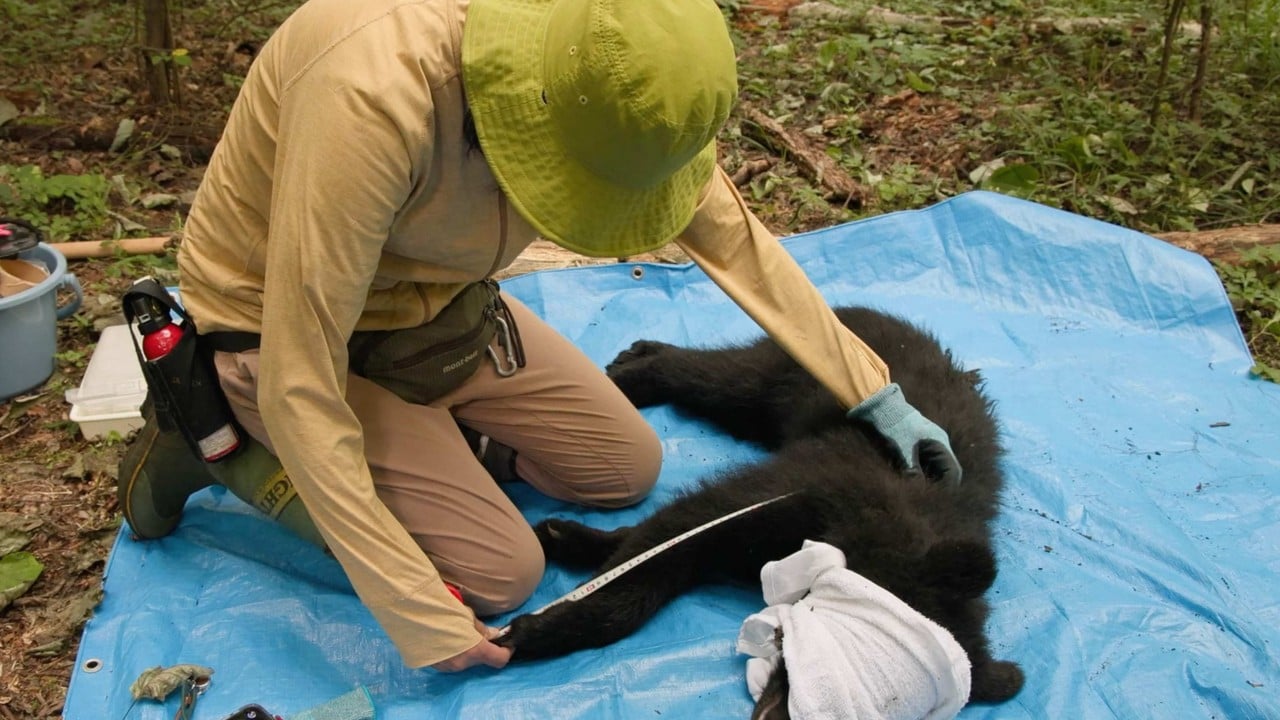
Its mother was not around, and Takii took blood and fur samples after her co-researcher tranquillised the young female. The animal was too small to be tagged with a GPS tracker, so she was released.
The process of trapping, tagging and releasing the animals is part of a pioneering management plan launched in 1995, as authorities realised the bear population was shrinking in the mountainous region in the centre of Japan’s Honshu island.
And it is becoming part of a model of coexistence in the region that some experts believe is an alternative to the dominant practice of culling the animals in an effort to prevent attacks.
“By not killing too many of them, more bears survive to live out their expected lifespan. In that sense, a healthy bear population is being formed,” Takii said of the process, which is paired with other methods intended to keep bears away from humans and monitor their movement.