
Science
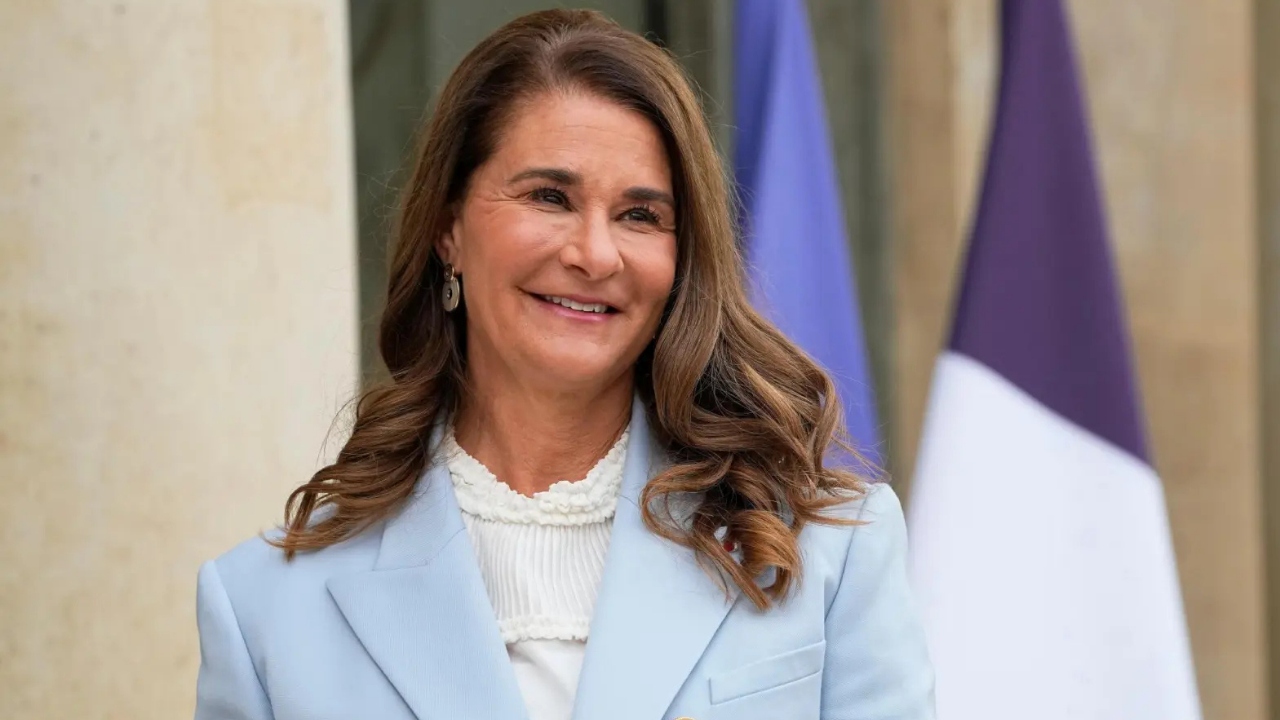
Melinda Gates' father worked for NASA; women engineers there inspired her work
Key Points
Melinda French Gates grew up in a household where science, engineering and education were closely woven into family life. Her father, Raymond Joseph French Jr., was an aerospace engineer whose career included work connected to NASA's Apollo programme, giving his daughter an early glimpse into the world of space exploration and advanced technology. But some of the most influential experiences from her childhood happened away from laboratories and launch sites.
Melinda French Gates grew up in a household where science, engineering and education were closely woven into family life. Her father, Raymond Joseph French Jr., was an aerospace engineer whose career included work connected to NASA's Apollo programme, giving his daughter an early glimpse into the world of space exploration and advanced technology. But some of the most influential experiences from her childhood happened away from laboratories and launch sites. At company picnics connected to her father's workplace, French Gates met women who worked as engineers and mathematicians, seeing first-hand that women could build careers in technical fields. Those encounters helped shape her understanding of what was possible for women and girls, an idea that would later become a recurring theme in her own career, technology work and philanthropic efforts.
Melinda French Gates' father worked on NASA's Apollo missions
Raymond French's career in aerospace placed him close to one of the most ambitious technological projects of the 20th century. He worked for the aerospace industry during the era of the Apollo programme, America's effort to send astronauts to the Moon and return them safely to Earth. For French Gates, this meant the space programme was not simply something she watched on television. Her father's work gave the family a personal connection to the engineering effort behind the missions.
She has spoken about growing up in Dallas and watching Apollo launches with her family, while understanding that her father was involved in the broader aerospace world that made such missions possible. The experience exposed her from an early age to the idea that mathematics, science and engineering could be used to solve extraordinarily difficult problems.
The women engineers she met became important examples
The people French Gates encountered through her father's professional life were arguably just as influential as the technology surrounding the Apollo era. She has recalled meeting women who worked in technical positions at company picnics and other gatherings associated with her father's workplace. Her father talked about women mathematicians working on his teams and made sure his daughters could see these women as real professionals. For a young girl growing up during a period when engineering and technology were still overwhelmingly associated with men, that visibility mattered. The women were not presented as an abstract argument about equality. They were people she could meet, speak with and observe pursuing demanding careers. Seeing them helped demonstrate that technical ability and professional ambition were not limited by gender.
Company picnics offered her a different view of women's careers
A company picnic might seem like an ordinary family event, but for French Gates it provided an unusual form of career exposure. She could see women participating in the same professional world as her father and contributing to complex technical work. That experience mattered because children often form ideas about what careers are available to them from the people they see around them. A girl who rarely encounters women in engineering may unconsciously conclude that the field is not meant for her. French Gates instead encountered women who challenged that assumption. The lesson was subtle but powerful. Women could be mathematicians, engineers and technology professionals, and they could contribute meaningfully to some of the most challenging projects of their time.
Her parents made education a priority
Her father's career was only one part of the environment that encouraged French Gates to pursue education. Her mother, Elaine French, also placed enormous importance on giving her children opportunities that she herself had not received. French Gates grew up as one of four children, and her parents expected all of them to attend university. The family worked to make higher education financially possible, reinforcing the idea that education was an investment rather than a luxury. This emphasis eventually helped lead French Gates to Duke University, where she studied computer science and economics before earning an MBA. The combination of her father's technical background and her parents' belief in education created an environment in which pursuing a demanding academic path was encouraged rather than discouraged.
She eventually chose computer science
French Gates' decision to study computer science gave her childhood exposure to engineering a direct connection with her own career. She attended Ursuline Academy in Dallas before going to Duke University, where she studied computer science and economics. At the time, computer science was developing rapidly but remained a field in which women were underrepresented. Her choice to enter the discipline placed her directly inside the technological world she had encountered indirectly through her father. She later joined Microsoft, where she worked in areas including product development and management. Her career demonstrated that the exposure she received as a child did not remain simply an interesting family memory. It became part of a trajectory that took her into one of the world's most influential technology companies.
Apollo showed her what science could accomplish
The Apollo programme also offered a powerful lesson about collaboration and possibility. Sending astronauts to the Moon required contributions from huge numbers of scientists, engineers, mathematicians and other specialists. The programme demonstrated that seemingly impossible objectives could become achievable when people with different technical skills worked towards the same goal. Growing up around someone involved in the aerospace industry allowed French Gates to see this world at close range. The lesson extended beyond space exploration. Science and technology could be tools for solving problems, creating opportunities and expanding the boundaries of what people believed possible. That understanding would later become important in her own approach to technology and social issues.
Her mother's influence reinforced the importance of opportunity
French Gates has also credited her mother with helping shape her attitude towards education and ambition. Elaine French had not had the opportunity to attend college, and she wanted her children to have access to opportunities that had been unavailable to her. The family's focus on education therefore carried a personal meaning. French Gates was raised with the expectation that she would study, work hard and become self-sufficient. Her parents' different influences complemented one another. Her father provided an example of technical work and introduced his daughters to women working in STEM fields, while her mother emphasised the transformative power of education. Together, these experiences helped establish an early belief that opportunity should be expanded rather than restricted.
From technology to a wider mission for women
French Gates eventually moved far beyond her career in computer science and technology. Through her philanthropic work, she became a major advocate for women and girls, focusing on areas including health, economic opportunity and access to education. Her later work has repeatedly returned to the question of what prevents women from reaching their full potential. The childhood experience of meeting women engineers provides an early illustration of why representation can matter. Seeing someone succeed in a field can make that path feel imaginable to the next generation. The women French Gates encountered through her father's workplace showed her that technical careers were possible for women. Decades later, her own work has frequently centred on helping women gain the resources and opportunities needed to pursue their own ambitions.
Why seeing women in science mattered
The influence of those company picnics illustrates a broader point about how career aspirations develop. Young people do not learn only through classrooms or textbooks. They also learn from the people they encounter and the possibilities they see around them. French Gates could have grown up thinking of engineering and mathematics as overwhelmingly male professions. Instead, she met women who were already succeeding in those areas. That experience gave substance to the idea that she could enter a technical field herself. It also helped create a connection between representation and opportunity that has remained visible throughout her later advocacy. A role model does not necessarily need to deliver a formal lesson. Sometimes simply seeing someone like yourself succeeding can quietly expand the boundaries of what you believe you can become.
The childhood lesson that followed her into adulthood
French Gates' story ultimately connects three elements that appeared early in her life: technology, education and the visibility of women in technical careers. Her father's aerospace career exposed her to the extraordinary work surrounding the Apollo era, while the women she met through his professional world demonstrated that women could contribute to that work themselves. Her parents' emphasis on education then gave her the foundation to pursue her own academic ambitions. She went on to study computer science, work at Microsoft and eventually devote much of her public life to expanding opportunities for women and girls. The women she encountered at those company gatherings may have been only one part of a much larger set of influences, but they provided a lesson that stayed with her: seeing women succeed can change what the next generation believes is possible.