
Politics
‘Alpha,’ ‘beta’ and ‘Low T’ — the strange masculinity war consuming the midterms
Key Points
‘Alpha,’ ‘beta’ and ‘Low T’ — the strange masculinity war consuming the midterms "Democratic voters want a candidate who will fight," said Beth Reingold, an Emory University professor who specializes in gender and politics - Bookmark - CommentsGo to comments While major policy disputes over inflation, health care, taxes, tariffs, immigration, and the war in Iran dominate headline debates this midterm election cycle, an underlying cultural question is quietly shaping key congressional...
‘Alpha,’ ‘beta’ and ‘Low T’ — the strange masculinity war consuming the midterms
"Democratic voters want a candidate who will fight," said Beth Reingold, an Emory University professor who specializes in gender and politics
- Bookmark
- CommentsGo to comments
While major policy disputes over inflation, health care, taxes, tariffs, immigration, and the war in Iran dominate headline debates this midterm election cycle, an underlying cultural question is quietly shaping key congressional battles: what defines a real man?
This surge in aggressive posturing follows the brand of politics introduced over a decade ago by Donald Trump, who used a distinct style of masculinity to belittle primary rivals and defeat two female Democratic opponents during his White House campaigns.
Seeking to regain power, several Democratic candidates are now asserting their own version of manhood—or striving to more confidently deflect conservative attacks.
"Democratic voters want a candidate who will fight," said Beth Reingold, an Emory University professor who specializes in gender and politics. "And that’s conceived as a sort of masculine demand, a more masculine approach, especially in response to Trump."
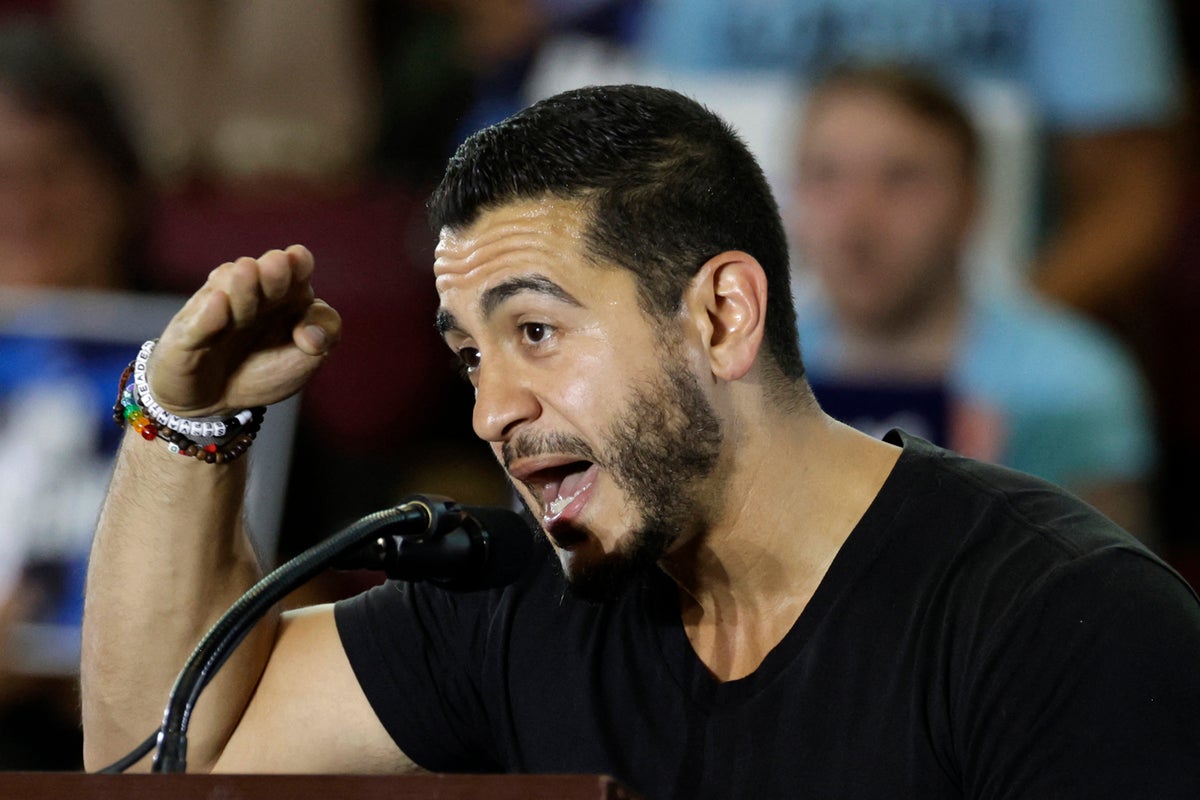
The dynamic is playing out across several key races. In Michigan, Democratic Senate nominee Abdul El-Sayed accused his Republican rival, Mike Rogers, of "beta energy" as they traded jabs over their high school football backgrounds.
Down in Texas, conservative figures have targeted Democratic Senate nominee James Talarico, labeling him "Low T Talarico" in reference to testosterone.
The 37-year-old Talarico, who is campaigning against 63-year-old Ken Paxton, brushed off the insult by saying, "I don’t think guys my age are really concerned about that kind of thing."
Reingold noted that gender discussions in campaigns typically focus on how female candidates choose to present themselves. "What’s different in this election," she said, "is that there’s even more of an incentive for these male candidates to make their masculinity present in some way, shape or form."
Projecting stamina and hiding physical weakness has a long history in American politics. Franklin Roosevelt hid his wheelchair and partial paralysis from the public.
John F. Kennedy, the youngest elected president, cultivated an image of youth and strength by being photographed sailing and playing football, while keeping his severe back pain and medication routine secret. Similarly, Ronald Reagan, then the oldest president ever to serve, was routinely depicted riding horseback.
Donald Trump, however, introduced a much more aggressive tone. He frequently applied derogatory nicknames to opponents, such as Marco Rubio—now Trump’s secretary of state—whom he called "Little Marco," and Jeb Bush, now retired from politics, whom he dubbed "Low Energy Jeb."
During a 2016 primary debate, he even publicly defended the size of his genitalia.
When Trump entered the Republican National Convention in 2024, speakers played James Brown's "It’s a Man’s Man’s Man’s World." He had recently survived an assassination attempt at a rally in Butler, Pennsylvania, where he stood on stage with a bloodied face, pumping his fist and telling supporters to "fight! fight! fight!"
Data from AP VoteCast showed that Trump increased his support among male voters to 55% that November, up from 51% in his 2020 race against Democrat Joe Biden.
In Michigan, the gender debate emerged after Rogers, a former Republican congressman, released a campaign commercial claiming Democrats want to permit "men in women’s sports." He criticized El-Sayed as overly liberal for the state while highlighting his own high school football background.
El-Sayed responded on social media over the weekend, writing: "Clearly your teammates didn’t vote you captain. If they did, you would have said it in the ad. Probably had that beta energy back then, too. I was captain. Football. Wrestling. Lacrosse."
Rogers pushed back in the exchange, writing: "Nothing screams ‘alpha’ quite like a 41-year-old desperately reminding everyone he was popular in high school. Looks like someone peaked in high school."
El-Sayed frequently posts videos of himself lifting weights in fitted black T-shirts, though he also shares clips of himself singing and dancing while rejecting conservative views on masculinity.
"Being a man is not about how you show up in the gym," he said in an interview with Lever News, a progressive news site. "It’s about how you show up for your family. It’s about how you show up in your community."
In Texas, famous for cowboy boots and swagger, masculinity became a focal point soon after state representative Talarico won the Democratic Senate nomination.
Republican Sen. Ted Cruz, who is not up for reelection this year, remarked on Fox News that "if you were making a list of 1,000 adjectives to describe this guy, ‘masculine’ would not be one of them" and claimed that "if a stiff breeze came by it would blow him over."
A political action committee supporting Paxton later aired an ad touching on transgender politics. It opens with a stern, heavily bearded man in a hard hat, accompanied by a voiceover stating: "This is Texas." The ad then cuts to a clip of Talarico saying there are more than two biological sexes, as the narrator adds, "This is not."
Paxton’s campaign is banking that personal attacks and their cultural associations will resonate with voters in a state that embraces the slogan, "don’t mess with Texas."
"When one party or one group says that another candidate isn’t masculine, or isn’t masculine enough, they are not really just talking about that candidate," said Joshua Blank, research director for the Texas Political Project at the University of Texas at Austin.
"It’s a way to say that this candidate is allied with groups and individuals who hold nontraditional views about the roles of men and women in society, and even the definition of male and female."
Talarico generally dismisses the taunts, arguing that they "don’t meet the needs of Texans" struggling with the costs of groceries, gas, and insurance.
Instead, he tries to reframe the debate as "about what it means to be a real man" by describing how his adoptive father, Mark Talarico, spent every Saturday mowing the lawns of both his own home and the elderly widow next door.
"He never talked about it. He just did it — because that’s what a man does," Talarico tells voters on the trail. "Call me old fashioned but a real man takes responsibility."
He then uses the narrative to highlight corruption allegations against Paxton, which Paxton denies. "Real men serve others," Talarico says. "Weak men serve themselves."
Join our commenting forum
Join thought-provoking conversations, follow other Independent readers and see their replies
Comments