
Science
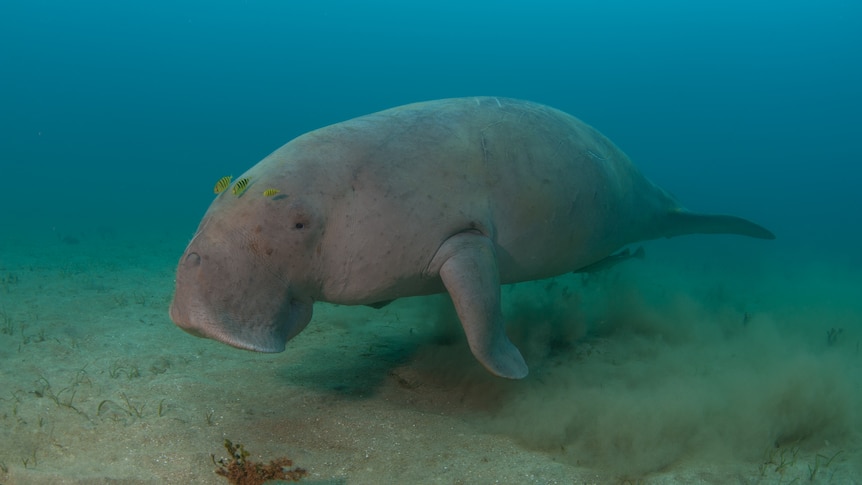
Researchers find dugong numbers halved in Gulf of Carpentaria
Key Points
'Shock' dugong decline in Gulf of Carpentaria prompts calls for more research, fishing bans In short: Aerial surveys show dugong numbers in the Gulf of Carpentaria have dropped by 50 per cent. Researchers have partnered with Indigenous ranger groups to monitor dugong numbers after an 18-year gap between surveys. Indigenous rangers are calling for more funding from the federal, Northern Territory and Queensland governments to conduct more regular surveys of dugongs and seagrass in the area.
'Shock' dugong decline in Gulf of Carpentaria prompts calls for more research, fishing bans
In short:
Aerial surveys show dugong numbers in the Gulf of Carpentaria have dropped by 50 per cent.
Researchers have partnered with Indigenous ranger groups to monitor dugong numbers after an 18-year gap between surveys.
What's next?
Indigenous rangers are calling for more funding from the federal, Northern Territory and Queensland governments to conduct more regular surveys of dugongs and seagrass in the area.
Researchers have recorded a 50 per cent drop in dugong numbers in one of the most globally important populations in the Gulf of Carpentaria.
Dugongs are classified as vulnerable on Australia's threatened species list, and have the same classification internationally.
James Cook University (JCU) researcher Chris Cleguer said aerial surveys his team carried out across the gulf in 2025, in partnership with Charles Darwin University (CDU) scientists and Indigenous ranger groups, had produced a shocking result about the animal's latest numbers.
"In 2007 we had an estimated gulf-wide population size of about 10,000 dugongs, and looking at the numbers that we've got in 2025, we are looking at about 5,000 individuals across the gulf, so we have a reduction by half of population size," he said.
The researchers' raw count found 305 dugongs across the gulf in 2025 compared to 471 in 2007.
Dr Cleguer said the biggest change was in Queensland waters, where 63 dugongs were recorded in 2025, compared to 231 in 2007.
The survey numbers were converted to population estimates using nationally recognised statistical methods.
Dr Cleguer said because there was such a large gap of 18 years between the surveys, it had been difficult to work out the trajectory or cause of the change.
"The analysis is ongoing; we still need to add more data to our analysis, but the numbers are concerning," he said.
"The time that has elapsed between 2007 and 2025 and not having data points in between is not helping our analysis.
"It's been really hard to understand what could have happened during that time gap."
After the Torres Strait, the Gulf of Carpentaria has had the world's second largest population of dugongs.
CDU marine scientist Rachel Groom said it could be very difficult for dugong populations to recover.
"It is really concerning. They're long-lived animals, they're slow to breed and reach maturity, so that shift or decline in the population, we're looking at years to recover," she said.
Seagrass food source declining
While the scientists are unsure what may have caused the change in numbers, they have also recorded large declines in the seagrass meadows that dugongs depend on for all of their food in recent years.
They have undertaken monitoring projects with Indigenous ranger groups across the gulf in both Queensland and Northern Territory waters.
JCU scientist Alex Carter said cyclones, floods and high winds had smothered seagrass meadows in some areas.
"We think the seagrass has declined in the southern gulf because we've had a period of many cyclones in that area, really large rainfall, river flow with a lot of mud coming out into the gulf which reduces the light available for seagrass," she said.
"We've also had a period of really windy times in the gulf, which churns up sediment and reduces light for the seagrass."
Seagrass is also vulnerable to periods of elevated ocean temperatures, which have occurred across the gulf in recent years.
The Queensland Wellesley Island Rangers coordinator Tommy Wilson said his group had been very worried to find declines in both dugong and seagrass numbers.
"We noticed the depletion of the seagrass — I mean, if there's no seagrass, there's no dugongs," he said.
"It's concerning to us; they play a significant role culturally to us."
Dr Groom said other indicators had made her worried some dugongs could be starving to death.
"In the last couple of weeks we've had 11 dugongs wash up dead in the gulf which has further increased concerns of what's going on,"she said.
"People have also started to report green turtles with black fat, which is also a sign of starvation where the fat starts to metabolise."
The research partners said they also suspected commercial gill-net fishing was reducing dugong numbers.
Both Queensland and the Northern Territory have stopped it in some parts of the gulf, and the Territory has promised a total ban by the end of next year.
Li-Anthawirriyarra Sea Ranger Unit ranger Shaun Evans said his group wanted gill net fishing banned in the gulf immediately.
"We are really concerned," he said.
"I used to work on a barramundi fishing barge, and senior elders had concerns about us using nets. So we'd like all netting in the area to be stopped.
"And we would like to have more limits on crabbers working the area."
More support for research needed
The federal and Queensland governments helped fund the dugong research.
Mr Evans said his ranger group was seeking more funding so they could keep researching on their sea country.
"The dugong plays an important role in our culture; it's part of our family," he said.
"We need more money for more dugong and monitoring surveys; we need to go out and do proper monitoring each year before and after the wet season.
"We also want to keep working together with all the partners and with traditional owners to pinpoint what's happening out there, and hopefully we can come up with some solutions on how we can help the seagrass beds. And also teach families not to over-hunt."
Dr Groom said the universities also wanted more money to keep surveying to see if the declining numbers continued, and to find out with more certainty what had caused it, so that strategies could be worked out to better protect dugongs.
"This population change is a real shock, and I would hope we would be able to get some support from the Territory, Queensland and Commonwealth governments to support a survey probably within the next two or three years," she said.
"We really need to find out where these pressures are and how we can best respond."
Gulf of Carpentaria ' (LOCATION)
Gulf of Carpentaria (LOCATION)
the Gulf of Carpentaria (LOCATION)
Indigenous (ORG)
Northern Territory (LOCATION)
Queensland (LOCATION)
Australia (LOCATION)
James Cook University (PERSON)
Chris Cleguer (PERSON)
gulf (LOCATION)
Charles Darwin University (ORG)
Dr Cleguer (PERSON)
the Torres Strait (LOCATION)
Rachel Groom (PERSON)
Seagrass (ORG)