
Politics
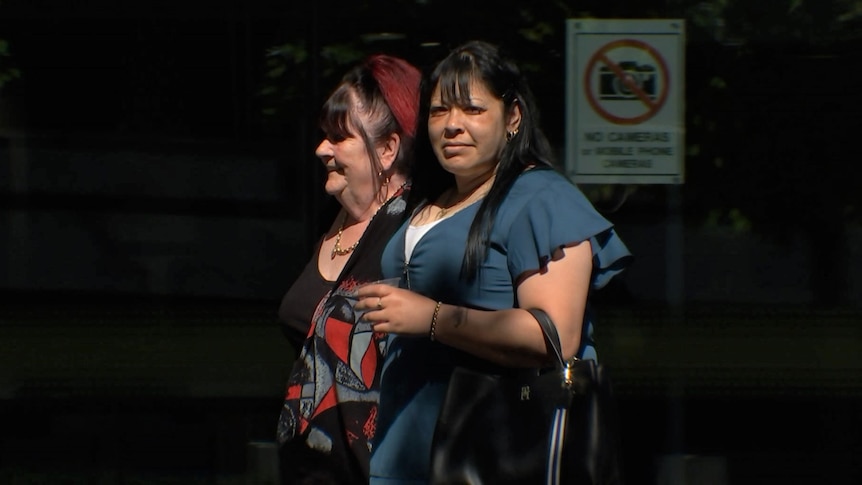
Aboriginal woman suing ACT government over illegal jail strip search
Key Points
Aboriginal woman suing ACT government over illegal jail strip search that breached her human rights In short: A former detainee is suing the ACT government after her human rights were breached when she was illegally strip-searched at Canberra's jail in 2021. The incident occurred when Julianne Williams became distressed after her request to attend her grandmother's funeral was rejected and was moved to a Crisis Support Unit, where she was subjected to a strip search in the bathroom. Ms...
Aboriginal woman suing ACT government over illegal jail strip search that breached her human rights
In short:
A former detainee is suing the ACT government after her human rights were breached when she was illegally strip-searched at Canberra's jail in 2021.
The incident occurred when Julianne Williams became distressed after her request to attend her grandmother's funeral was rejected and was moved to a Crisis Support Unit, where she was subjected to a strip search in the bathroom.
What's next?
Ms Williams's case will return to court this month.
An Aboriginal woman whose human rights were breached during an illegal strip search at Canberra's jail has launched a fresh bid for compensation from the ACT government.
Julianne Williams has lodged proceedings in the Federal Court calling for damages after a judge last year found her human rights were breached while she was detained on remand at the Alexander Maconochie Centre (AMC) in 2021.
The incident was sparked when Ms Williams was moved to the Crisis Support Unit after becoming distressed by the prison's refusal to let her attend her grandmother's funeral.
During a civil case against the ACT government last year, the ACT Supreme Court found she was subjected to an attempted strip search in her room, and a strip search in the toilet, and both had breached the Human Rights Act.
The use of force by officers was also incompatible with Ms Williams' human right to humane and appropriate treatment, Justice Verity McWilliam said in her decision late last year.
At the time, Ms Williams did not seek compensation from the territory, but a fresh statement of claim shows she is now seeking compensatory damages, which would be intended to act to both rectify the pain caused, and deter the territory against similar behaviour in the future.
'Major abuse of her rights'
Ms Williams's lawyer Sam Tierney said his client had originally sought an ex-gratia payment from the ACT treasurer, in the form of an act of grace payment.
But correspondence between Mr Tierney and the treasurer's office, seen by the ABC, shows that application has stalled.
"The government has indicated that it wishes to litigate further in relation to the incident," he said.
"The circumstances and now well publicised video of the incident show an absolutely traumatic incident being visited on someone in circumstances where there was no lawful justification for that to have happened."
The ACT government said act of grace applications are assessed on their merits in accordance with legal frameworks, and did not comment on individual decisions.
"We're not dealing with a minor infraction on Julianne's rights, we're dealing with a serious and major abuse of her rights in the setting of a jail where she had no ability to enforce those rights herself," Mr Tierney said.
Advocate says not all strip searches reported
Loading...Ms Williams's case has shone a light on a campaign to end strip searches in prisons across the country.
Nina, who requested to be known by her first name only, is the family violence justice project manager at Flat Out, an organisation aimed at assisting women exiting prison, and a member of the 'Formerly Incarcerated Girls Justice Advocates Melbourne' collective, known as FIGJAM.
"They [strip searches] are extremely invasive and people do identify that they are associated with an experience of sexual assault,"Nina said.
"You have to remove all of your clothing, you have to bend your knees so you're in a squatting position, spread your butt cheeks and cough."
Around 15,000 strip searches were conducted each month during varying periods across six Australian states in 2021-22, according to findings by the Human Rights Law Centre.
That number has reduced since then with the introduction of alternative practices like wands and body scanners at some prisons, including in Canberra, but Nina said their rollout has been inconsistent.
"There is no standard regulation across states and territories, which means policies and procedures and how strip searches are recorded vary,"Nina said.
No state or territory has committed to banning prison strip searches altogether.
Nina said she was aware of other cases like Ms Williams' that had happened in prisons across the country, and warned not all are reported.
"If you could imagine the sort of practice of forcefully having to remove your clothing, this would actually be seen as a crime if it took place in community," she said.
A spokesperson for ACT Corrective Services said the AMC removed mandatory strip searches from its procedures in 2022, and introduced body scanners in 2023.
But they said strip searches may still be required in limited circumstances "when absolutely necessary".
"We've also strengthened staff training, guidance and oversight to support consistent, human-rights-based decision-making in a complex custodial environment,"the spokesperson said.
"And an additional body scanner at the Court Transport Unit will be installed soon, further reducing the need for strip searching to occur."
Ms Williams's case will return to court this month.
Aboriginal (ORG)
Canberra (ORG)
Julianne Williams (PERSON)
Ms Williams's (PERSON)
the Federal Court (ORG)
the Alexander Maconochie Centre (ORG)
AMC (ORG)
Ms Williams (PERSON)
the Crisis Support Unit (ORG)
the ACT Supreme Court (ORG)
Ms Williams' (PERSON)
Verity McWilliam (PERSON)
Sam Tierney (PERSON)
Mr Tierney (PERSON)
ABC (ORG)