
Business & Finance
Commentary: Rebuilding Nepal without repeating mistakes of 2015 earthquake
Key Points
Commentary: Rebuilding Nepal without repeating mistakes of 2015 earthquake The question is not simply how to respond to the flood, but how to reduce the economic and human consequences of the next disaster, says this researcher. SALT LAKE CITY, Utah:
Commentary: Rebuilding Nepal without repeating mistakes of 2015 earthquake
The question is not simply how to respond to the flood, but how to reduce the economic and human consequences of the next disaster, says this researcher.
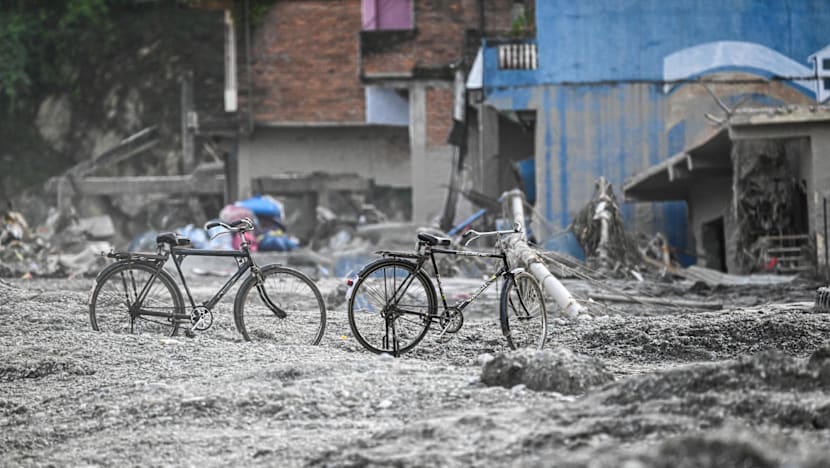
SALT LAKE CITY, Utah: As of Sep 1, the unfolding flood disaster in Nepal has left at least 1,000 people dead and nearly 4,500 missing after millions of cubic metres of water raced down the Bhote Koshi and Trishuli rivers.
The immediate economic shock is equally severe. In a single morning, floodwaters wiped out surface powerhouses, crippled the energy grid, and inundated farmlands during peak planting season. Dozens of bridges and crucial roadways, including the vital artery to Kathmandu, have been completely washed away, paralysing domestic logistics.
The infrastructure damage will have consequences long after the floodwaters recede. The severing of trade routes to the Chinese border means Nepal must now reroute roughly US$3 billion in Chinese imports through the Korala Pass or Indian seaports.
This detour through Indian ports adds at least 20 transit days, imposing a time-related trade cost equivalent to a 40 per cent tariff that will fall disproportionately on small enterprises.
The disruption will also affect Nepal’s service economy, particularly the Kailash Mansarovar tourism route, where the loss of lives and infrastructure is likely to weigh heavily on near-term activity.
The disaster therefore presents Nepal with more than an immediate humanitarian emergency. It exposes how economic vulnerabilities can extend across political borders when livelihoods, trade routes and infrastructure depend upon a shared Himalayan geography.
For Kathmandu, Beijing and New Delhi, the question is not simply how to respond to this disaster, but how to reduce the economic and human consequences of the next one.
MOBILISING FUNDS IS ONLY PART OF THE CHALLENGE
That question is pressing as Nepal begins another major reconstruction effort. With Finance Minister Swarnim Wagle estimating the reconstruction bill at roughly US$4 billion to US$5 billion, Kathmandu faces external debt-servicing obligations precisely as it prepares for graduation from Least Developed Country status.
Yet Nepal’s experience after the 2015 earthquake suggests that the scale of reconstruction spending alone will not determine the quality of the recovery.
A decade ago, Nepal learned that mobilising reconstruction money was only part of the challenge. Research on the 2015 recovery finds that conventional procurement rules and construction contracts were poorly suited to the urgency and uncertainty of post-disaster reconstruction.
Bureaucratic approval processes delayed projects, while standard contracting arrangements made it difficult to respond to changing costs and conditions. The lesson from 2015 is therefore not simply that Nepal needs more reconstruction financing. It is that the institutions and rules through which that money is spent matter just as much.
The National Planning Commission's forthcoming Post-Disaster Needs Assessment provides an opportunity to apply that lesson. Rather than merely tallying damaged roads, bridges, power facilities and other assets, the assessment should incorporate climate and geological risk into decisions about reconstruction.
But planning must be accompanied by institutional reform. Procurement rules and reconstruction contracts should be adapted to post-disaster conditions, allowing for faster approvals and realistic timelines while providing flexibility to respond to unforeseen changes during reconstruction.
Rebuilding vulnerable infrastructure in the same hazardous river corridors may restore economic activity quickly, but it could also recreate the vulnerabilities that made the present losses so severe.
IMPORTANCE OF COORDINATION
The experience of 2015 also confirms the importance of coordination. The government has activated the Prime Minister Relief Fund to channel international financial assistance, while foreign governments and international partners have pledged financing, supplies, specialist teams and equipment.
Deploying those resources effectively will require addressing persistent gaps in Nepal's disaster-response capacity, from shortages of heavy rescue equipment to fragmented government data systems and inadequate backup communications.
But these needs must look to the future, too. Systemic vulnerabilities, such as the absence of automated early-warning networks along dangerous rivers and the unregulated development of infrastructure in vulnerable flood zones, continue to hinder the country’s ability to manage crises.
Because the avalanche that triggered the flooding originated in unmonitored Tibetan territory, it exposed a critical gap in transboundary monitoring and data sharing, making reliance on post-disaster diplomatic communication insufficient.
That creates a case for a Himalayan early-warning framework through which China, Nepal and India share glacier, rainfall and river-flow data in real time, giving downstream authorities more time to warn communities and protect critical infrastructure.
Such cooperation need not replace national disaster-management systems. Rather, it would recognise that countries sharing the Himalayan watershed can manage some risks more effectively when information moves across borders as quickly as the hazards themselves.
Nepal's challenge, then, is to change what reconstruction means. The experience after the 2015 earthquake demonstrated the costs of institutional fragmentation and the importance of rebuilding with future risks in mind.
The present disaster adds another lesson: Some of Nepal's most consequential environmental risks cannot be fully monitored or managed within its borders.
Nischal Dhungel is PhD Student in the Department of Economics at the University of Utah and Fellow at the Nepal Institute for Policy Research. This commentary first appeared on Lowy Institute’s blog, The Interpreter.