
Technology
Commentary: Big Tech is incapable of solving its Frankenstein problem
Key Points
Commentary: Big Tech is incapable of solving its Frankenstein problem The public is already convinced the tech industry can’t be trusted with its own creations, says Gautam Mukunda for Bloomberg Opinion. BOSTON, Massachusetts: Bill Gates, the billionaire co-founder of Microsoft, published a 6,000-word essay on Wednesday (Aug 26) saying that he would slow the development of artificial intelligence if he could. He elaborated in an interview with the New York Times, saying “in private, people...
Commentary: Big Tech is incapable of solving its Frankenstein problem
The public is already convinced the tech industry can’t be trusted with its own creations, says Gautam Mukunda for Bloomberg Opinion.
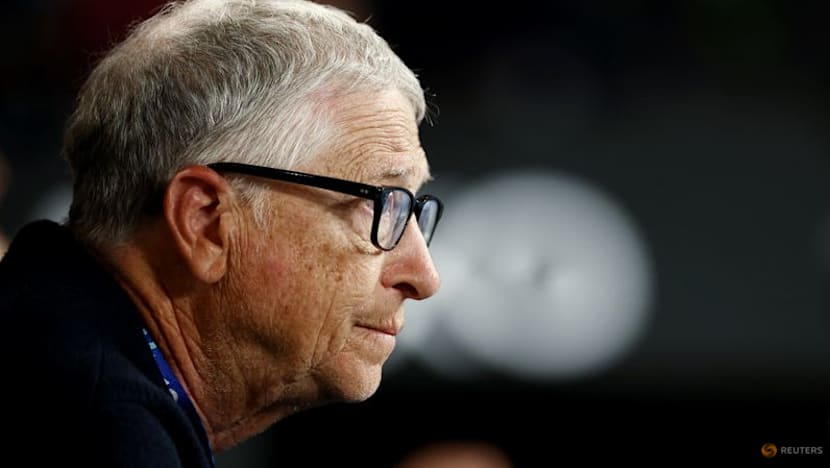
BOSTON, Massachusetts: Bill Gates, the billionaire co-founder of Microsoft, published a 6,000-word essay on Wednesday (Aug 26) saying that he would slow the development of artificial intelligence if he could.
He elaborated in an interview with the New York Times, saying “in private, people who understand how good this stuff is, and how much better it’s getting, they’re very worried” but few are raising the issues in public because “they’re now saying to each other: ‘Hey man, don’t say that. It’s bad for us – the next trillion dollars we’re trying to raise.’”
He scoffed at the idea of trusting the industry to manage itself, saying “self-regulation on the most dangerous tool ever invented? No, thanks!”
The public is already convinced the tech industry can’t be trusted with its own creations. Some legal news last week explains why. A bipartisan coalition of 51 attorneys general announced a proposed settlement with Meta Platforms that obligates the social media company which runs Facebook and Instagram to put tight restrictions on how children use its platforms. The restrictions are weaker than those Facebook’s leaders put on their own children.
"WHY CREATE SOMETHING YOU’D NEVER LET YOUR KIDS USE?"
Meta agreed to a two-hour default daily limit on accounts held by minors, a block from midnight to 6am, an end to showing anyone under 18 “like” counts or cosmetic surgery filters, and an independent auditor to verify compliance.
At the Aspen Ideas Festival in 2024, Peter Thiel, Facebook's first outside investor and a longtime Meta director, said he restricted his young children to 1.5 hours of screen time a week and that was typical for Silicon Valley parents. Meta Chief Executive Officer Mark Zuckerberg has said he doesn’t want his children passively moving from video to video. But based on Meta’s products, he did want your children doing that, at least until last week’s settlement.
Why create something you’d never let your kids use? Chamath Palihapitiya, the CEO of Social Capital and co-host of the All-In podcast, explained that “Silicon Valley has completely lost what made it great. It was a place for weirdos, for people at the fringes, for people that really were idealistic. And it has become something that's far from that now…all we have done is focused on making money in every single way that we can, hand over fist”.
Maybe it’s because they listened to the advice of a former head of user growth at Facebook, who told Stanford University MBA students that the tools he had created were ripping apart the social fabric, and then said “get the money, get the money, and then let’s get around a table and let’s create new rules. Literally that simple: get the f****** money”. His name? Chamath Palihapitiya.
FALLING TRUST FOR AI LEADERS
An industry whose leaders don’t trust their kids with creations it markets to yours won’t find sympathetic ears when it asks for more wealth and power. Public opposition to data centre construction now runs higher now than opposition to nuclear power plants. And in a survey of 1,088 Americans aged 18 to 34 by CNBC and Generation Lab, overwhelming majorities said they didn’t trust AI leaders.
The response has been to blame people warning about AI’s potential downsides, especially Anthropic and its CEO Dario Amodei.
In the same episode of All-In where Palihapitiya lamented the new culture of Silicon Valley and dismissed what he called a pearl-clutching AI doom narrative, venture capitalist and former Trump administration AI and crypto czar David Sacks said Anthropic was “engaged in a sophisticated regulatory capture scheme based on fear-mongering” and that “no company and therefore no founder or CEO has done more to promote these fears than Dario has”.
Sacks allowed that Amodei’s concerns might be sincere but said expressing them was still an attempt at capture.
If even sincere warnings get condemned as an attempt to manipulate the government, then there’s little anyone in the industry can do to warn or safeguard the public. Gates, whose concern closely tracks Amodei's, put it plainly to the Times: “You have people attacking the person who's the most open about the downsides”.
Sacrificing Amodei for the tech industry’s sins will just show the public that it will punish anyone who warns about AI’s dangers.
THE LIMITS OF COUNTING ON POLITICIANS
Many tech leaders have responded to public hostility by throwing their financial resources behind the Trump administration and other politicians they think will oppose regulation.
But history shows the limits of counting on friendly politicians. A Republican president helped create the Occupational Safety and Health Administration, the Environmental Protection Agency, and the Consumer Product Safety Commission.
American business was more popular then and employed many more people than the AI industry does now. None of that helped forestall regulation when the public demanded it.
Herbert Stein, who chaired Richard Nixon's Council of Economic Advisers, said more regulation was imposed under Nixon than any President since Franklin Delano Roosevelt. And that approach is already failing, with politicians from socialist Senator Bernie Sanders to Donald Trump ally Governor Greg Abbott of Texas striking anti-data centre stances.
AI doesn’t have millions of employees making its case. Virginia's Joint Legislative Audit and Review Commission found that a typical 250,000 square foot data centre employs about 50 full-time workers once open, roughly half of them contractors. Amazon.com is investing US$35 billion in the state by 2040 for at least 1,000 jobs, while Virginia's sales-tax exemption for the industry cost an estimated US$1.6 billion in fiscal 2025.
Brookings Institution researchers do find real gains around the largest sites, with private employment up 4 per cent to 5 per cent, which is something. But it’s not “my neighbour works for OpenAI” either.
If the AI industry wants to dampen public backlash, it should start by embracing Gates’s advice. After all, he’s the only tech leader who’s been on the receiving end of a government attempt to break up his company.
An effective regulatory body, real protection for children, and communities that get more from data centres than 50 jobs in exchange for tax breaks would be a good start. Otherwise, the rebellion that’s beginning with data centres won't end there.
Frankenstein (PERSON)
Gautam Mukunda (PERSON)
Bloomberg Opinion (ORG)
BOSTON (LOCATION)
Massachusetts (LOCATION)
Bill Gates (PERSON)
Microsoft (ORG)
the New York Times (ORG)
Meta Platforms (ORG)
Facebook (ORG)
Instagram (ORG)
Meta (ORG)
the Aspen Ideas Festival (EVENT)
Peter Thiel (PERSON)
Silicon Valley (LOCATION)