
Education
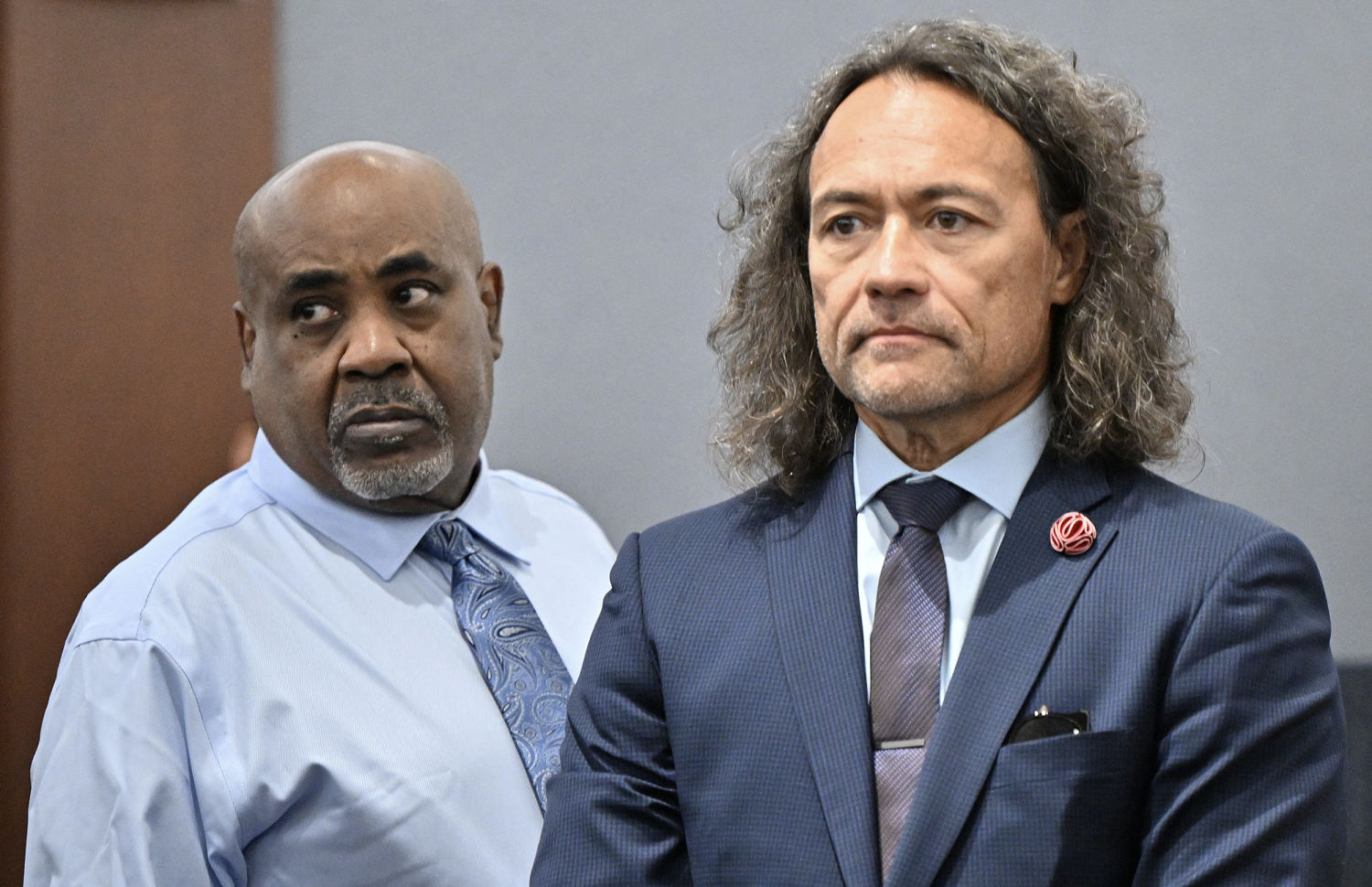
‘Not the end of the movie’: Duane Davis’ lawyer on what’s next after Tupac murder verdict
Key Points
A day after a Las Vegas jury found Duane “Keffe D” Davis guilty of first-degree murder in the 1996 killing of Tupac Shakur, his attorney said the defense is looking toward its next fight, an appeal. Davis, 63, was convicted Monday of first-degree murder with use of a deadly weapon in the fatal drive-by shooting of Shakur nearly 30 years ago. His sentencing is Oct. 13, when he faces the possibility of spending the rest of his life in prison.
A day after a Las Vegas jury found Duane “Keffe D” Davis guilty of first-degree murder in the 1996 killing of Tupac Shakur, his attorney said the defense is looking toward its next fight, an appeal.
Davis, 63, was convicted Monday of first-degree murder with use of a deadly weapon in the fatal drive-by shooting of Shakur nearly 30 years ago. His sentencing is Oct. 13, when he faces the possibility of spending the rest of his life in prison.
“We were preparing for the appeal, so even Mr. Davis knew that going in,” defense attorney Michael Sanft told NBC News on Tuesday. “Even before the first set of jurors came in for jury selection, we knew it was going to be an appeal issue.”
At the center of the appeal, Sanft said, will be the judge’s decision to allow jurors to hear statements Davis made to investigators under a 2008 proffer agreement. The agreement allowed him to speak candidly about what he did or witnessed that night in 1996 without facing charges.
The defense unsuccessfully sought to exclude the proffer statements before trial, because, Sanft said, “we believed it was highly prejudicial.”
Davis entered into the proffer agreement with federal investigators in 2008 as authorities investigated the killing of Christopher Wallace, the rapper known as the Notorious B.I.G. During those conversations, Davis provided investigators with information about Shakur’s killing.
Prosecutors in the case of Shakur’s killing, however, ultimately used Davis’ own words as a central part of their case against him, playing recordings of his statements to investigators and pointing jurors to accounts he later gave in interviews and his 2019 memoir, “Compton Street Legend.”
Sanft argued at trial that Davis had fabricated or embellished his accounts for money and notoriety and that investigators lacked physical evidence independently placing him at the scene of Shakur’s shooting.
Davis did not testify in his own defense, but jurors heard extensively from him through those earlier recordings and public statements.
Prosecutors called 24 witnesses in the 10-day trial. The defense called three witnesses.
Prosecutors portrayed Davis as a “shotcaller” in the South Side Compton Crips in California who helped orchestrate the attack on Shakur after Shakur and others beat Orlando “Baby Lane” Anderson, Davis’ nephew, inside the MGM Grand earlier that night.
Davis was not accused of firing the shots that killed Shakur. Prosecutors argued that he provided the gun and helped set the killing in motion. Under Nevada law, a person who aids or abets a murder can be held criminally responsible for the killing.
On Sept. 7, 1996, Shakur was riding in a BMW driven by Death Row Records co-founder Marion “Suge” Knight near the Las Vegas Strip when a white Cadillac pulled alongside them and someone inside opened fire.
Shakur, 25, was shot multiple times and died six days later. Knight survived.
For decades, no one was charged in the killing.
Davis became the only person ever prosecuted in connection with Shakur’s death after his public comments about the shooting helped revive investigators’ interest in the cold case. He is also the only person still alive who was believed to have been in the Cadillac when the shooting occurred. Sanft, however, said the defense continues to maintain that Davis was not in the car or in Las Vegas that night.
The jury rejected that defense, returning a unanimous guilty verdict after less than three hours of deliberations.
Sanft said the speed of the decision surprised him.
“For a jury to come back 2½ hours after submitting it to them ... they had pretty much made up their minds,” he said. “We thought for sure they were going to, you know, spend time over the night to come back in the morning and really get into the evidence.”
Sanft said Davis had been prepared for the possibility of a conviction because of the pretrial rulings.
“There was an understanding that there’s a long game being played here,” Sanft said. “That this was not the end of the movie, but rather just a phase.”
Sanft said the defense will seek the minimum possible sentence at Davis’ Oct. 13 sentencing, but he acknowledged that Davis could effectively spend the rest of his life behind bars.
“Mr. Davis is in his 60s. He’s in his mid-60s,” Sanft said. “You know, at this particular point, any sentence is potentially going to be a life sentence for him. So, of course, we’ll be asking for the minimum, but that’s not a good option right now for him.”
Despite the guilty verdict, Sanft said, Davis remains focused on what comes next.
“No one ever wants to lose, especially something like this,” he said. “But ultimately, at the end of the day, he understands that this is the next step. We have to take it before an appellate court. We have to go through that process, and then we come back at some point.”