
World News
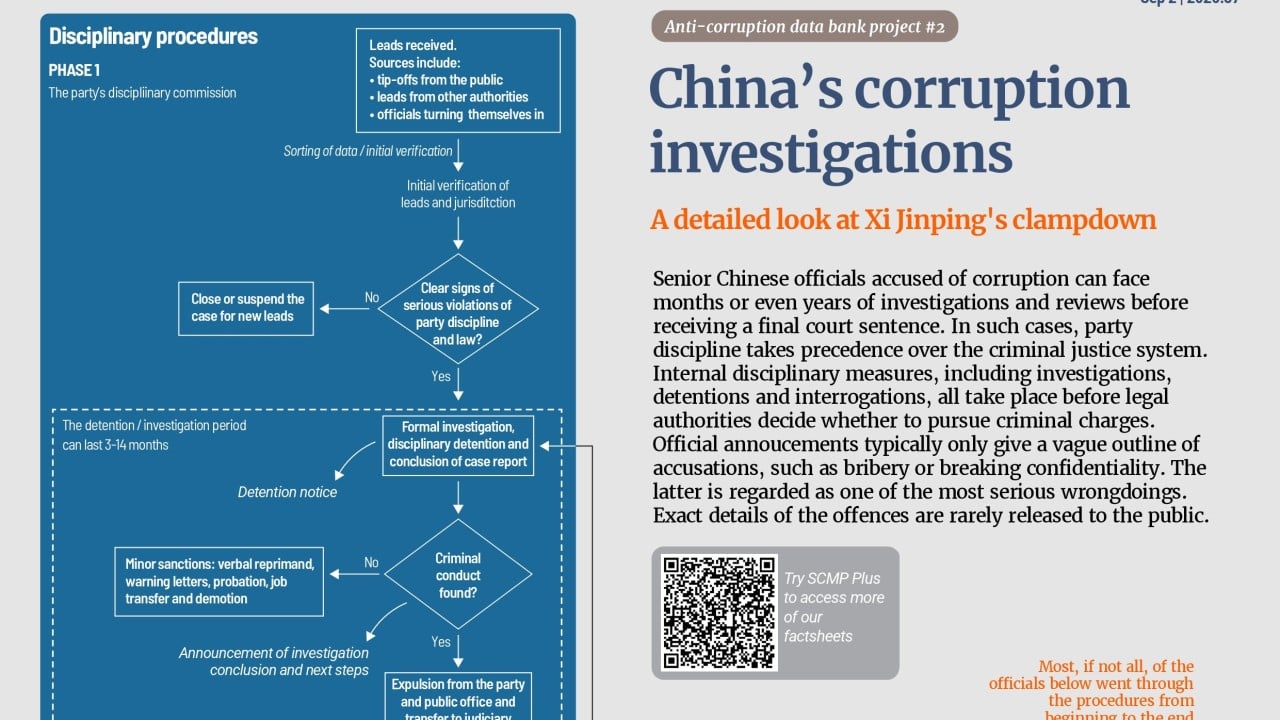
China’s corruption investigation procedures
Key Points
For more, check out the South China Morning Post’s full anti-corruption data bank project:
For more, check out the South China Morning Post’s full anti-corruption data bank project:
[Image text:] Disciplinary procedures
PHASE1
The party's disciplinary commission
Leads received.
Sourcesinclude:
tip-offs from the public
leads from other authorities
officials turning themselves in
Sorting of data/initialverification
Initial verification of
leads and jurisditction
Close or suspend the
case for new leads
No
Clear signs of
serious violations of
party discipline
and law?
Yes
The detention/investigation period
can last3-14 months
Detention notice
Formal investigation,
disciplinary detention and
conclusion of case report
Minor sanctions:verbal reprimand,
warning letters,probation,job
transfer and demotion
No
Criminal
conduct
found?
Announcement of investigation
conclusion and next steps
Yes
Expulsion from the party
and public office and
Anti-corruption data bank project #2
China's corruption
investigations
A detailed look at Xi Jinping's clampdown
Senior Chinese officials accused of corruption can face
months or even years of investigations and reviews before
receiving a final court sentence. In such cases, party
discipline takes precedence over the criminal justice system.
Internal disciplinary measures, including investigations,
detentions and interrogations, all take place before legal
authorities decide whether to pursue criminal charges.
Official annoucements typically only give a vague outline of
accusations, such as bribery or breaking confidentiality.The
latter is regarded as one of the most serious wrongdoings.
Exact details of the offences are rarely released to the public.
Try SCMP Plus
to access more
of our
factsheets
Most,if not all, of the
officials below went through
the procedures from