
Politics
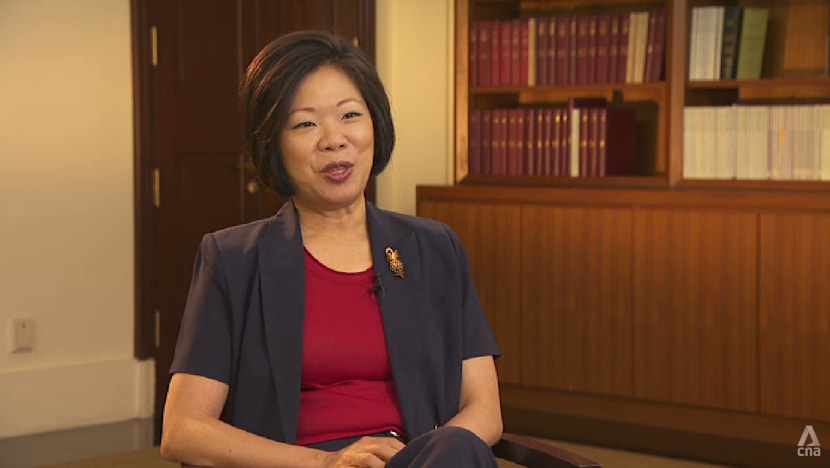
Road safety, drug addiction among Sim Ann’s focus areas as Second Minister for Foreign and Home Affairs
Key Points
Road safety, drug addiction among Sim Ann’s focus areas as Second Minister for Foreign and Home Affairs In a wide-ranging interview with CNA, Ms Sim – who was appointed to the roles in July – also spoke about the threat of external actors seeking to turn differences in Singapore society into divisions. SINGAPORE: Improving road safety, tackling issues around drug addiction and strengthening Singapore’s ties with its regional neighbours will be among Second Minister for Foreign Affairs and...
Road safety, drug addiction among Sim Ann’s focus areas as Second Minister for Foreign and Home Affairs
In a wide-ranging interview with CNA, Ms Sim – who was appointed to the roles in July – also spoke about the threat of external actors seeking to turn differences in Singapore society into divisions.
SINGAPORE: Improving road safety, tackling issues around drug addiction and strengthening Singapore’s ties with its regional neighbours will be among Second Minister for Foreign Affairs and Home Affairs Sim Ann’s priorities in the coming years.
Ms Sim, who was appointed to the roles in July, also said Singaporeans need to be alert to attempts by external actors to influence them and turn differences within society into divisions.
“With geopolitical uncertainty, one of the trends that I think Singaporeans need to be very aware of is that all over the world we see external actors seeking to influence, and Singapore is not immune to that,” she told CNA.
She said the country’s multicultural and multiracial identity, as well as its religious harmony, are strengths that Singaporeans should be confident in, particularly in the face of such attempts at influence.
ROAD SAFETY, DRUG REHABILITATION AMONG HOME AFFAIRS PRIORITIES
On her home affairs portfolio, Ms Sim identified road safety as a key priority.
Parliament passed amendments to the Road Traffic Act in August, including stiffer penalties for serious road offences, lower alcohol limits for drink-driving and a new drug-driving offence.
But Ms Sim said laws and regulations would need to be accompanied by a change in attitudes.
“We intend to roll out a more intensive public education campaign that's targeted at all road users. Because having the laws and regulations is one thing, but we also need mindsets to change,” she said.
She will also focus on drug addiction, incarceration and rehabilitation, as well as the Yellow Ribbon initiative, which helps ex-offenders reintegrate into society.
Ms Sim described these areas as closely connected across the Home Team and with the work of other agencies.
On foreign affairs, Ms Sim said she would continue supporting efforts to build Singapore’s links with Northeast Asia, including China, as well as Southeast Asia.
That work comes as Singapore prepares to assume the Association of Southeast Asian Nations (ASEAN) chairmanship in 2027, which will also mark the regional grouping’s 60th anniversary.
GUARDING AGAINST EXTERNAL INFLUENCE
On the risks posed by external influence, Ms Sim said awareness of such attempts was important, along with understanding Singapore's national interests and being confident in what makes the country unique.
“What's unique about us is our multicultural identity, multiracial identity, religious harmony, and that strength is built on diversity,” she said.
But external actors could seek to turn these differences into divisions, she warned.
Ms Sim said Singaporeans should also be confident in the country's own versions of Chinese, Malay and Indian cultures, and understand how they have evolved.
“If we are very familiar with how we have evolved, and we're very confident in saying this is who we are, then I think we would be less likely to be influenced by others who may seek to question the validity or the authenticity of who we are,” she said.
Building such “cultural competence” was key, she said, adding that Singaporeans should also be familiar with the country's foreign policy positions.
This could help them recognise messages or narratives that do not appear consistent with Singapore's national interests or how it has traditionally conducted its foreign policy, she added.
Ms Sim said this was where the work of the Foreign and Home Affairs ministries intersected.
“At the end of the day, domestic cohesion is, I think, what helps us to preserve our societal harmony, but also at the same time allows us to navigate confidently in the world.”
ON RETURNING TO THE HOME TEAM
For Ms Sim, her appointment at the Ministry of Home Affairs (MHA) also marks a return to familiar ground.
She previously worked at MHA as a civil servant from 2000 to 2003, and was part of efforts to further develop the Home Team concept, which was launched in 1997 to bring the ministry’s different agencies together around a common mission.
Ms Sim recalled efforts at the time to encourage officers from different departments to work together, including annual workshops and joint projects for younger officers.
“To me, it was very interesting because it's about culture change,” she said.
Returning to MHA more than two decades later, Ms Sim said she found it rewarding that identifying as part of the Home Team had become natural for officers.
She pointed in particular to how readily cross-department teams are now formed.
Some of the young officers involved in those early efforts are also now leading Home Team departments and statutory boards, she added.
“To see this effort now bear fruit, I find that really very rewarding,” she said.
“TRUST HAS TO BE EARNED EVERY DAY”
Ms Sim entered politics in 2011 and has been an MP for Holland-Bukit Timah GRC since then.
Asked which experiences had most shaped her approach to leadership, she recalled a conversation with a resident early in her political career.
The conversation was over plans to build a block of studio apartments for seniors on an open space in a mature estate.
Some residents opposed the development because it would obstruct views and replace an area they had grown accustomed to using for recreation.
Ms Sim, who had gone door to door to explain the plans, encountered one resident who gave her a particularly direct response.
“He said: ‘Look, let me just spell it out for you, you're new here. You're new here looking after this constituency, and we haven't yet seen you deliver any goodies for the residents, and now you want us to accept something that's a bit hard for us to accept. How do you think we would react?’”
The exchange, Ms Sim added, “hit the nail on the head”.
“It shows me that leadership has to be earned, and that trust has to be built up. So trust and leadership are something that takes time, and you have to earn it every day.”
She said the experience led her to start presenting an annual report card to residents, a practice she has maintained for more than a decade.
The exercise also helps her team stay focused on improvements across different neighbourhoods and on what residents want, she said.
CHANGING IDEAS OF WHAT A LEADER LOOKS LIKE
Ms Sim, who also chairs the People’s Action Party Women’s Wing, which advocates on issues affecting women, said women in Singapore had made significant progress over the decades.
Many of the “big issues”, such as access to education, had been addressed, she said. What remained were the “hard issues”, particularly mindsets around gender roles and leadership.
“For me, I think that the change that requires time, but is so important to do, is for there to be collective evolution in our idea of what a leader looks like,” she said.
If society’s instinctive image of a leader remained male, she said, women could end up being assessed against expectations of how a male leader should behave.
Ms Sim said she hoped greater attention would be paid to what women leaders accomplish rather than how they look or dress.
“I definitely want to see a Singapore where young women can fulfil their potential to the fullest,” she said.
At the same time, progress for women should not come at the expense of men, she said, adding that advocacy should be inclusive and “bring everyone along”.
Sim Ann’s (PERSON)
CNA (LOCATION)
Ms Sim (PERSON)
Singapore (LOCATION)
Sim Ann (PERSON)
Singaporeans (ORG)
Parliament (ORG)
Yellow Ribbon (LOCATION)
the Home Team (ORG)
Northeast Asia (LOCATION)
China (LOCATION)
Southeast Asia (LOCATION)
the Association of Southeast Asian Nations (ORG)
ASEAN (ORG)
Chinese (ORG)