
Business & Finance
Stocks fall, bond rout deepens as US and Iran trade attacks
Key Points
Stocks fall, bond rout deepens as US and Iran trade attacks Sept 2 : World stocks fell on Wednesday as fresh U.S. airstrikes on Iran pushed oil prices to five-week highs, stoking inflation concerns and extending a global bond selloff. The U.S. struck Iranian military targets near the Strait of Hormuz, while Tehran said it had targeted U.S. assets across the region, marking the most significant exchange of fire in weeks. Fears of further disruption to energy supplies lifted oil prices, with...
Stocks fall, bond rout deepens as US and Iran trade attacks
Sept 2 : World stocks fell on Wednesday as fresh U.S. airstrikes on Iran pushed oil prices to five-week highs, stoking inflation concerns and extending a global bond selloff.
The U.S. struck Iranian military targets near the Strait of Hormuz, while Tehran said it had targeted U.S. assets across the region, marking the most significant exchange of fire in weeks.
Fears of further disruption to energy supplies lifted oil prices, with Brent crude futures last up 0.1 per cent at $94.87 a barrel. [O/R]
"The recent increase in energy prices has put additional upward pressure on bond yields, which had already been on the rise on the back of some fiscal concerns," said Kiran Ganesh, multi-asset strategist at UBS Global Wealth Management.
The yield on the benchmark U.S. 10-year Treasury bond rose to an intraday high of 4.8122 per cent, its highest level in almost three years, while the yield on the 10-year Japanese government bond held above 3 per cent for a second straight session after hitting a three-decade high earlier this week.
Rising yields tend to support the U.S. dollar by boosting its appeal as a safe-haven asset, while reducing demand for equities and other riskier investments.
The U.S. dollar index, which measures the greenback against a basket of six currencies, was up 0.05 per cent at 99.734, near its highest since August 17.
"With the market already pricing quite a hawkish outlook for the Fed, we think there's much more scope for downward surprises for the dollar than there is for some of the other currencies," Ganesh said.
MSCI's gauge of global stocks fell 0.2 per cent and hovered near a one-month low. The pan-European STOXX 600 fell 0.3 per cent, after sharper losses in Asia following Wall Street's overnight selloff.
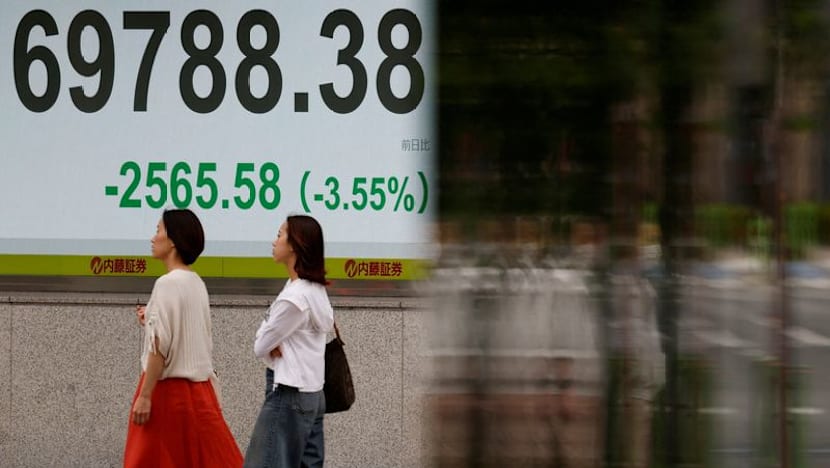
South Korea's KOSPI dropped almost 4 per cent, while the Nikkei 225 was down 2.9 per cent.
U.S. stocks index futures pointed to a muted open.
DATA DEPENDENT
The escalation in the Middle East and the global bond selloff have given September a shaky start, adding to pressure on markets days after hawkish comments from Federal Reserve Chair Kevin Warsh prompted investors to increase bets on another U.S. interest rate hike.
Ahead of the Fed's September 16 meeting, investors are looking to upcoming U.S. economic data for clues on whether the economy remains strong enough to justify another rate increase. ADP private payrolls data is due on Wednesday and the nonfarm payrolls report on Friday.
Fed funds futures imply a 68 per cent chance of a 25-basis-point rate increase this month, up from 37 per cent a week ago, according to CME Group's FedWatch tool.
The New Zealand dollar was down 1.2 per cent at $0.58220 after the Reserve Bank of New Zealand hiked interest rates by 25 basis points to 2.75 per cent, as expected. However, hawkish language in the central bank's statement weighed on the currency.
Gold was down 0.1 per cent at $4,322.24 an ounce, while bitcoin edged 0.6 per cent lower to $76,951.01 and ether was off 1 per cent at $2,394.57.