
Health
Pakistan hospital fire that killed 14 infants exposes serious safety failures
Key Points
Pakistan hospital fire that killed 14 infants exposes serious safety failures An interim inquiry found the neonatal nursery had no fire alarm or sprinklers, while an earlier blaze had already exposed deficiencies at the hospital. ISLAMABAD: A deadly fire that killed 14 infants at one of Pakistan’s largest hospitals has exposed serious shortcomings in fire safety and emergency preparedness, putting renewed scrutiny on safety standards at the country's public institutions. An interim...
Pakistan hospital fire that killed 14 infants exposes serious safety failures
An interim inquiry found the neonatal nursery had no fire alarm or sprinklers, while an earlier blaze had already exposed deficiencies at the hospital.
ISLAMABAD: A deadly fire that killed 14 infants at one of Pakistan’s largest hospitals has exposed serious shortcomings in fire safety and emergency preparedness, putting renewed scrutiny on safety standards at the country's public institutions.
An interim government inquiry into the Aug 26 blaze at the Pakistan Institute of Medical Sciences (PIMS) found that the neonatal nursery where the infants died had no fire alarm or sprinkler system.
Investigators also found there was no approved and rehearsed evacuation procedure specifically for the nursery.
The findings were detailed in a statement from Prime Minister Shehbaz Sharif’s office following an investigation he ordered into the tragedy.
They have intensified calls for accountability, particularly after the inquiry revealed that another fire at PIMS just weeks earlier had already exposed deficiencies in fire detection, alarms and evacuation preparedness.
The Aug 26 blaze broke out in the early morning and spread rapidly through the hospital's third-storey neonatal nursery.
Fifteen babies were being cared for there. Staff managed to rescue only one.
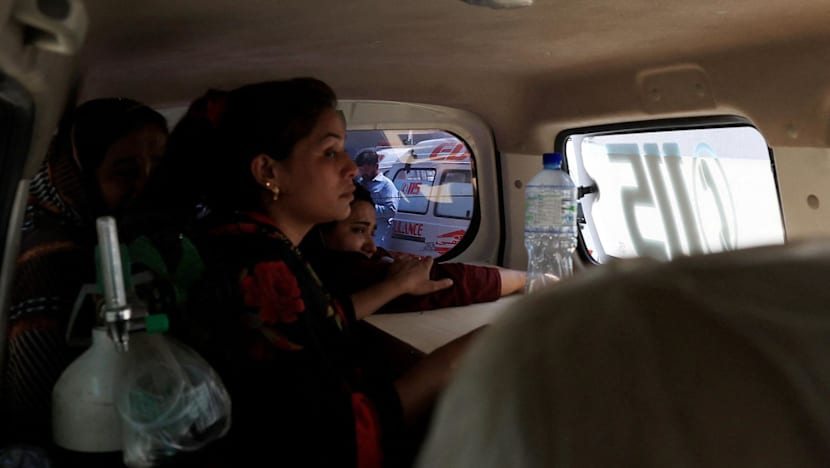
“It was a horrific scene that cannot be described,” said Rana Arif, who was at the hospital because his sister was undergoing an operation.
Arif told CNA he helped women who had just given birth onto stretchers.
“Most of the women’s stitches had opened and they were bleeding,” he recalled of the harrowing experience.
HERO NURSE HONOURED
The only newborn to survive was saved by nurse Razia Noreen, who ran into the burning nursery and carried the baby to safety.
She tried to return to save more babies but was unable to do so as the fire spread too quickly.
Noreen told the Associated Press that she was heartbroken she could not save the others and had struggled to sleep as memories of the tragedy continued to haunt her.
She had been widely praised online and Prime Minister Sharif said she had displayed exceptional courage and devotion to duty by risking her life.
Noreen will receive the Sitara-i-Khidmat, or Star of Service, one of Pakistan's most prestigious civil awards, as well as 10 million Pakistani rupees (US$36,000).
INQUIRY FINDS FAILURES
While investigators have yet to establish the precise cause of the fire, the interim inquiry identified multiple failures in the hospital's preparations for an emergency.
Besides the absence of alarms and sprinklers in the nursery, investigators found that emergency services were not contacted until six minutes after the fire began. The first emergency responders arrived 15 minutes after receiving the call.
The findings have drawn further scrutiny because PIMS had experienced a previous fire in July.
That blaze, at the hospital’s nursing hostel, had already exposed deficiencies in fire detection, alarm systems, evacuation preparedness and security response, the inquiry found.
The hospital administration failed to take the necessary steps following that incident, the report added.
Parliamentary Secretary for National Health Services Nelson Azeem, who visited PIMS after the nursery fire, blamed the hospital administration for failing to implement safety protocols.
“It’s the responsibility of the hospital administration to implement fire safety protocols … which they failed to do,” he said. “The entire blame falls on the hospital administration.”
PIMS said last week that staff had used all available fire-safety equipment to contain the blaze and that all emergency exits were open and operational.
EIGHT OFFICIALS SUSPENDED
The deaths have triggered public anger, with grieving families and civil society groups demanding accountability.
Sharif has ordered the suspension of eight officials, including the PIMS executive director, and directed that legal proceedings be initiated against those found responsible.
Others suspended include two joint executive directors, the head of the neonatal department, two doctors, the assistant director for security and the head of the Capital Development Authority's emergency services.
The government has also announced compensation of 5 million rupees (US$18,000) for the families of each infant killed.
The National Assembly's health committee has rejected the preliminary inquiry, saying significant gaps remain, and proposed independent fire and safety audits of healthcare facilities across the Islamabad Capital Territory.
The United Nations’ children agency UNICEF separately called for an urgent review and strengthening of fire prevention and safety standards across Pakistan’s health facilities.
Fire safety consultants say regular drills and equipment checks are critical, with hospitals advised to conduct fire drills every three months and test installed safety equipment monthly.
The deaths have prompted broader reviews of fire safety measures at hospitals across Pakistan.
Punjab, the country’s most populous province, has ordered an immediate review of fire safety systems, firefighting equipment and emergency response facilities at hospitals.
PIMS is Islamabad's largest tertiary care hospital and treats patients from across Pakistan.
Major questions remain unanswered, and the investigation is not over. Its final report is expected to address the exact cause of the fire and who should ultimately be held responsible.
In the meantime, the interim inquiry has recommended immediate corrective measures, including a hospital-wide fire and electrical safety audit, and practical evacuation drills.