
World News
Commentary: Walking away from Air India could cost SIA more
Key Points
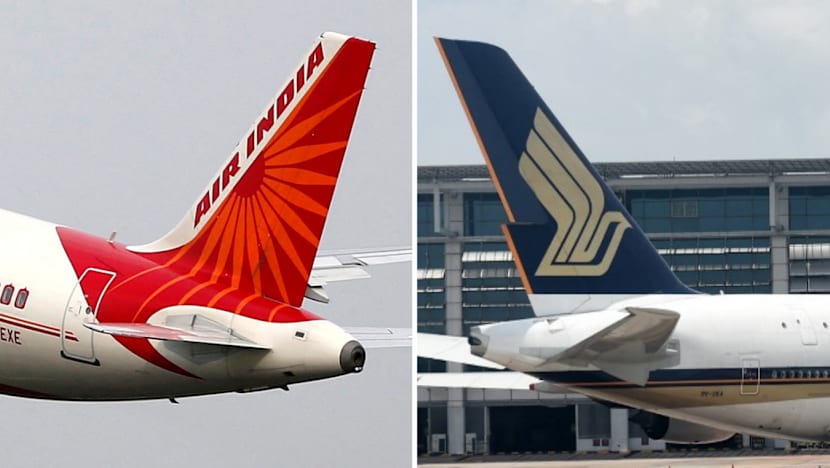
Commentary: Walking away from Air India could cost SIA more Air India’s mounting losses and challenges are cause for concern, but they do not make walking away the best option for Singapore Airlines, says former financial journalist Ven Sreenivasan. SINGAPORE: Singapore Airlines had no illusions about the challenges of its long-term investment in Air India, CEO Goh Choon Phong said during a results briefing in November 2025. Two years into the venture, SIA faces some bleak choices.
Commentary: Walking away from Air India could cost SIA more
Air India’s mounting losses and challenges are cause for concern, but they do not make walking away the best option for Singapore Airlines, says former financial journalist Ven Sreenivasan.
SINGAPORE: Singapore Airlines had no illusions about the challenges of its long-term investment in Air India, CEO Goh Choon Phong said during a results briefing in November 2025.
Two years into the venture, SIA faces some bleak choices. Air India posted losses of US$2.33 billion in the fiscal year ended March, more than double the prior year, and is reportedly seeking US$1.5 billion in fresh equity from owners Tata and SIA.
That could work out to almost US$380 million based on SIA’s 25.1 per cent stake of the enlarged Air India, after the Indian flag carrier merged with SIA’s co-owned Vistara in 2024. Tata is the biggest shareholder with 74.9 per cent.
This comes as SIA itself posted a net loss S$76 million (US$59.6 million) loss in the first quarter of 2026, despite record revenue. As losses mount, there is a growing chorus of voices calling for SIA to write off the investment and walk away rather than throw good money after bad.
INDIA MARKET IS WORTH THE EFFORT
The concerns are not misplaced – but neither do they make walking away the best option.
Yes, Air India faces substantial business and operational crosswinds: the prolonged Pakistan airspace closure to Indian carriers, the depreciation of the Indian rupee against the US dollar, the loss of key markets due to the Middle East conflict, sustained high fuel prices and intransigent corporate culture. Then there is the reputational and financial impact of the tragic AI171 crash in June 2025.
Most recently in August, respected Tata Group Chairman N Chandrasekaran – who had been instrumental in stitching together the Tata-SIA partnership – announced plans to step down in February 2027 following months of disagreements with the group's controlling charitable trust, partly over Air India's losses.
Nor can SIA ignore its own less-than-stellar record with airline investments. It lost huge sums in Air New Zealand following the collapse of the latter’s Ansett Australia subsidiary.
Yet none of this changes the fundamental reason SIA wanted Air India in the first place.
As SIA points out, India is the world’s third-largest aviation market by passenger traffic and is expected to treble by 2044 from 2024 levels.
Rising incomes, an expanding middle class, coupled with inadequate road and rail infrastructure, have made air travel a critical national priority. Yet, air-travel penetration is still low.
The irony is that the current dilemma comes after decades of effort by SIA to get a meaningful foothold in India. It was blocked at every turn since the early 1990s by regulatory and political obstacles. Air India’s privatisation and takeover by the Tata group almost four years ago finally provided the opening.
THE COST OF WALKING AWAY
Walking away now would mean giving up that hard-won opportunity to get a piece of action in one of the world’s hottest aviation markets with a favourable combination of partners.
As the national carrier, Air India holds valuable international traffic rights and airport slots around the world. At home, it has a huge domestic network and enjoys strong brand recognition.
In the Tata group, SIA has a strong partner which brings to the table local knowledge, scale, brand and reputation. As Tata’s partner, SIA brings aviation expertise, operational discipline and customer service. In short, world class standards in airline operations.
If Air India succeeds, SIA’s investment will generate a handsome return on a sustainable basis. More critically, it would also have established twin hubs in two big aviation markets, giving it enviable global reach and presence.
If SIA wants to grow beyond being a Singapore-centric single-hub player, where it already faces acute challenges from Middle East carriers and regional low-cost players, it has to be in a market like India.
STAYING THE COURSE IS NOT BLIND COMMITMENT
So there is a strong strategic case for staying the course with Air India. But the journey will not be smooth.
A multi-year restructuring of an airline of this size, legacy and ambition will involve setbacks, heavy investment and pressure on profitability in the initial years.
The more pertinent question, therefore, is not whether SIA should exit, but whether management remains convinced that the long-term strategic opportunity and potential returns justify enduring those costs and challenges.
SIA’s management must articulate the case clearly to its shareholders and the public here.
Has its assessment of the long-term value of the Air India partnership changed? What milestones should be set to judge whether the investment is delivering on its original expectations?
What kind of control will it take in the airline’s operations to ensure that its goals are met? How much operational control is Tata willing to give, and how much is the Indian government willing to tolerate?
How willing they are to let SIA take the lead in its proven area of expertise and do whatever it takes to transform Air India will be telling.
Staying the course on Air India does not mean just injecting more funds. SIA must be satisfied – and satisfy its shareholders – that the partnership is on track.
While things may look dire, Air India is not a lost cause either. Three months ago, the Indian carrier received a Skytrax 4-Star Airline Rating – on par with leading international carriers. Despite the financial difficulties, it is still taking delivery of new planes, upgrading its cabin products and training its staff to meet global standards.
Indeed, it will be easier for SIA to write off some S$1 billion and walk away. But the cost of doing so could be more than meets the eye.
Amid increasing geopolitical uncertainties, many global corporations are looking to Asia for growth. Abandoning such a high-profile project with major local partners could have reputational ramifications for Singapore companies in India.
Having committed itself, SIA must stay the course and navigate the turbulence. But it must be clear-eyed about what the issues are, what needs to be done and how it will get done.
Ven Sreenivasan is a former editor and journalist who has covered financial markets, economic and corporate news and aviation for more than 30 years.