
Technology
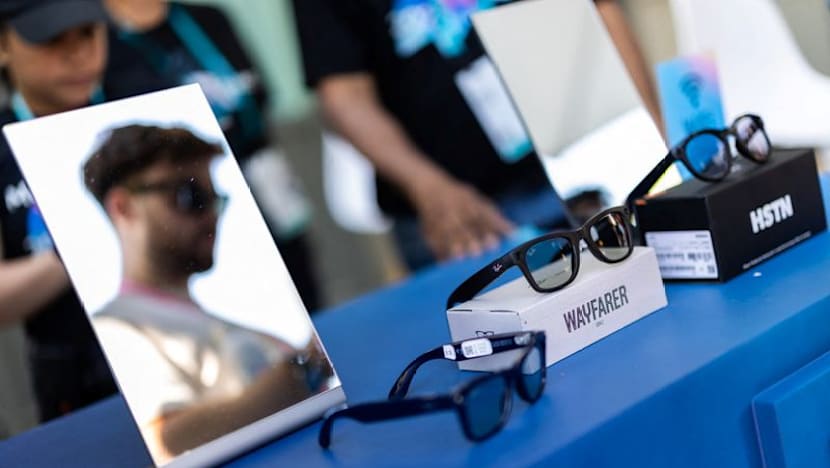
Commentary: The extremist risk behind smart glasses
Key Points
Commentary: The extremist risk behind smart glasses Smart glasses may represent the next commercially available technology to be manipulated by extremist actors, says this researcher. While frequently innovative, violent extremists have rarely needed to invent new technologies. More often, they adapt technologies developed for entirely different purposes once they become cheap, accessible and easy enough to use.
Commentary: The extremist risk behind smart glasses
Smart glasses may represent the next commercially available technology to be manipulated by extremist actors, says this researcher.
SYDNEY: While frequently innovative, violent extremists have rarely needed to invent new technologies. More often, they adapt technologies developed for entirely different purposes once they become cheap, accessible and easy enough to use.
Capabilities, such as artificial intelligence, drones and 3D printing that were once expensive, specialist or restricted to governments and large organisations are now available through consumer markets. Their accessibility has resulted in extremist adoption and exploitation.
Smart glasses may represent the next previously specialist, now commercially available, technology to be manipulated by extremist actors.
A decade after Google Glass failed to achieve mainstream adoption, smart glasses are finally beginning to break through. A once expensive technological novelty is becoming cheaper, more capable and increasingly ordinary.
Meta currently leads the market, but it will not be alone for long. Google plans to launch Android XR-enabled, AI-powered glasses later in 2026, while Apple is reportedly preparing its own product for 2027. At the other end of the market, inexpensive camera-enabled glasses are already appearing at mainstream retailers such as Kmart and Amazon.
This growth in availability has generated scrutiny. Much of it has centred on privacy, particularly the ability of wearers to film bystanders without their knowledge. Those concerns are real and have already produced cases involving voyeurism and harassment.
But the implications of accessible smart glasses extend beyond privacy. One area deserving greater attention is their potential co-option by violent extremists.
STRENGTHENING EXTREMISTS’ CAPABILITIES
Emerging technologies have long acted as force multipliers for terrorist actors, making it easier to plan attacks, increase their lethality, communicate and produce or distribute propaganda.
The extremist experimentation and use of drones follows this pattern. Uncrewed aerial systems existed as military technologies for decades, but their accessibility changed dramatically once commercial drones became cheap and simple enough for ordinary consumers to operate.
Extremist groups on the battlefield subsequently adapted commercial systems for surveillance, propaganda and attacks. Domestic extremist interest has similarly grown as these systems have become more capable and easier to obtain.
Extremists did not need to develop the underlying technology. Commercial markets did much of that work for them.
Smart glasses potentially follow the same logic, even if their implications are less dramatic. Their significance is not that they give extremists entirely new capabilities, but that they make existing ones easier to use.
Someone planning an attack can already photograph a target, record video or communicate through a smartphone. Smart glasses make those activities hands-free, less conspicuous and increasingly integrated with artificial intelligence.
The January 2025 New Orleans attack provides an early example. Months before Shamsud-Din Jabbar drove a vehicle into crowds on Bourbon Street, he travelled through the French Quarter wearing Meta smart glasses, recording footage as he cycled through the area.
The glasses were not essential to the attack, but their use provides an early indication of the emerging consumer technology being incorporated into attack planning.
Smart glasses may also reinforce the propaganda dimension of extremist violence by making first-person recording easier. The continued circulation of footage from the 2019 Christchurch attack demonstrates the enduring propaganda value of attacker-generated first-person video.
Additionally, the potential integration of AI into smart glasses may further expand their utility by allowing footage and information to be processed in real time rather than simply recorded.
GLOBAL RECOGNITION OF THE THREAT
The threat of extremist technological co-option is being recognised internationally. The latest United Nations General Assembly explicitly raised concerns about terrorist exploitation of emerging technologies and has called on states to consider additional measures to address their misuse.
Such recognition is important, but governments have often struggled to identify the security implications of technologies before widespread adoption. Responses tend to focus on individual technologies or particular harms, while the threat from extremist use may only become obvious once those technologies are already widely available.
For policymakers, this points to the need for earlier assessment of how emerging consumer technologies might be co-opted. Price, availability and ease of use should be part of that assessment. A capability that currently requires specialist knowledge may present a different security problem if commercial development in future makes it usable by almost anyone.
This does not require treating every new technology as a security threat. The lesson from drones is not simply that extremists use drones. It is that a technology developed largely outside the extremist environment became relevant to them once commercial innovation made it cheap, capable and easy to use.
Smart glasses may be another example of the same process.
James Paterson is Research Associate for the Transnational Challenges Program at the Lowy Institute. This commentary first appeared on the Lowy Institute’s blog, The Interpreter.