
World News
Despite rivalry, China-India coexistence is not a pipe dream
Key Points
Advertisement Opinion Despite rivalry, China-India coexistence is not a pipe dream India has no interest in endless confrontation, and Beijing has every reason to prefer a predictable India to another unresolved front 3-MIN READ3-MIN Gaurav Kumar is a researcher at the Centre for Professional Military Education in the United Service Institution of India, New Delhi. When Indian Prime Minister Narendra Modi and Chinese President Xi Jinping met at the Shanghai Cooperation Organisation summit in...
Advertisement
Opinion
Despite rivalry, China-India coexistence is not a pipe dream
India has no interest in endless confrontation, and Beijing has every reason to prefer a predictable India to another unresolved front
3-MIN READ3-MIN
Gaurav Kumar is a researcher at the Centre for Professional Military Education in the United Service Institution of India, New Delhi.
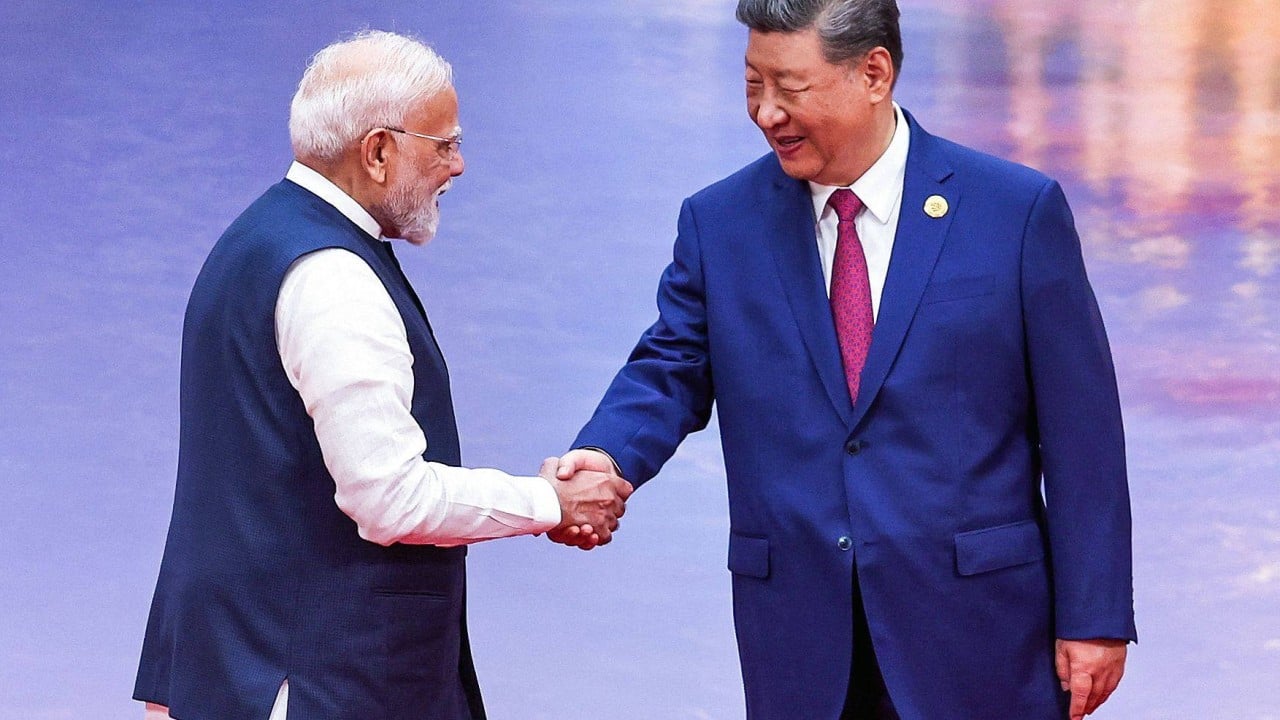
When Indian Prime Minister Narendra Modi and Chinese President Xi Jinping met at the Shanghai Cooperation Organisation summit in Bishkek, Kyrgyzstan, the encounter was short and carefully choreographed while the message was warm. Modi had earlier said that stable and predictable ties between the two largest nations on Earth matter for a multipolar Asia and world.
The larger moment will come on September 12 and 13, when Xi is expected to visit New Delhi for the first time in seven years. He is likely to lead a delegation of some 400 officials to the Brics summit.
How should we read this? No honest account of the emerging thaw in Sino-Indian relations can leave out the leader who is not at the table. US President Donald Trump’s 50 per cent tariffs on Indian goods imposed last year have pushed Delhi and Beijing closer than any charm offensive could have, even though the tariff rates were reduced this year.
When China’s envoy offers to stand firm with India against outside pressure, the strategic logic writes itself. That said, a friendship powered by a shared irritation can cool once the irritation fades. India hedges by instinct, and one day it could gravitate back towards the West.
That is not a reason for gloom. Rather, it is the reason to build something durable now, while there is an opening and the will to act on both sides.
For much of the past five years, Beijing was content to let the freeze along the Line of Actual Control set the tone. However, a China facing sustained pressure from the United States and an uncertain global economy has every reason not to keep a second front open with a rising neighbour of more than 1.4 billion people. Xi has made the shift explicit, telling Modi the two should be partners rather than rivals. In Beijing’s view, the dragon and the elephant should dance together, not trample each other.
Advertisement
Select Voice
Select Speed
1.00x
China (LOCATION)
India (LOCATION)
Beijing (LOCATION)
Gaurav Kumar (PERSON)
the Centre for Professional Military Education (ORG)
the United Service Institution of India (ORG)
New Delhi (LOCATION)
Indian (ORG)
Narendra Modi (PERSON)
Chinese (ORG)
Xi Jinping (PERSON)
the Shanghai Cooperation Organisation (ORG)
Bishkek (LOCATION)
Kyrgyzstan (LOCATION)
Modi (PERSON)