
Health
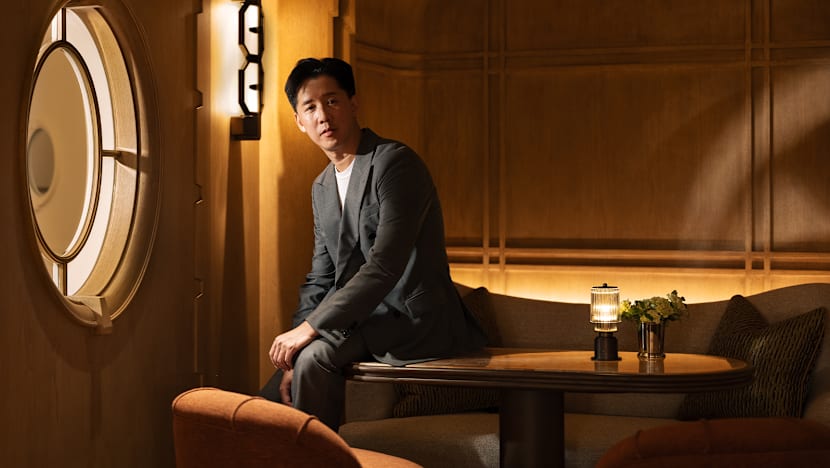
Andre Fu reflects on 25 years of design and his enduring Singapore connection
Key Points
Andre Fu reflects on 25 years of design and his enduring Singapore connection The Hong Kong designer behind The Fullerton Bay Hotel, Andaz Singapore and Capella Singapore looks back on the projects, influences and ideas that continue to shape his work. The custom-made marble mosaic tiles still sparkle beneath the glow of the crystal chandeliers. The plush sofas still beckon, inviting guests to sink into them for hours.
Andre Fu reflects on 25 years of design and his enduring Singapore connection
The Hong Kong designer behind The Fullerton Bay Hotel, Andaz Singapore and Capella Singapore looks back on the projects, influences and ideas that continue to shape his work.
The custom-made marble mosaic tiles still sparkle beneath the glow of the crystal chandeliers. The plush sofas still beckon, inviting guests to sink into them for hours. The 18m-high atrium above the lobby still inspires awe.
The well-loved Fullerton Bay Hotel has been open for more than 15 years, but the influence of its interior designer Andre Fu remains palpable. Best known for his hospitality projects, Fu layers his interpretation of modern luxury with an understated elegance. In doing so, guests feel compelled to dwell and dawdle for hours on end, never mind the bustling city just beyond the main doors.
“One may consider my work being centred around spatial layering, a highly calibrated use of proportion and light; restraint in material selection combined with richness in texture; and an emphasis on craftsmanship over ornament,” explained the Hong Kong-based designer, who has run his eponymous practice, Andre Fu Studio, for 25 years.
His portfolio includes some of the world’s best-known hospitality names. Among them are The Upper House, where he had his big break; Claridge’s Spa and its duplex penthouse suite, The Residence; Dusit Thani Bangkok; Waldorf Astoria Osaka; and Capella Taipei. In Singapore, his projects include Capella Singapore and Andaz Singapore.
A NEW PROJECT IN HONG KONG’S HEART
The latest addition to his portfolio is Bespoke Gloucester House. Opened on Jul 24, the project by property developer Hongkong Land is part of Landmark in Central, Fu’s home city. The private space is reserved for members of Landmark’s Bespoke loyalty programme.
The 51-year-old described his concept for Bespoke as “a sanctuary…choreographed to feel quietly cinematic”. From the library and bar to the outdoor terrace and salons, each space draws inspiration from the Gloucester Hotel, established in 1932 and once among the definitive social addresses in Central, favoured by the city's business and social elite.
“The intention was to reinterpret that through a refined dialogue between past and present. We have framed the way someone approaches the entire journey, translating the spirit of certain spaces from the original hotel. It’s the essence of a modern expression of old-world charmthat gives it a cinematic feel,” Fu explained.
Members are first greeted at reception, where the parlour-inspired setting establishes a sense of quiet ceremony. Next is The Library, a transitional space conceived as a living archive, with cultural ephemera connecting the site’s history with the Gloucester House of today.
Typhoon Bar, named for the original hotel’s watering hole, serves up a dose of bolder, more dramatic social energy. A stained-glass backdrop and sculptural lines inspired by Hong Kong's familiar egg-tart tray connect the space to local memory. The Terrace provides a rare open-air pause in the heart of Central, while its black-and-white chequered floor nods to a signature detail of the original Gloucester Hotel.
Finally, The Drawing Room and Salons soften the rhythm again. The most intimate spaces within Bespoke, they are designed for conversation, relaxation and more private moments, framed by a muted palette and mid-century proportions.
That sense of quiet repose lends the spaces a residential quality. Fu added, “Every detail serves as a visual echo, guiding guests through a journey that connects old Central with my hometown today.”
CONTRIBUTING TO SINGAPORE’S LIFESTYLE SCENE
Outside Hong Kong, Fu speaks modestly of the “privilege” of bringing his design aesthetic to Singapore. The Fullerton Bay Hotel was his first project here, conceived as a “modern colonial hotel” that pays tribute to Singapore’s past while remaining contemporary.
These can be seen through the arrival experience at the Clifford Pier heritage site, with its 17m-wide lobby. Beyond the doors, an abode-like elegance awaits, right through The Landing Point lounge to the lobby. On the rooftop, the Lantern bar is conceived as a floating oasis framed by lush landscaping. That much of Fu’s original design has remained intact since the hotel opened in 2010 speaks to its enduring appeal.
Nearby, Andaz Singapore, set within Ole Scheeren’s Duo towers, saw Fu draw on Singapore’s eclectic shophouse culture. Alley on 25 brings that neighbourhood spirit indoors through a series of “shophouse” dining concepts. Rooftop bar Mr Stork is set amid tropical landscaping, with cobbled paving and private teepee huts.
Fu’s most recent project here is the refurbishment of Capella Singapore on Sentosa, where he sought to place greater emphasis on home comforts. Natural materials including teak, oak and rattan sit alongside an earthy palette of sand, sage and mineral grey. He conceived the property as a distinct tropical resort that is “at once contemporary and authentic – an urban hotel with an inherent sense of calm”.
“A lot of people describe my work as making you want to linger. I think what I have carved out in the world of design is that it could be classic in a modern way, or modern in a classic way, but there’s an intangible feeling of connection that threads through,” he said.
PROJECTS REFLECT HIS CURRENT MINDSET
Born and raised in Hong Kong, Fu left for the UK at 14, where he later obtained a Master in Architecture from the University of Cambridge. His education cultivated in him a vocabulary for design and an understanding of the way the history of architectural development has evolved. This included the rationale behind classical architecture, to artistic movements like the Bauhaus period and post-modernism era.
He has since spent more than three decades living and travelling between the two cultures. The impact has been profound. Fu said: “Perhaps the British training gave me an understanding of European architectural evolution, while my Hong Kong roots keep me grounded in Eastern values. This upbringing allows me to bridge the gap between cultures, drawing as naturally on European principles.”
Although he founded his studio in 2000, the same year he graduated from Cambridge, his career truly took flight after he worked on The Upper House in Hong Kong, which opened in 2009. In challenging the traditional definition of gold-leaf luxury, he created a hotel with the vibe of a modern Asian residence.
He attributes it to fate for being trusted with the project, considering he had never worked on a hotel before. “I think it was the right place at the right time and I was allowed to immerse myself fully into what I felt the new early generation of travellers were pursuing,” he mused.
From the two-word brief of “calm” and “comfort”, he conceived a hotel that ran counter to prevailing ideas of luxury hospitality at the time. He believed its sense of respite would resonate with travellers while providing a contrast to the city outside. “It was a genuine reaction to the brief and how I felt then,” he added.
To this day, Fu’s projects continue to be crafted as reflections of his mindset at the point of the commission. Whether it is the client, brand or rationale, they would all contribute to what he envisions at the drawing board. “You try to listen, go into the site, look at the surroundings and have a feel for the city,” he said.
His work is also explored in the newly launched book Andre Fu: A Designer’s Vision, which marks his studio’s 25th anniversary. Written by regular CNA Luxury contributor Daven Wu, the book examines Fu’s creative process through three thematic sections: Escape, Cultural Dialogue and Heritage.
“What surprised me most, working with Andre on this book, was just how much labour hides behind something that looks so effortless. He maps out a person’s entire journey through a space – how it might feel at 10 in the morning versus at dusk, for instance – long before any material gets chosen. For him, emotion comes first; everything else, from proportion to light, is built to serve it,” said Wu, who is also the Singapore editor of Wallpaper*.
It is perhaps timely then that Fu is also thinking about the legacy that he is leaving behind. When future designers look back at his body of work decades from now, he hopes they will take away how it always strives to create a sense of connection.
“The single biggest lesson would likely be my conviction that design should not impose a lifestyle, but rather enable a personal expression of living – creating spaces that are rooted in a strong narrative, one that is warm and is imbued with understated sophistication. In short, the guest's journey is always the soul of my work,” he said.
Andre Fu (PERSON)
Singapore (LOCATION)
Hong Kong (LOCATION)
The Fullerton Bay Hotel (ORG)
Andaz Singapore (LOCATION)
Capella Singapore (ORG)
Fullerton Bay Hotel (LOCATION)
Andre Fu Studio (PERSON)
The Upper House (ORG)
Claridge (LOCATION)
Residence (ORG)
Dusit Thani Bangkok (LOCATION)
Waldorf Astoria Osaka (LOCATION)
Capella Taipei (ORG)
HONG KONG’S (LOCATION)