
Politics
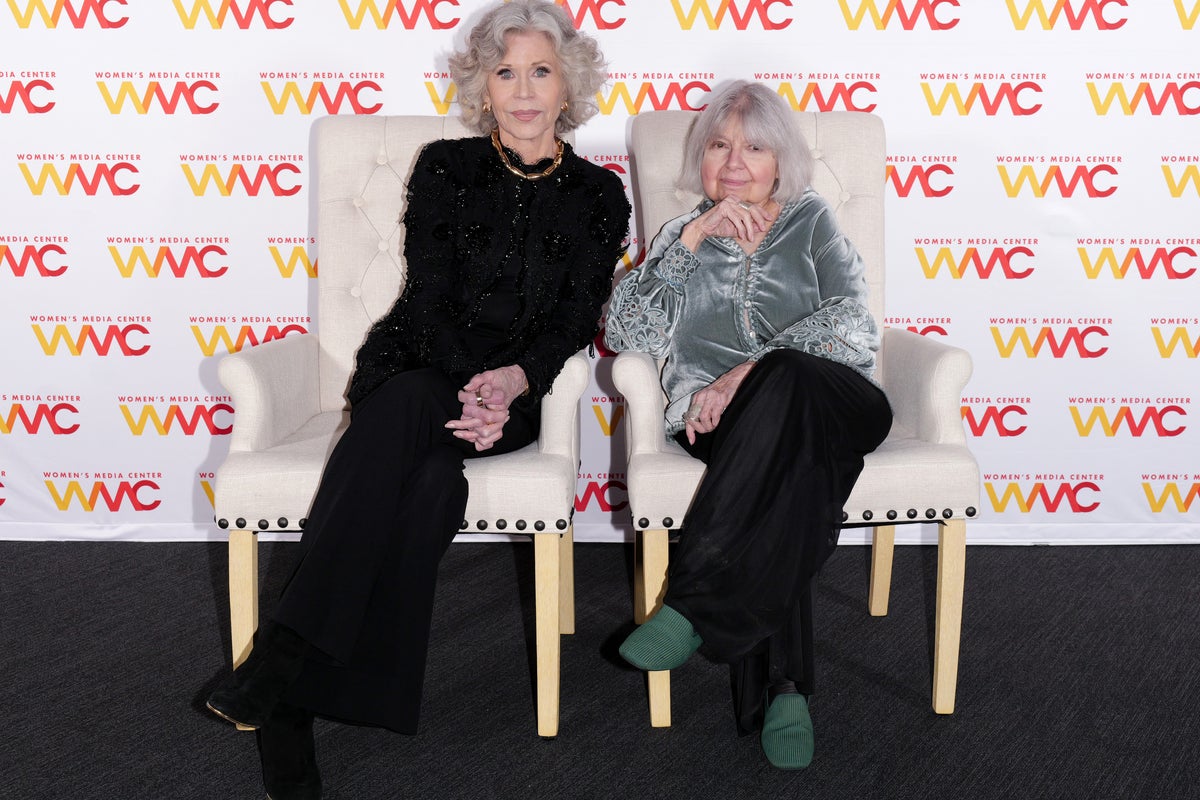
Robin Morgan, poet and feminist whose allies included Jane Fonda and Gloria Steinem, dies at 85
Key Points
Robin Morgan, poet and feminist whose allies included Jane Fonda and Gloria Steinem, dies at 85 Robin Morgan is considered ‘one of the architects of the contemporary women’s movement’ - Bookmark Robin Morgan, a wholesome child star of the 1940s and ‘50s who grew up to become a poet, essayist, editor and second-wave feminist, has died. Morgan's death was confirmed Saturday by the Women's Media Center (WMC), an organization which she co-founded with Jane Fonda and the celebrated author and...
Robin Morgan, poet and feminist whose allies included Jane Fonda and Gloria Steinem, dies at 85
Robin Morgan is considered ‘one of the architects of the contemporary women’s movement’
- Bookmark
Robin Morgan, a wholesome child star of the 1940s and ‘50s who grew up to become a poet, essayist, editor and second-wave feminist, has died. She was 85.
Morgan's death was confirmed Saturday by the Women's Media Center (WMC), an organization which she co-founded with Jane Fonda and the celebrated author and activist Gloria Steinem, who died Wednesday.
WMC President Julie Burton called Morgan “one of the architects of the contemporary women’s movement,” hailing her writing and “global leadership for justice and equality."
The statement didn't specify the location, date or cause of Morgan's death.
During the 1960s and ’70s, Morgan embodied and inspired historic changes in how women lived and thought. As she was happy to point out, the one-time “Ideal American Girl” and adored “Little Robin Morgan” was a rule-breaker and justice seeker with a notable list of achievements, along with a prison record and an FBI file.
Morgan was at the center of some of the defining moments of what came to be called second-wave feminism, expanding upon the achievements of the suffragists a half-century earlier. In 1968, she was among the organizers of the first protest against the Miss America pageant, joining fellow activists in tossing their bras (soon mythologized as burning) into a “Freedom Trash Can.” The 1970 essay anthology she edited, “Sisterhood is Powerful,” is considered one of the essential texts of the modern women’s movement.
Her legacy was one of deeds, words and images. Morgan is widely credited with coining the term “herstory,” the feminist reworking of “history,” and popularizing the clenched fist/female symbol icon of the liberation movement. Her poem “Monster,” with such lines as “I want a women’s revolution like a lover/I lust for it,” was quoted at feminist rallies and beyond. Her poem “Arraignment” helped capture the movement’s embrace of the late Sylvia Plath and condemnation of her husband, poet Ted Hughes. Morgan’s rhyming couplet “I accuse/Ted Hughes” inspired the title for Sonic Youth’s “J’Accuse Ted Hughes.”
Labeled an “anarchist housewife” in one government report, Morgan confronted the establishment, left and right. In 1970, she and fellow protesters were arrested and jailed after occupying the offices of the avant-garde Grove Press, whose owner, Barney Rosset, was fighting employees’ efforts to unionize. In the widely reprinted 1970 essay “Goodbye to All That,” she called out activists and libertines from Abbie Hoffman and Hugh Hefner to Dave Dellinger and the music group the Fugs.
"Goodbye to the male-dominated peace movement, where sweet old Uncle Dave can say with impunity to a woman on the staff of Liberation magazine, The trouble with you is you’re an aggressive woman,” she wrote.
“Goodbye to the idea that Hugh Hefner is groovy ’cause he lets Conspirators come to parties at the Playboy Mansion — goodbye to Hefner’s dream of a ripe old age. Goodbye to Tuli and the Fugs and all the boys in the front room — who always knew they hated the women they loved. Goodbye to the notion that good ol’ Abbie is any different from any other up-and-coming movie star who ditches the first wife and kids, good enough for the old days but awkward once you’re Making It.”
A life of change
In her personal life, Morgan had male and female lovers and was married for more than 20 years to the gay poet Kenneth Pitchford, with whom she had a son, the musician, activist and record company executive Blake Morgan. She once described her marriage as a “two-member commune” and was so resistant to labels that she remembered being “straight-baited” by feminists who thought she should be a lesbian and chastised by conservatives who assumed she was a lesbian.
In her 2001 memoir “Saturday’s Child,” she expressed joy and amazement at how her life turned out and how she was able to retain “a threadbare, somewhat surreal sense of humor.”
“Put that in your apple pie and smoke it,” she wrote.
Besides “Saturday’s Child,” she completed more than 20 books, including “The Word of a Woman: Feminists Dispatches,” and the poetry collections “Monster” and “Dark Matter.” She followed “Sisterhood is Powerful” with “Sisterhood is Global” (in 1984), and “Sisterhood is Forever” (2002), featuring such contributors as Gloria Steinem, Simone de Beauvoir and Eve Ensler. For several years, she was editor-in-chief of Ms. Magazine.
Steinem would call her an ideal “utility player,” gifted in almost every way a protest movement might require. As an organizer, she helped found such 1960s feminist groups as New York Radical Women and Women's International Terrorist Conspiracy from Hell (W.I.T.C.H.). She was part of the Youth International Party, the left-wing “Yippies” led by Hoffman and Jerry Rubin among others, but soon became disgusted with how the group treated women and left.
In 1984, she was a founder of an early feminist think tank, the Sisterhood Is Global Institute. In 2005, she, Steinem and Jane Fonda launched the Women’s Media Center, which has a mission to support “the visibility, viability and decision-making power of women and girls in media.”
More recently, she hosted a syndicated radio show and remained active despite being diagnosed with Parkinson’s, which inspired several poems and a TEDWomen talk in 2015.
A celebrity turns
In a different era, she might have been just another forgotten child star. Born in 1941 in Lake Worth, Florida, and raised in New York, she never saw her father while growing up and was told — falsely — by her mother that he was dead. Her mother also shaved a year off her age, claiming she was born in 1942, to make her early public career seem even more impressive.
The blonde, talented Robin was modeling by age three, hosted her own “Little Robin Morgan” radio show at age five and around the same time was featured on the radio (later television) game show, “Juvenile Jury.” From 1949-57, she appeared in the hit TV domestic comedy series “Mama” and made appearances on “Robert Montgomery Presents,” “Kraft Theater” and other shows.
She would meet some of the era’s biggest stars, from Abbott and Costello to Sal Mineo, and was popular enough to inspire such commercial tie-ins as Robin Morgan dolls. Magazines described her as “unspoiled” and “courteous” and “the ideal girl-next-door,” immune from “violent outbursts of antagonism against established society.”
But off camera, and sometimes on, she was so far from her image that her first “serious” childhood poem began: “Go, rage, winter the world with despair.” During one broadcast of “Juvenile Jury” the question was whether a boy deserved to be spanked. Morgan was supposed to joke that he should wear padding under his pants, but instead declared that all physical punishment was wrong.
As she recalled in “Saturday’s Child,” producer Dan Ehrenreich squeezed her shoulder so hard that Morgan could feel his fingernails. He turned her microphone away and eventually placed his hand over her mouth.
“I realized that I loved and respected that child who fought back in what was the first political act I recall ever daring to make,” Morgan wrote.
Once in her late teens, she began taking classes at Columbia University, attended poetry workshops and became politically active. She marched for civil rights and ending the Vietnam War and met protesters, artists and poets such as W.H. Auden and Anthony Hecht, who gave her a man’s eye view of the creative process, “But, my dear, women should be poems, not write them.”
In 1962, she met Pitchford at a Manhattan party. Once the other guests (“boozy bikers” and “stoned, hallucinating Joffrey dancers”) had left and the host urged to go with them, Pitchford lit candles, put Dvorak’s “New World” symphony on the record player and became her “First.” They later walked for hours and ended up on a downtown park bench.
“You have such an air of possibility about you, Robin” he told her. “It makes me believe anything can happen.”
[Image text:] VC
SC
WC
WC
WC
WC
VC
WC
W
WC
WAN
WC
WC
WC
VCWCVC
wC
WC
WC
WC
WO
MC
WC
JWON
WC
WC
LEDIA CENTER
OMEN
WC
W
VC
WC
WC
W