
Science
MIT sends robot beneath Arctic ice, transmits data at 1.2 KB per second
Key Points
The Arctic sea is becoming noisier and harder to reach. Beneath its frozen surface, cracking ice, marine mammals and passing ships create a constantly changing underwater soundscape. For scientists trying to understand this remote environment, the challenge is not simply listening.
The Arctic sea is becoming noisier and harder to reach. Beneath its frozen surface, cracking ice, marine mammals and passing ships create a constantly changing underwater soundscape. For scientists trying to understand this remote environment, the challenge is not simply listening. It is finding ways to place sensors beneath the ice and retrieve their data without repeatedly sending people into dangerous conditions. According to a report published by MIT News, Massachusetts Institute of Technology, researchers from MIT Lincoln Laboratory are working on both problems. During the U.S. Navy's Operation Ice Camp 2026, the team tested a prototype communications system designed to send data through Arctic sea ice using magnetic fields. After drilling through 3.6 feet of ice, researchers lowered a remotely operated vehicle into the water and achieved through ice data transmission at approximately 1.2 kilobytes per second. The MIT team has been developing a network of relatively inexpensive sensors capable of monitoring the Arctic continuously. The effort began with experiments during Operation Ice Camp 2024, when researchers deployed commercial off-the-shelf sensors and detected sounds including marine-mammal vocalizations.
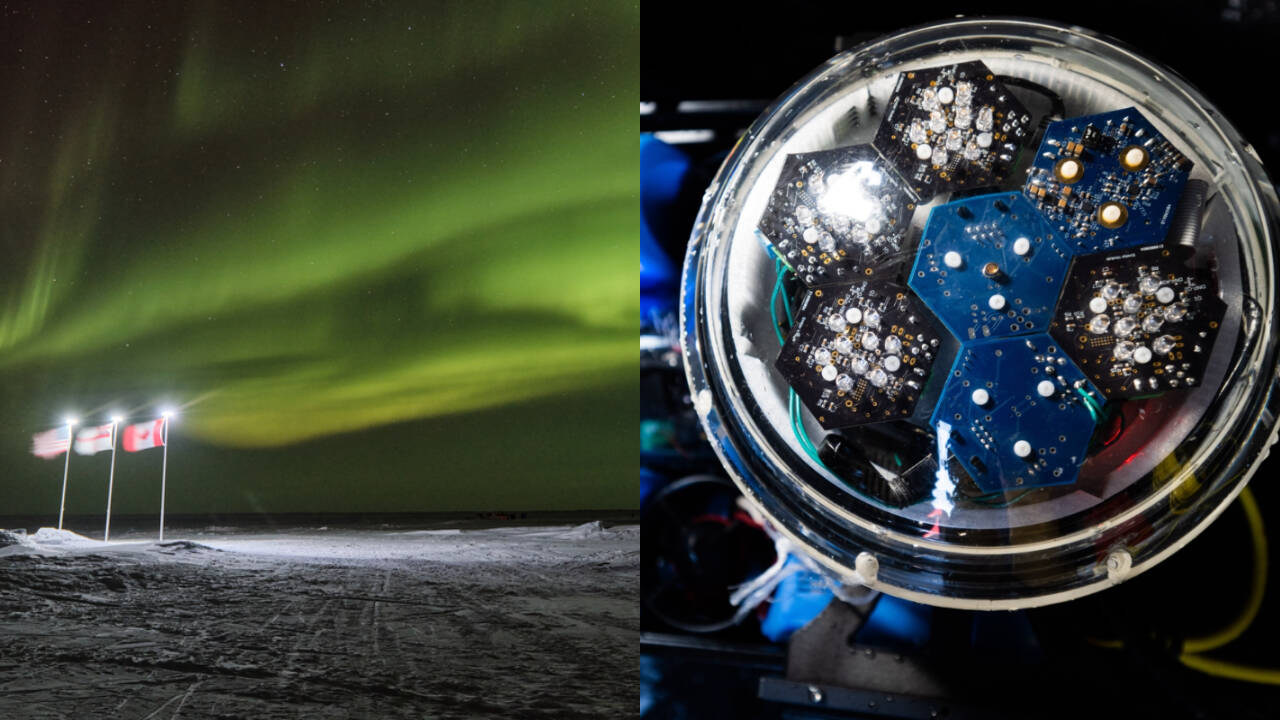
In 2026, the team returned with a higher-fidelity geophone capable of detecting vibrations traveling through sea ice. Understanding these sounds could become increasingly important as Arctic ice continues to break up and retreat. Fracturing ice produces distinctive acoustic signatures, while increased access to previously difficult-to-navigate waters could bring more ships and other activity into the region. A better understanding of the Arctic's acoustic environment could therefore support scientific monitoring, infrastructure planning, environmental resilience and maritime awareness.
A mission complicated by extreme weather
Getting technology onto the ice proved almost as challenging as developing it. The 2026 Operation Ice Camp deployment was battered by consecutive blizzards, whiteout conditions, temperatures around minus 25 degrees Fahrenheit and winds of 25 to 30 mph, with gusts reaching 40 mph. Flights into the temporary Arctic camp were delayed for a week. Once the researchers finally arrived, another five-day period passed without a single flight arriving or departing. The team managed to deploy only about a quarter of its planned sensor package before deteriorating weather forced them to return to camp. The experience highlighted a central problem with Arctic research: even the most carefully planned fieldwork can be dictated by weather.
Sending data through the ice
Radio signals are rapidly weakened by seawater, making conventional wireless communication difficult underwater. At a lagoon near Utqiaġvik, Alaska, researchers drilled a 2-by-3-foot opening through 3.6 feet of sea ice.
While the sensor deployment was limited, researchers were also testing a different technology that could eventually reduce the need for people to work directly on the ice. The team partnered with Norwegian defense technology company Havguard to test a modem that communicates through ice using magnetic fields rather than radio-frequency signals. Radio signals are rapidly weakened by seawater, making conventional wireless communication difficult underwater. At a lagoon near Utqiaġvik, Alaska, researchers drilled a 2-by-3-foot opening through 3.6 feet of sea ice. A remotely operated vehicle carrying the underwater portion of the modem was then lowered beneath the ice. The system used a magneto-inductive transmitter underwater and a receiver positioned above the ice. Researchers also equipped the robot with a Doppler velocity logger and four-beam sonar, allowing them to track its movement beneath the frozen surface. The prototype achieved a data-transfer rate of approximately 1.2 kilobytes per second.
Toward remote Arctic sensor networks
The result is an early but promising demonstration. The researchers envision future versions of the system collecting information from underwater sensors and relaying it to the outside world through drones or satellites. That could enable sensor networks to operate for longer periods while reducing the number of people required to travel onto unstable sea ice. The team is also exploring air-droppable versions of its sensors and plans to continue refining the modem's packaging and integration with its broader sensor system ahead of Operation Ice Camp 2028.
Building technology for an unforgiving environment
The project also extends beyond engineering. During their time in Utqiaġvik, researchers participated in local community events and worked with middle-school students on Arctic research and basic sonar concepts. Their experience has reinforced a simple lesson: Arctic technology must work in conditions where humans cannot always safely operate. The long-term goal is therefore not simply to send a robot beneath the ice. It is to create systems that can deploy sensors, communicate with them and retrieve their data while keeping people off the ice as much as possible. In a region where weather can shut down an entire operation for days, that capability could prove as valuable as the sensors themselves.
Images Courtesy: MIT News