
Science
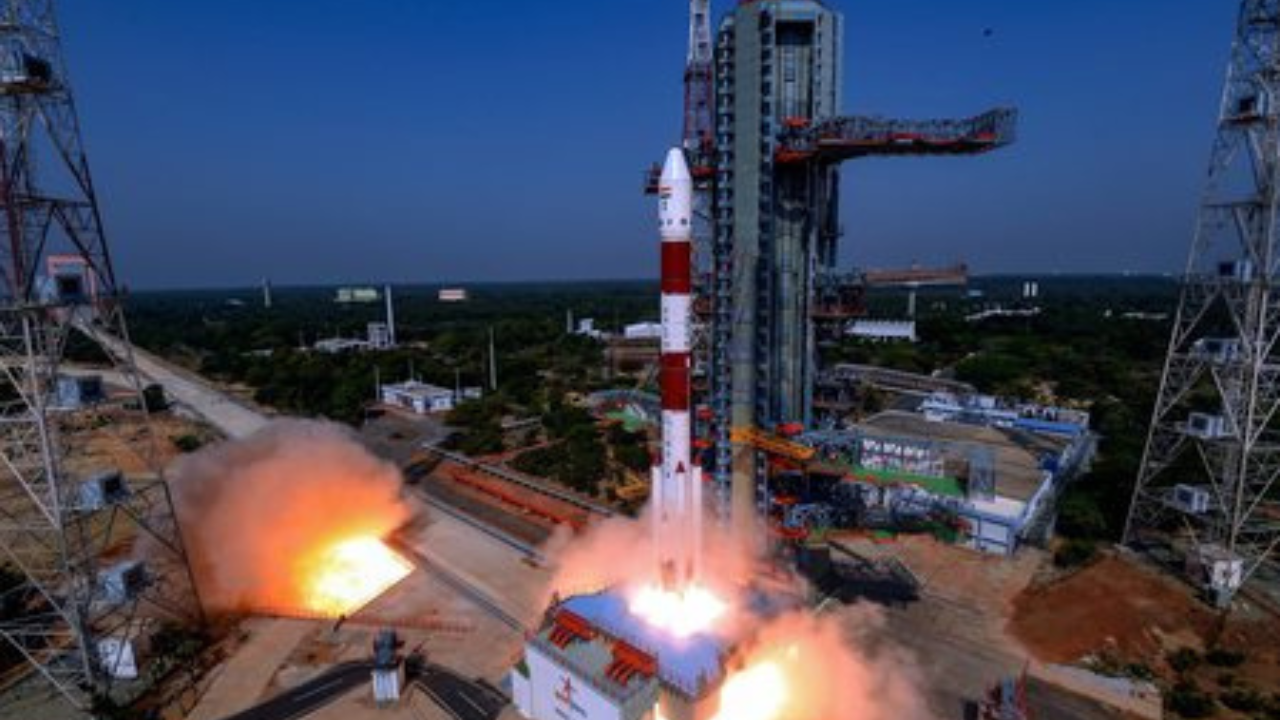
Agency won't be privatised or its role diminished: Isro
Key Points
Isro dismisses privatisation speculation, says role will only strengthen NEW DELHI: Allaying fears of some of its staff that the organisation will be privatised and its role reduced to an R&D lab, Isro on Sunday dismissed “speculations and misinformation” about any diminution of its role, calling such reports “baseless and incorrect”. “We wish to categorically state that Isro will neither be privatised nor will its importance be diminished,” the space agency said.
Isro dismisses privatisation speculation, says role will only strengthen
NEW DELHI: Allaying fears of some of its staff that the organisation will be privatised and its role reduced to an R&D lab, Isro on Sunday dismissed “speculations and misinformation” about any diminution of its role, calling such reports “baseless and incorrect”. “We wish to categorically state that Isro will neither be privatised nor will its importance be diminished,” the space agency said.Isro further said it “will continue to remain India’s principal institution for advanced space research and technology development, national and strategic missions, space science and exploration, and critical and frontier space capabilities”.Space promoter and regulator Indian National Space Promotion and Authorisation Centre (INSPACe) chairman Pawan Goenka also said on Sunday that Isro “will remain the bedrock of Indian space sector” and it will remain at the core of India’s space programme leading frontier research and the next generation of national space programmes like space station and crewed lunar mission.In a long statement, the space agency said, “Participation of the private sector in space is not about reducing its role. It is about enabling Isro to focus even more strongly on the next generation of India’s space programme, while industry scales mature technologies and capabilities. What is changing is not the importance of Isro, but the scale and structure of India’s space ecosystem.”“The transition is therefore towards an Isro-led national space ecosystem,” the agency said.
The agency also said that its “role will progressively strengthen in areas where its scientific expertise matters most: frontier R&D, advanced technologies, human spaceflight, next-generation launch systems, deep-space and planetary missions and strategic national capabilities. It will continue developing cutting-edge technologies, including advanced payloads for communication, navigation and Earth observation, sensors, propulsion systems and other critical technologies.”After nine Isro employee associations have sought a “written clarity” from the agency chairman on the private sector shift, Goenka in a post on X late on Sunday evening said, “Let me say it unequivocally: Isro' s role is by no means diminishing. It will remain the bedrock of the Indian space sector.On scaling up the production of rockets and satellites in India, the INSPACe director declared that the country has set an “ambitious target of 50 launches a year by 2030”. “A goal of this scale cannot be achieved by one organisation alone. Govt and private industry have to build this future together,” he said.Explaining the reasons for opening up the sector, the INSPACe chairman said, Goenka said, “The reforms since 2020 are about expanding India’s overall space ecosystem. IN-SPACe will facilitate and authorise greater non-govt participation, while NSIL will help commercialise mature capabilities.”He said the idea of space reforms is to “let industry increasingly manufacture and scale mature launch vehicles, satellites and other systems, while Isro focuses on what it is uniquely placed to do: advanced R&D, scientific missions, strategic missions, new technologies, and infrastructure that is too complex for the private sector to develop on its own”.Assuring Isro staff that they are going to handle big projects and responsibilities, Goenka said, “Isro will remain at the core of India’s space programme leading frontier research and the next generation of national missions, including the Bharatiya Antariksh Station by 2035, an Indian crewed mission to the Moon by 2040, next-generation launch systems, and sustained lunar and planetary exploration.” Goenka said, “The direction is not a smaller Isro. It is a larger Indian space ecosystem, with Isro pushing the technological frontier.Congratulating Isro for the recent GSLV MK II successful launch, Goenka, in a post on X on Sunday said, “EOS-05 is a major achievement by Isro, and this is just the beginning.”
On the growing space sector in the country, the INSPACe regulator said, “From barely a handful of space startups five years ago, India today has over 450. Indian private industry has already flown a rocket to orbit (while referring to Skyroot’s Vikram-1 rocket’s successful launch on July 18). Isro’s research will continue to push the frontiers of what is possible. Private industry must translate that momentum into manufacturing at scale: more rockets, more satellites, more launch capacity and new technologies. That is how we will build a complete space ecosystem and create the capacity to match our ambition.”He said the “opportunity before us is immense: build in India, launch from India and serve the world from India. We are well on our way to taking India’s space sector to a new orbit, figuratively and literally.”