
Sport
How much protein do you need – and can you get enough from plants?
Key Points
How much protein do you need – and can you get enough from plants? Your protein needs change with age and activity. A dietitian explains how plant proteins measure up and what to consider when reduced appetite or busy schedules get in the way.
How much protein do you need – and can you get enough from plants?
Your protein needs change with age and activity. A dietitian explains how plant proteins measure up and what to consider when reduced appetite or busy schedules get in the way.
From grilled chicken breast salads to Greek yogurt bowls, protein is the poster child of the modern diet. Much of that attention has focused on building muscle, particularly among gym-goers and bodybuilders.
But protein does a lot more than that. Once digested, it is broken down into amino acids, which the body uses for tissue growth and repair, as well as enzyme and hormone production. Protein also helps maintain muscle, which we rely on for everyday movements such as getting up from a chair, climbing stairs or carrying groceries.
Protein needs can rise with age, during recovery from illness or with increased physical activity, said Ms Ng Poh Mun, a senior dietitian at health and wellness brand Kinohimitsu.
ARE YOU EATING ENOUGH PROTEIN?
Generally, adults aged 18 to 49 need about 0.8g of protein per kilogram of body weight a day, according to the Health Promotion Board. From age 50, that rises to about 1.2g per kilogram. That means a 65kg adult would need about 52g a day before age 50 and about 78g from age 50.
But meeting your protein target is not the only consideration. “What matters more is whether a person’s overall nutritional requirements are being met,” Ms Ng said. That includes getting enough energy, carbohydrates, fat, dietary fibre, vitamins and minerals.
DO PLANT PROTEINS MEASURE UP?
Ms Ng said plant proteins can meet the body’s protein needs, although their amino acid profiles vary. Animal proteins such as eggs, dairy, meat and fish generally provide all essential amino acids. Some plant proteins contain lower amounts of one or more essential amino acids, but eating a variety throughout the day can provide the range the body needs.
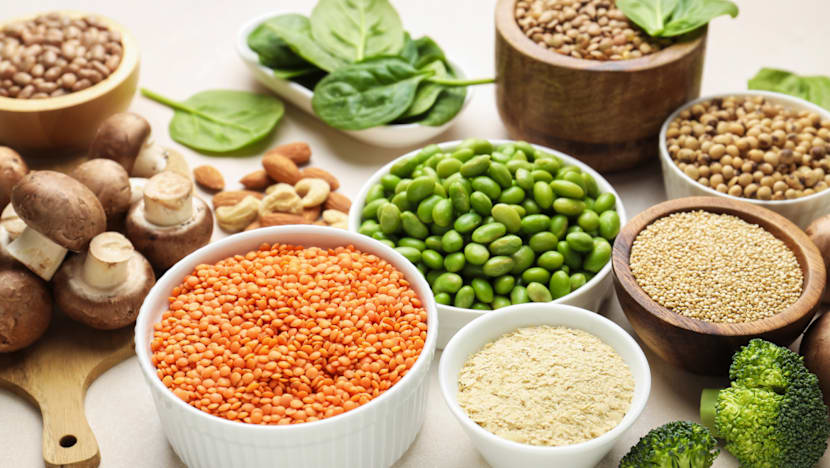
Soya – familiar to many people in Singapore through tofu, tempeh and soya milk – and quinoa are complete plant proteins, she said. Other plant protein sources include peas, lentils, chickpeas, beans, nuts and seeds.
To illustrate how plant proteins can add up across the day, Ms Ng gave an example for a 65kg adult aged below 50: oats, unsweetened soya milk and chia seeds for breakfast, firm tofu with brown rice and vegetables for lunch, and lentils or chickpeas with brown rice and vegetables for dinner. Depending on portion sizes, the three meals could provide around 53g to 59g of protein.
Plant protein sources can also bring other nutrients to the plate. Legumes such as beans and lentils provide dietary fibre, vitamins and minerals, while nuts and seeds provide unsaturated fat. Plant foods are naturally cholesterol-free, while many plant protein sources such as beans, lentils and soya foods are low in saturated fat.
Ms Ng cited pea and rice proteins as an example of how different sources can complement each other. Together, they provide a more balanced range of essential amino acids.
Kinohimitsu WellSure, a plant-based nutrition powder, combines four protein sources – soya protein isolate, pea protein isolate, quinoa and rice protein.
WHEN EATING WELL IS EASIER SAID THAN DONE
Long working hours, irregular mealtimes and frequent reliance on takeaway food can make balanced eating harder. “Sometimes, the issue isn’t that people don’t know what they should eat,” Ms Ng said. “It’s simply that they miss or skip meals because they are busy.”
Reduced appetite, difficulty chewing or higher nutritional needs can also make it harder to eat enough. “In these situations, a nutritionally balanced drink can provide a convenient way to help bridge nutritional gaps when regular meals fall short,” Ms Ng said.
One standard serving of WellSure provides 261kcal and 10.7g of protein, together with dietary fibre and 28 vitamins and minerals.
The formula also contains calcium beta-hydroxy-beta-methylbutyrate (CaHMB), a calcium salt of HMB, a compound the body produces when it breaks down the amino acid leucine. Ms Ng said HMB may support muscle maintenance, particularly with age or during periods of reduced mobility or recovery.
Other ingredients include prebiotics, probiotics, lutein and a plant-based fat blend with omega-3, omega-6 and omega-9. The product is free from lactose and gluten.
For people interested in adding more plant-based foods to their diet, Ms Ng suggested starting gradually. They could swap some animal protein for tofu, beans or other plant protein sources in one or two meals a week.
Looking to branch out from your usual protein sources? Find out more about the new-look Kinohimitsu WellSure, available at FairPrice, Guardian and Watsons, as well as on the brand’s official Shopee, Lazada and TikTok stores.
The article is for general educational purposes only and should not be taken as medical advice or as a recommendation for any treatment. Consult your doctor before taking a new supplement.