
Environment
Lenovo ThinkPad X1 Carbon Gen 14 review: A classic design in a lighter package
Key Points
Lenovo ThinkPad X1 Carbon Gen 14 review: A classic design in a lighter package It won't win over new fans, but it should delight the ThinkPad faithful. There's something special about using a ThinkPad, even one that's been completely modernized. Their distinctive black cases with hints of red — especially the TrackPoint nub right in the middle of the keyboard — distinguish them from every other laptop on the market.
Lenovo ThinkPad X1 Carbon Gen 14 review: A classic design in a lighter package
It won't win over new fans, but it should delight the ThinkPad faithful.
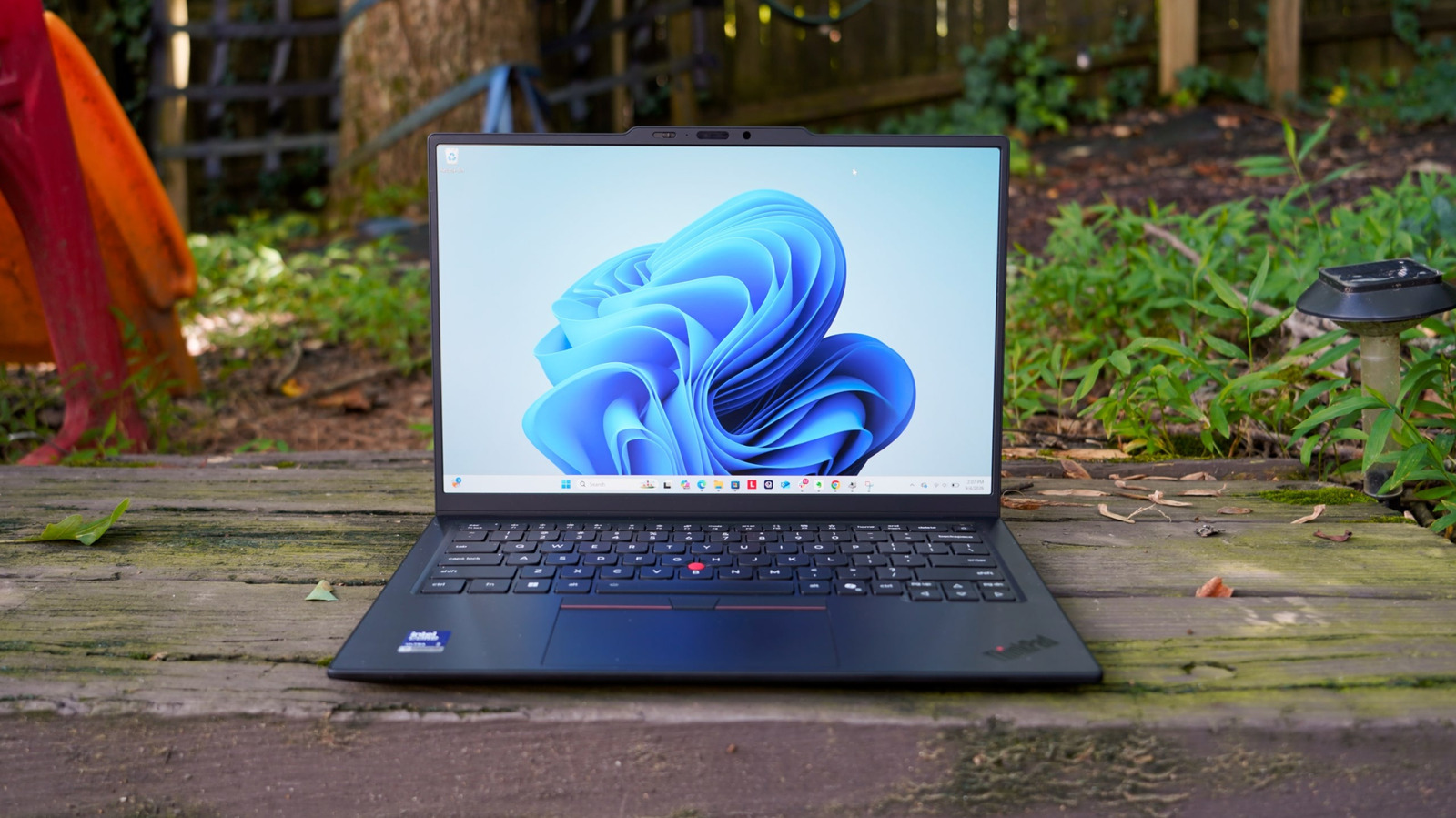
There's something special about using a ThinkPad, even one that's been completely modernized. Their distinctive black cases with hints of red — especially the TrackPoint nub right in the middle of the keyboard — distinguish them from every other laptop on the market. More than two decades after Lenovo took over the iconic ThinkPad brand from IBM (something Engadget covered in 2004), the Chinese computer maker still honors its legacy as a premium notebook for business users. But what if a ThinkPad weighed just 2.2 pounds and had a beautiful OLED screen, along with surprisingly great speakers? Enter the ThinkPad X1 Carbon Gen 14 Aura Edition.
I can't imagine most computer shoppers will jump on the ThinkPad's corporate aesthetic — not when Apple, ASUS and Lenovo itself all make far sleeker laptops today. But hey, kids nowadays have somehow made awful-sounding cassettes trendy again. The main buyers of the ThinkPad X1 Carbon 14th gen are IT admins who have stuck with ThinkPads for years, and want to offer something more streamlined than the IBM laptops of yore.
What's notable in the Lenovo ThinkPad X1 Carbon Gen 14?
We liked the last ThinkPad X1 Carbon we reviewed in 2024, but this model takes things to another level. Lenovo says it redesigned the Carbon X1 from the ground up with a new metal "Space Frame" case, which helped the company slim the laptop down to 2.2 pounds. The case itself is still plenty sturdy, and its carbon fiber top has a soft texture that feels pleasant to hold.
Lenovo also developed a double-sided system board that's 20 percent smaller than before, and it was able to squeeze in a fan that's 70 percent larger. That allows for both better thermal management and the ability to support more powerful 30 watt CPUs.
From afar, the ThinkPad Carbon X1 still screams "legacy PC," but that's probably a plus for stodgy corporate users. Up close, its modern conveniences are easy to see. It's surprisingly thin, and it feels almost weightless when you actually pick it up. The Carbon X1 also comes with a standard 14-inch 2.8K OLED screening running at 120Hz. It delivers all of the usual benefits of OLED — high contrast, bold colors and the ability to display true black — and it's also bright enough to use outside in direct sunlight. A matte covering over the display also helps reduce reflections significantly.
The system can be equipped with Intel's powerful Ultra X7 series chips and Xe graphics, but the base model we're reviewing ships with a slower Core Ultra 7 355 chip with basic Intel graphics, 32GB of RAM and a 512GB SSD. That's more than enough power for basic productivity work, but if you're dabbling in media or 3D rendering, it's worth splurging for the Xe graphics upgrade.
While the Carbon X1 doesn't have the classic ThinkPad keyboard from the IBM days (something you can still find on other modern ThinkPad models), its chiclet keyboard is still comfortable to type on. There's a satisfying depth to every key, and I had no trouble touch-typing at my usual 80 to 90 words per minute. I was also surprised how smooth and accurate its trackpad felt, since it's still an older-style haptic model. There's a clicking dead zone at the top of the trackpad, but otherwise it worked well. Still, I'm surprised Lenovo hasn't moved on to a haptic trackpad for its Carbon machines.
I've never been a huge fan of the red TrackPoint nub, but I can understand why some people find it essential. It was particularly important in the IBM ThinkPad heyday, back when standard trackpads were far more clunky and annoying to use. Even though it's a bit vestigial, the TrackPoint still works well, allowing you to control the mouse pointer with slight movements of your finger. It's a bit awkward to use the left and right mouse click buttons, which sit right below the keyboard and above the trackpad, but again, it's mainly there for the ThinkPad traditionalists.
As for ports, the ThinkPad X1 Carbon features three Thunderbolt 4 USB-C ports, a USB Type A connection, HDMI and a headphone jack. It's a shame there's no SD card slot though — that's inevitably the first port to go as computer makers chase thinner cases. The slight notch atop the Carbon X1's case houses its 5-megapixel webcam and mechanical privacy shutter. That's something we also saw on Lenovo's Yoga Slim 7i, and while it doesn't exactly scream "ThinkPad," a slight notch is preferable to making the laptop's upper bezel thicker to house the camera.
In-use: A truly modern ThinkPad
The ThinkPad X1 Carbon Gen 14 is simply a joy to use, especially if you're a fan of the classic ThinkPad aesthetic. Our review unit's Core Ultra 7 355 chip and 32GB of RAM didn't break a sweat during my typical workflow, which involves juggling multiple browsers with dozens of tabs, Slack, photo editing and either Spotify or YouTube playing music in the background. It's an absolute workhorse for office productivity, though the lack of more powerful Xe graphics makes it less suitable for video editing, 3D rendering and gaming.
But come on, this is an ultra-light ThinkPad, not a heavy media-editing tank. For its intended purposes, the ThinkPad X1 Carbon simply excels. It's also a joy to travel with: At 2.2-pounds, it's easy to slip into a light messenger bag or bookbag. Its glorious OLED display even makes boring corporate slideshows leap off the screen. And I genuinely appreciated its matte layer since few systems let me work outside on a bright day without being bombarded by screen reflections.
The ThinkPad's Intel Graphics GPU holds it back when it comes to gaming, but that's not exactly a surprise. It scored 500 points higher than the Yoga Slim 7i in the 3DMark Wildlife Extreme benchmark, but it pales in comparison to any laptop with more serious graphics hardware. If you like the ThinkPad's aesthetic and just need better 3D performance, be sure to upgrade to an Intel chip with Xe graphics. I was able to play Overwatch in 1080p with low graphics settings, but it wasn't exactly an enjoyable experience. Everything looked blocky and bland. At the very least, the ThinkPad's 120Hz screen means you could stream games over the cloud at up to 120 fps.
After spending a week with the ThinkPad X1 Carbon, I've grown to appreciate the little things it does right. Its keyboard is one of the best I've ever used in such a thin system. I was able to pound out this review without any major annoyances, which is more than I can say for the flashier keyboards on Dell's new XPS 14 and 16. Its trackpad, despite not being haptic, is also a dream to use. I've never encountered a mistaken left or right click.
Hell, even the ThinkPad's speakers sound great, and that's something I rarely get to say about Windows PCs. It only has two downward-firing speakers, but they use Dolby Atmos to deliver a surprisingly expansive soundscape. It was perfect for watching YouTube videos, or for enjoying some light music at night. There's just a hint of low-end to make the system shake a bit, but what's truly impressive is the overall clarity of the speakers. Still, I'd be interested to hear how Lenovo could push the quality even further if it squeezed in a quad-speaker system like the MacBook Air and XPS 14.
Much like the Yoga Slim 7i, I was impressed by the ThinkPad X1 Carbon's five megapixel webcam. It looks almost like a professional camera during video calls, and it looks even better once you turn on Windows Studio Effect's portrait mode, which slightly blurs your background.
As for battery life, the X1 Carbon lasted precisely 16 hours in PCMark 10's Modern Office benchmark. That's about the midrange of what we're seeing with ultraportables today. The Yoga Slim 7i lasted about an hour and a half longer in the same test, while HP's Omnibook X reached a massive 18 and a half hours.
Should you buy the ThinkPad X1 Carbon Gen 14?
If you're a fan of the classic ThinkPad aesthetic, and you just want something a bit more modern, the ThinkPad X1 Carbon remains a solid choice. But again, it's a system more meant for IT administrators to buy in bulk instead of individual consumers. With a starting price of $2,137, it's comparable to Dell's XPS 14, but that still seems like a high price to pay for what you're getting. It also doesn't help that Lenovo doesn't offer 16GB of RAM option, which could provide some respite in our era of obscenely high memory prices.
As a former IT guy, I can see why this machine would be a good choice for widespread deployment. It doesn't rock the boat too much design-wise, but it's also lighter than before, fast and reliable. You can also handle simple repairs by removing four Phillips screws along the bottom of the machine, which is a dream for IT workers.
Wrap-up
The ThinkPad X1 Carbon offers everything you'd want in a modern ThinkPad. It's fast, wonderfully light and has a gorgeous OLED screen. But if you're looking for something a bit more stylish, it's probably not meant for you. Lenovo is catering to ThinkPad loyalists with the X1 Carbon, and for the most part, I think they'll be pleased.