
Weather
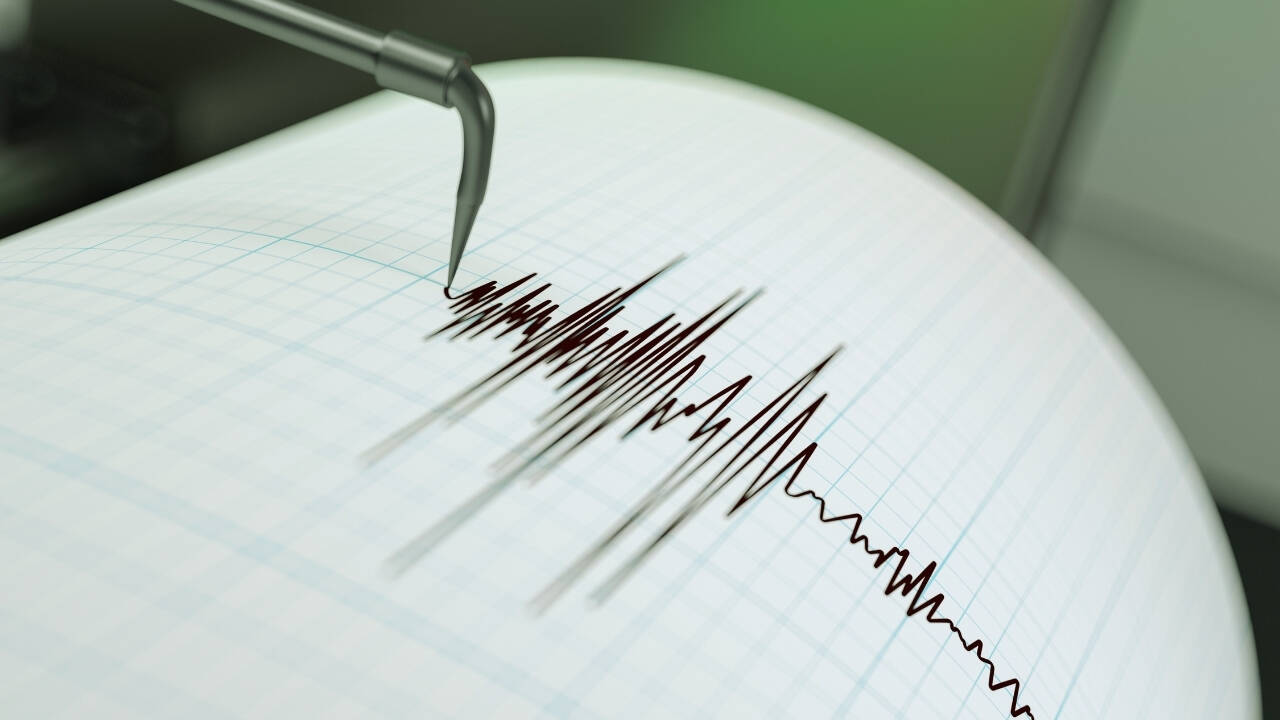
5.3-magnitude quake hits Tibet as region reels from deadly flash floods
Key Points
An earthquake of magnitude 5.3 struck Tibet on Tuesday, the European-Mediterranean Seismological Centre (EMSC) said, with the quake occurring at a depth of 35 km (21.75 miles). The earthquake comes days after another tremor struck the region. An earthquake of magnitude 5 was reported in Tibet on last week’s Thursday, according to the German Research Centre for Geosciences (GFZ).
An earthquake of magnitude 5.3 struck Tibet on Tuesday, the European-Mediterranean Seismological Centre (EMSC) said, with the quake occurring at a depth of 35 km (21.75 miles).
The earthquake comes days after another tremor struck the region. An earthquake of magnitude 5 was reported in Tibet on last week’s Thursday, according to the German Research Centre for Geosciences (GFZ).
That quake occurred at a depth of 10 km (6.21 miles), according to the data.
The latest earthquake was deeper than the tremor reported five days earlier, based on the respective seismic data.
Tibet faces growing scrutiny after deadly flash floods
The latest earthquake also comes as Tibet remains under scrutiny following a devastating flash flood that struck the Tibet-Nepal border on August 26.
The disaster was triggered by an ice-rock avalanche near the Nepal-Tibet border, sending a massive surge of water and debris downstream through the Bhotekoshi River. The floods devastated settlements in northern and central Nepal and damaged hydropower projects.
The disaster has also raised concerns over the fragile environment of the Qinghai-Tibet Plateau. Chinese climate experts said rising temperatures, accelerated glacier melt and retreat, local geological and geomorphological conditions and broader climatic influences may have contributed to the disaster.
Sun Xiaoguang, head of the Meteorological Observatory of the Tibet Autonomous Region, said: “According to our monitoring, we can see the short-time rain days, or the imbalance of the rain pattern and the rising of the temperature in Tibet.”
He also said the region may be affected by the climate change crisis and that extreme weather incidents in China could become more frequent.
Chinese officials said Tibet has 33,000 glaciers, including 187 categorised as high-risk and requiring round-the-clock satellite monitoring to predict possible collapses, according to PTI.
Nepal flood death toll rises to 1,357
The August 26 flash floods have caused extensive loss of life in Nepal. The death toll rose to 1,357 on Tuesday as more bodies were recovered from affected areas, authorities said.
The National Disaster Risk Reduction and Management Authority said rescue teams were continuing to search for 5,326 people, while 13,583 people had been rescued.
Security forces recovered hundreds of bodies from several affected districts, including Chitawan, Nawalparasi East and West, Nuwakot, Rasuwa, Gorkha, Dhading and Tanahu. So far, 102 bodies had been handed over to family members after identification and completion of legal formalities.
At least 43 people were also killed on the Chinese side, while more than 500 people remained missing in Tibet, according to Chinese media reports.
The floods washed away homes, vehicles, roads and bridges and damaged hydropower projects across northern and central Nepal. Rescue operations were also underway at hydropower projects, where 121 people were believed to be trapped in underground tunnels.
The disaster has also renewed scrutiny of China's hydropower projects in Tibet, including the planned mega dam on the Brahmaputra River. The region is the source of around 10 transboundary rivers, including the Brahmaputra.
Chinese researchers have linked the growing risks in the region to glacier retreat and climate change.
Kang Shichang, director and researcher at the Institute of Mountain Hazards and Environment under the Chinese Academy of Sciences, said glaciers across the Qinghai-Tibet Plateau had shrunk by about 24% in area over the past six decades.
In the southern part of the plateau, including the Himalayas, glacier area had fallen by about 40% over the same period, Kang told Chinese daily The Paper, attributing the retreat primarily to global warming.
Tibet (LOCATION)
the European-Mediterranean Seismological Centre (ORG)
the German Research Centre (ORG)
Nepal (LOCATION)
the Bhotekoshi River (LOCATION)
Qinghai (LOCATION)
Chinese (ORG)
Sun Xiaoguang (PERSON)
the Meteorological Observatory (EVENT)
the Tibet Autonomous Region (LOCATION)
China (LOCATION)
PTI (ORG)
The National Disaster Risk Reduction and Management Authority (ORG)
Chitawan (PERSON)
Nawalparasi East (LOCATION)