
Health
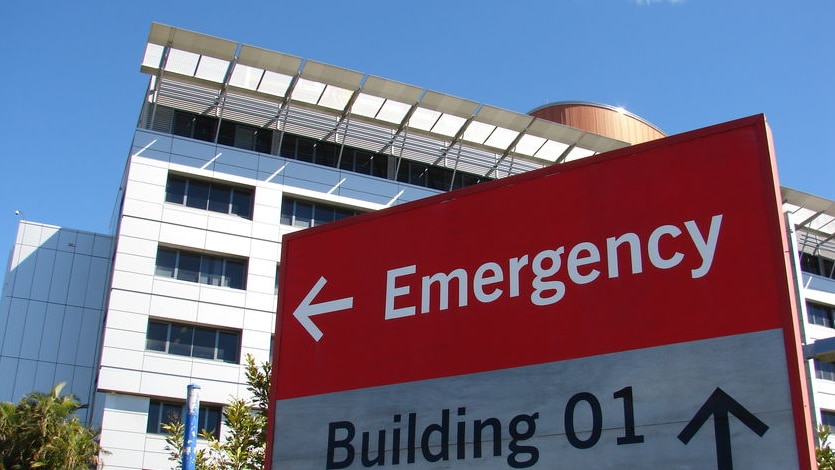
Woman in 70s seriously injured in alleged emergency department attack
Key Points
Woman badly injured in alleged attack at Princess Alexandra Hospital emergency department In short: A 73-year-old woman was seriously injured last month after she was allegedly attacked by a man in the emergency department of the Princess Alexandra Hospital. Australasian College for Emergency Medicine president Peter Allely said violence was a "hugely significant" and "hugely under-reported" occurrence in emergency departments nationwide. What's next: The incident has prompted calls for...
Woman badly injured in alleged attack at Princess Alexandra Hospital emergency department
In short:
A 73-year-old woman was seriously injured last month after she was allegedly attacked by a man in the emergency department of the Princess Alexandra Hospital.
Australasian College for Emergency Medicine president Peter Allely said violence was a "hugely significant" and "hugely under-reported" occurrence in emergency departments nationwide.
What's next:
The incident has prompted calls for action, including improved reporting of violent incidents and expanding hospital security.
A 73-year-old woman suffered serious injuries when she was allegedly bashed by another patient in a random attack inside the emergency department of a major public hospital in Brisbane.
It comes as medical groups continue to warn about escalating violence in overburdened emergency units across the country.
Queensland Police Service (QPS) said the woman was allegedly punched in the face "a number of times in an unprovoked attack" by a 43-year-old man shortly before 11:30pm on August 23.
The shocking event happened at the Princess Alexandra Hospital in Woolloongabba.
"The woman sustained serious facial injuries during the incident," a QPS spokesperson said in a statement.
"Medical staff disrupted the incident, and the man was arrested shortly afterwards by responding police."
Police said the man had been charged with one count of grievous bodily harm, was remanded in custody and is due to reappear in the Brisbane Magistrates Court later this month.
A spokesperson said the hospital was aware of "an alleged assault involving a patient and another unrelated patient" and support was provided to the person impacted as well as "the staff who witnessed the incident".
"The safety of our staff, patients and visitors is our number one priority, and we have zero tolerance for violence and aggressive behaviour in our hospital," the spokesperson said in a statement.
They said Metro South Health — which runs the Princess Alexandra Hospital — had taken "significant action" to address occupational violence and employed security officers who were "available 24/7 across the hospital".
"We have invested more than $37 million to increase the number of security officers, and implement additional CCTV, body-worn cameras, duress alarms, peer support programs, hospital ambassadors and de-escalation training for staff."
The woman has since been discharged from hospital.
Violence 'hugely common' in overcrowded hospitals
ABC News asked Metro South Health for annual figures on the number of assaults on hospital patients and staff, but none were provided.
Australasian College for Emergency Medicine (ACEM) president Peter Allely said violence was a "hugely significant" and "hugely under-reported" occurrence in emergency departments nationwide.
"It shouldn't be accepted or normalised," Dr Allely said.
"Whenever somebody gets punched on an airplane it makes national news, whenever someone gets punched in an emergency department, it's [just a normal] Friday."
The Perth specialist said the "number one overwhelming driver" for an increase in violence and aggression was "the degree of overcrowding that our health care system faces".
He said violence was "not excusable" but it was exacerbated by the conditions in emergency units.
"This is in an environment where the lights are on 24 hours a day. There are minimal shower and toilet facilities and people may not have the ability to walk around the way that they normally would in normal aspects of life," Dr Allely said.
"It's not designed for people to be spending long lengths of time in."
Last year ACEM published the report Breaking Point — An Urgent Call to Action on Emergency Department Safety.
It included national survey results that found nine out of 10 respondents reported an incident, or multiple incidences, of violence by a patient or accompanying person in their ED within the past week.
Recommendations included fostering a culture of, and systems for, reporting violent incidents and bolstering well-trained, directly employed, hospital security officers for emergency departments.
Figures released in July by the Australian Institute for Health and Welfare show assaults were the second leading cause of injury hospitalisations, after falls, among health care workers in 2024-25, with the rate almost doubling since 2015-16.
Dr Allely said ACEM had not "seen a whole lot of tangible change" from governments on the challenge.
"We want a razor-sharp focus on overcrowding. That's going to have the biggest impact," he said.
The call for action was echoed by the Queensland Nurses and Midwives' Union (QNMU).
Secretary Sarah Beaman said the problem of violence and aggression in hospitals was "at crisis point".
"The impact on staff is that they're coming in with a level of fear, they just want to get in and provide care and when you're worried about whether you're going to get assaulted, that is problematic," Ms Beaman said.
She said 82 per cent of respondents in this year's survey of more than 8,000 QNMU members said they had experienced occupational violence within the last 12 months.
The union called for more state government investment in a de-escalation security program called the Ambassador Model and a better reporting system.
Ms Beaman said workplace safety was essential for retaining health care professionals.
"The more people that leave the professions means that safe, free, high-quality care cannot be provided," she said.
[Image text:] Emergency
Building 01
Princess Alexandra Hospital (ORG)
the Princess Alexandra Hospital (ORG)
Australasian College for Emergency Medicine (ORG)
Peter Allely (PERSON)
Brisbane (LOCATION)
Queensland Police Service (ORG)
QPS (ORG)
Woolloongabba (LOCATION)
the Brisbane Magistrates Court (ORG)
Metro South Health (ORG)
CCTV (ORG)
ABC News (ORG)
Dr Allely (PERSON)