
Health
Huawei Watch D3 pumps up its health-monitoring credentials
Key Points
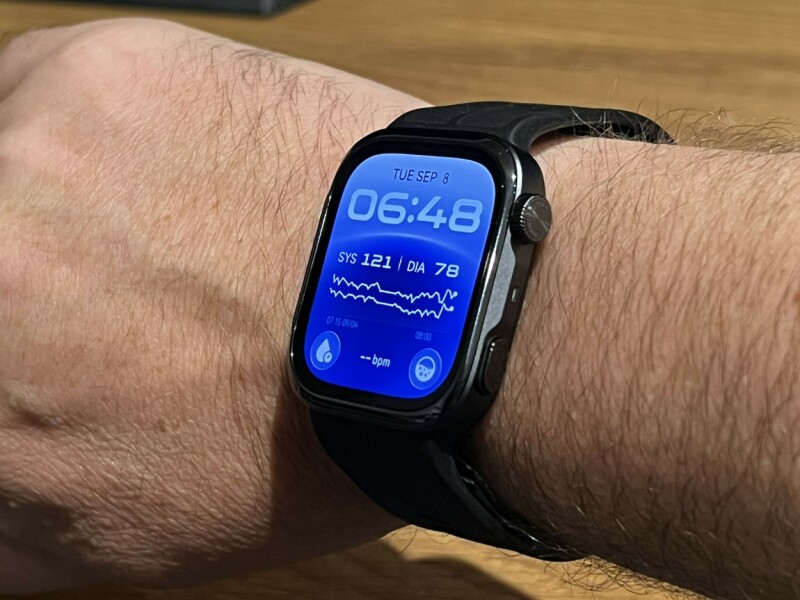
Huawei has released the Watch D3, the third generation of its blood-pressure-measuring wearable, as the company continues plowing a relatively lonely furrow in cuff-based technology. The D3 is an intriguing device for anyone seeking more credible blood pressure readings than many smartwatches claim to provide. Where many brands use optical technology to estimate blood pressure, the D series uses a pump built into the watch and an inflatable airbag inside the strap.
Huawei has released the Watch D3, the third generation of its blood-pressure-measuring wearable, as the company continues plowing a relatively lonely furrow in cuff-based technology. The D3 is an intriguing device for anyone seeking more credible blood pressure readings than many smartwatches claim to provide. Where many brands use optical technology to estimate blood pressure, the D series uses a pump built into the watch and an inflatable airbag inside the strap. The D3 is CE-certified as a medical device under the EU Medical Device Regulation (MDR). This is hardly Huawei's first rodeo: two predecessors have refined the formula and made the device feel less like clinical equipment and more like an ordinary piece of consumer technology. That said, it remains chunky compared with other wearables sold by Huawei and its rivals – the watch body weighs 40 g and is 11.3 mm thick. It's a noticeable improvement over the D2, but still feels like a large device. As it should. It includes a pump, and the removable strap (two sizes come in the box) has a built-in airbag. The Register was given a pair of these watches for a long-term test, and there is a noticeable physical difference between the D2 and D3. Subjectively, it was difficult not to be aware of the D2, but the D3, despite being only a few grams lighter and a few millimeters thinner, is far less obtrusive. Until, of course, it measures your blood pressure, when the tightening strap makes its presence obvious. Although virtually silent, the strap noticeably tightens as the watch measures blood pressure, and the software recommends sitting still, not talking, and placing a hand over your chest while the measurement takes place. The process takes barely a minute and produced plausible, consistent readings during our test. The device supports ambulatory blood pressure monitoring (ABPM), taking readings at intervals over 24 hours to provide a broader picture of how blood pressure changes during the day and night. A gentle nudge from the watch signals it's time to measure, and away it goes. It also supports blood pressure measurements before and after exercise, and can issue reminders following changes in altitude or temperature. Huawei's Health Community feature allows users to share health information and alerts with family members. Other metrics, such as pulse and blood oxygen, are tracked, but blood pressure measurements are the watch's party trick. Other functionality, such as phone notifications (we paired ours with an iPhone, and calls, messages, and other alerts appeared without drama), is present. However, you will need to install the Huawei Health app to use the device, which might cause some users concern about where their health data is going. We spoke to Rico Zhang, Huawei's president for the product line, via a translator during a launch event in Munich about concerns regarding privacy and data protection. He acknowledged the concern, saying Huawei follows all local policies on personal data and user privacy, and noted that the issue is fundamental "if we want to remain a wearable business in Europe in the future." Zhang gave a similar answer on repairability, saying Huawei followed local regulations. In the EU, battery replacement by consumers is not currently a requirement for wearables sold in the region. Probably also a good idea not to launch a Chinese wearable in Europe with a huge wooden metaphor parked outside. In day-to-day usage, the D3 feels like a slightly larger smartwatch, although we'd contend the user interface is slightly busier than, say, an Apple Watch. The screen is bright (a 1.92-inch display with narrower bezels and 3,000-nit peak brightness), and in our usage we got about five days of battery life. Huawei claims up to six days under typical use, although it says battery life falls to about one day with ABPM enabled. Aside from the user interface, which mainly requires learning new muscle memory, the water resistance is also an issue. Huawei told us the device has an IP68 rating but should not be worn in the shower or submerged for swimming. The company also says it is not water-resistant while taking a blood pressure measurement. Those restrictions are understandable given the inflatable mechanism, but still disappointing. Any water that does get on it also needs to be wiped off to avoid interfering with measurement accuracy. The D3 is a useful device for people who want cuff-based blood pressure readings without carrying a separate upper-arm monitor that sounds like a lawnmower. Its certification as a medical device gives it more credibility than many smartwatch-based alternatives, despite the great strides made with optics over the years, and its styling and size make it feel more like a normal wearable than a health device. The downsides are a busy interface outside the health functions and a design that remains chunkier than other wearables, including Huawei's own, despite efforts to slim it down. The Huawei Watch D3 launches in the UK on September 23 at £399.99. It comes in Black, the version we tested, plus Gold and Mocha Gold. ®
[Image text:] TUESEP8
06:48
SYS 121/DIA78
W
07150910
--bpm
W
0800