
Politics
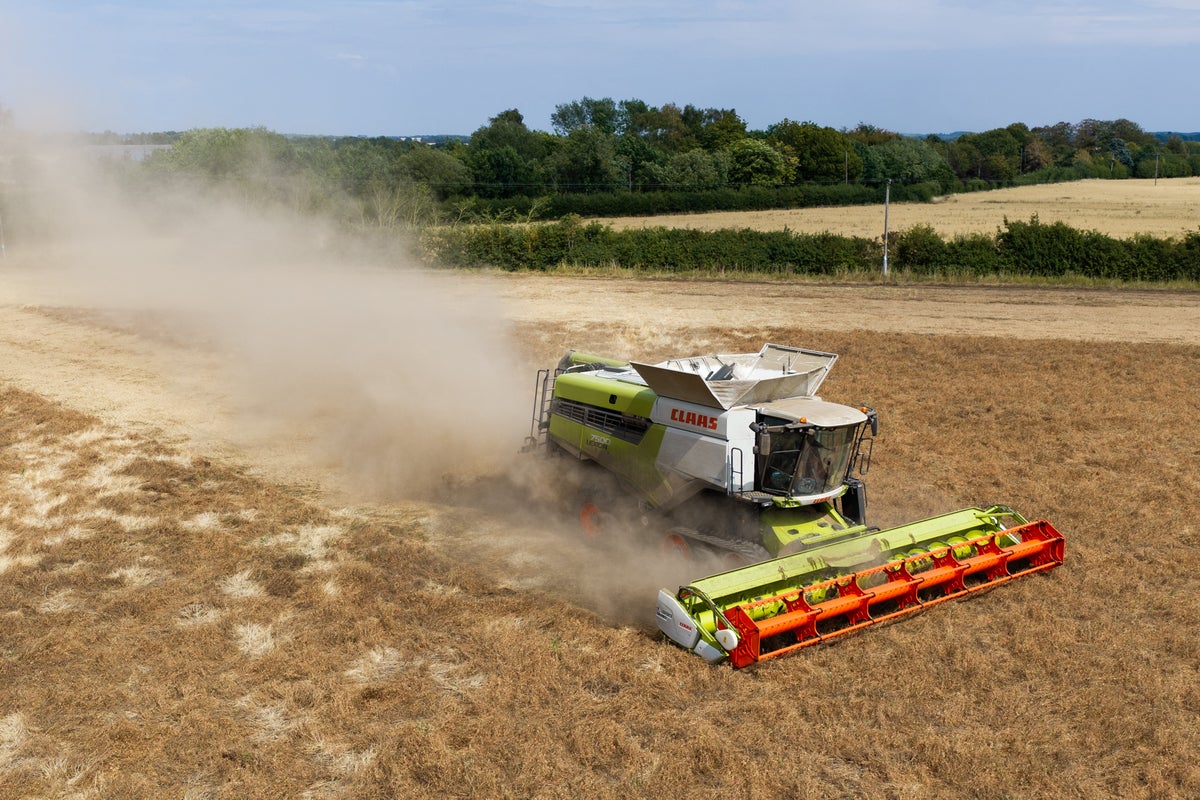
Farmers warn British food security at risk after ‘hardest summer in a generation’
Key Points
Farmers warn British food security at risk after ‘hardest summer in a generation’ NFU published a report revealing the UK’s self-sufficiency had fallen in 10 out of 11 key commodities over the past 30 years - Bookmark - CommentsGo to comments Agricultural leaders have warned that British farming has endured its most difficult summer in a generation, battered by extreme weather, escalating costs and widespread disease. In response, National Farmers’ Union president Tom Bradshaw has called on...
Farmers warn British food security at risk after ‘hardest summer in a generation’
NFU published a report revealing the UK’s self-sufficiency had fallen in 10 out of 11 key commodities over the past 30 years
- Bookmark
- CommentsGo to comments
Agricultural leaders have warned that British farming has endured its most difficult summer in a generation, battered by extreme weather, escalating costs and widespread disease.
In response, National Farmers’ Union president Tom Bradshaw has called on the Government to underwrite "crisis loans" for struggling producers. He also urged ministers to introduce tax and planning reforms aimed at reinforcing the nation's long-term food security.
The appeal coincides with a new NFU study revealing that the UK's self-sufficiency has dropped across 10 out of 11 primary commodities—such as wheat, meat and fresh veg—over the last 30 years, as declining production or surging consumer demand outpaced supply.
Consequently, farmers are pressing ministers to back domestic food production and establish explicit self-sufficiency targets against a backdrop of global climate impacts and international instability.
In a speech in an event in Parliament to mark the annual Back British Farming day organised by the NFU, Mr Bradshaw said: “2026 has been the hardest summer for British farming in at least a generation, and no sector escaped.
“Costs are high and unpredictable, bluetongue is adding pressure for livestock businesses, while drought has hit crops and fruit and vegetable production, and created welfare concerns and forage shortages for our livestock keepers.
“Confidence is fragile, cash flow is at crisis point, and investment has suffered,” he warned, adding that the problems will cost billions in increased costs and lost revenue, while food inflation is set to climb to 6% next year – even without the super El Nino which affected weather worldwide.
“None of this is inevitable or irreversible,” he said.
“Farmers are ready to deliver the Government’s economic and environmental ambitions.
“We want to continue feeding the nation, but we need practical policies that restore confidence, that strengthen resilience, and that give certainty to invest and grow.”
Calling for the crisis loans, which he said would provide a bridge to the future for otherwise viable businesses that at the moment are facing acute cash flow pressures, he said: “This is not a normal time. The challenge facing our farmers is extraordinary.
“It is the worst in a generation. Business as usual doesn’t get us through this.”
Speaking to journalists after the event, Mr Bradshaw said the bluetongue outbreak surging across the country and impacts of drought meant farming leaders believed “this has moved beyond anything normal” and shifted the situation from “strategic into survival”.
He said farmers across the board could benefit from the proposed crisis loans, from livestock farmers who need to restock animals lost to bluetongue to arable farmers struggling to buy fertiliser – the prices of which have been pushed up significantly by the conflict in Iran.
In its proposals for the Government’s October Budget, NFU is also calling for an extension to annual investment allowances to include infrastructure such as reservoirs, to boost investment and strengthen domestic food production.
And despite changes to the controversial Inheritance Tax reforms to increase the threshold to £2.5 million, the NFU president said the policy was “wrong”, as it restricted investments in infrastructure such as reservoirs and new buildings that would increase the value of farms.
Mr Bradshaw also told reporters the new Prime Minister Andy Burnham, who visited a farm in his first month in office, “needs to put the food into food security”.
“At the moment, there’s talk about it, but there’s actually very little policy really underpinning that. And I think that that is the reality that they need to start real policies,” he urged.
Speaking at the event, Environment Secretary Angela Eagle said that while farming was as integral to the UK’s national security as energy or defence, food supplies “has often been taken for granted over the years, because we’ve been so good at it”.
But there were challenges the country had to face, particularly in the face of the past summer, with rising costs, water shortages and climate-driven outbreaks of disease such as bluetongue.
And she said: “When a third of farmers report that they make no profit, we’ve got to think about how to change that.
“If we’re relying on farmers to put food on our tables, farming has to put money in the pockets of those who farm,” she said.
Ms Eagle said the Government was taking action to deal with the immediate pressures and build a more sustainable future, pointing to a £65 million support package including improved access to water and £15 million for on-farm reservoirs, and measures to help with the bluetongue outbreak.
She described how the first window for applying for the revised agri-environment scheme – the sustainable farming incentive – had been a success and the capital grants scheme was delivering environmental improvements such as hedgerows that would also help farming.
“I want to reiterate this Government’s commitment to creating the conditions you need to adapt and to succeed, because when farmers thrive, the nation thrives,” she said.
Join our commenting forum
Join thought-provoking conversations, follow other Independent readers and see their replies
Comments