
Politics
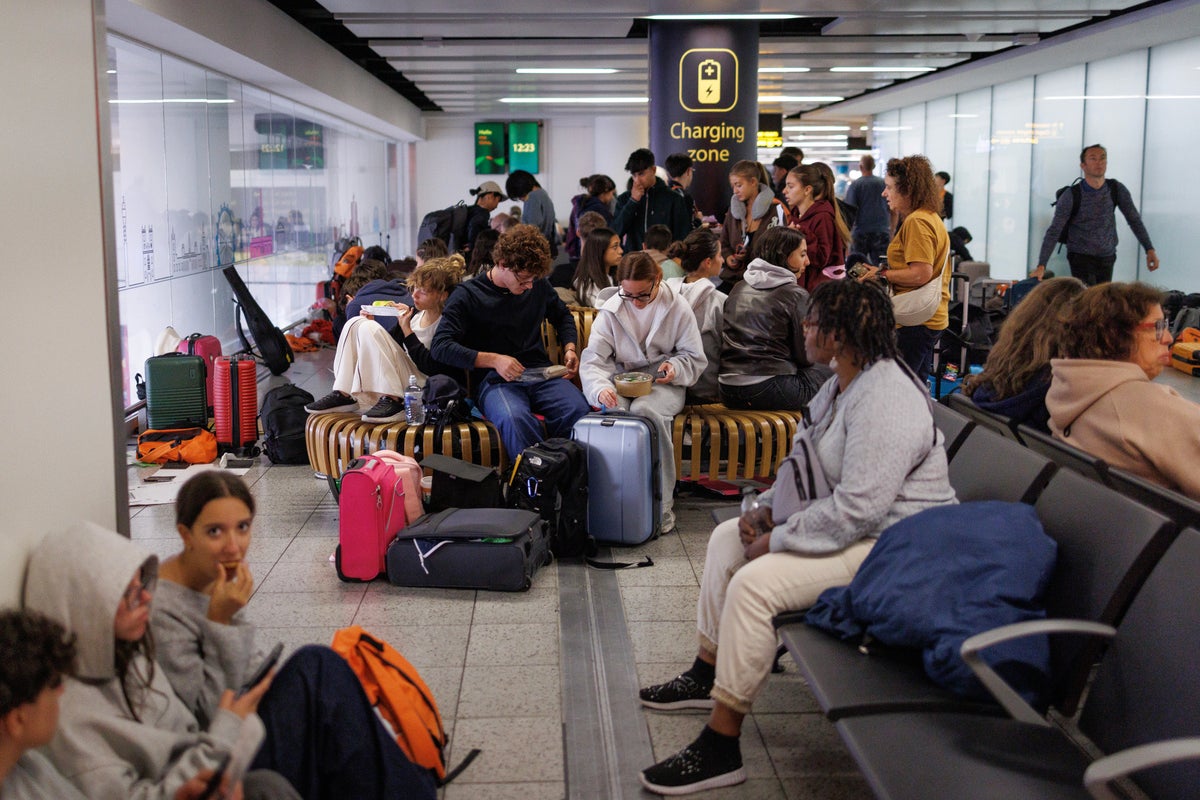
Flight chaos that left thousands stranded and could cost aviation industry £70m ‘was avoidable’
Key Points
Flight chaos that left thousands stranded and could cost aviation industry £70m ‘was avoidable’ Downing Street said the government still had confidence in the boss of National Air Traffic Services, Martin Rolfe - Bookmark - CommentsGo to comments The number of flights cancelled after a technical failure of the UK’s air traffic control system rose above 2,000 on Wednesday, as the transport secretary told MPs that the meltdown suffered by passengers was avoidable. Heidi Alexander has called...
Flight chaos that left thousands stranded and could cost aviation industry £70m ‘was avoidable’
Downing Street said the government still had confidence in the boss of National Air Traffic Services, Martin Rolfe
- Bookmark
- CommentsGo to comments
The number of flights cancelled after a technical failure of the UK’s air traffic control system rose above 2,000 on Wednesday, as the transport secretary told MPs that the meltdown suffered by passengers was avoidable.
Heidi Alexander has called for an independent review into the fault inside National Air Traffic Services’ (Nats) flight processing system, which has resulted in chaos at major UK airports including Heathrow, Gatwick and Manchester.
The disruption, which economic experts have told The Independent could cost the industry up to £70m, has prompted backlash from major airlines including Ryanair, which has demanded Nats boss Martin Rolfe resign.
Mr Rolfe was summoned to meet Ms Alexander before she spoke to MPs on Wednesday afternoon. This week’s incident follows two other technical faults at the air traffic control provider in three years, including a major outage in August in 2023 that impacted 700,000 passengers.
Nats has insisted the latest glitch is not down to the same issue that caused the 2023 incident.
But Ms Alexander told MPs: “We often take for granted the way in which our aviation system just works, but yesterday [Tuesday] that was not the case. Safety must remain air traffic controllers’ overriding priority and I have spoken to Nats chief executive Martin Rolfe, who informed me this outage was due to a technical issue at their Swanwick site.
“So, while my understanding from Nats is that we can rule out a cyber attack on this occasion, I do not believe this issue was unavoidable.”
Ms Alexander added that passengers “should not have to face this disruption”, and said she had asked the aviation watchdog, the Civil Aviation Authority, to carry out an independent review to find the cause of the failure and ensure “our air traffic control systems can get passengers to where they need to be”.
Earlier on Wednesday, a Downing Street spokesperson said Mr Rolfe had the confidence of the government despite “significant concerns” over the scale of disruption.
Mr Rolfe, speaking on BBC Radio 4’s Today programme, had apologised to those impacted. He said “things do go wrong in complex systems”, while defending the partially privatised group, claiming it had invested more than £1bn in technology since 2001. He also said its service had consistently improved over the period.
However, as hundreds more flights were cancelled on Wednesday, impounding further misery on passengers, Mr Rolfe faced growing calls to resign from airline bosses.
Ryanair’s chief operation officer, Neal McMahon, said: “Martin Rolfe, after the August 2023 Nats system collapse promised parliament that this wouldn’t happen again, and that an effective back-up system would be introduced. UK passengers learned yesterday that these assurances were worthless.
“The Nats air traffic control system collapsed again, and yet again, there was no back-up system. Martin Rolfe should be sacked.... to prevent repeated collapses of UK air traffic control.”
The managing director of Wizz Air UK said there are “serious questions about the resilience” of the UK’s air traffic control service. Yvonne Moynihan told BBC Radio 4’s Today programme: “This is now the third time that we have had an air traffic control failure, and during the peak period as well. So major questions need to be asked. There are serious questions about the resilience of this system.”
The association of UK airlines, Airlines UK, whose members include easyJet and Tui Airways, has also written to Ms Alexander to express “serious concern and frustration”.
On Wednesday, more disrupted passengers shared their stories with The Independent, including Puspamathi Manogram who, on arriving at Heathrow, found her last-minute flight to visit family in Sri Lanka had been cancelled. She said: “This has put an immense amount of additional stress on both of us at an already incredibly difficult time.”
The Independent’s chief football writer Miguel Delaney was forced to spend almost 11 hours at Gatwick airport for a flight to Naples to cover Arsenal’s Champions League tie with Napoli in Naples.
The Centre for Economic and Business Research (Cebr) calculated the estimated cost of the disruption for The Independent based on flight cancellations, including passenger rerouting or reimbursement and the provision of care and assistance, such as accommodation and food.
A spokesperson said: “Cebr estimates that Tuesday’s flight cancellations are expected to cost airlines around £58 million, including the costs of rerouting or reimbursing passengers and providing care and assistance. Including Wednesday’s reported cancellations, we estimate that the cost to airlines across the two days could reach around £70 million.”
Join our commenting forum
Join thought-provoking conversations, follow other Independent readers and see their replies
Comments
[Image text:] Charging
zone
’ Downing Street (LOCATION)
National Air Traffic Services (ORG)
Martin Rolfe - Bookmark - CommentsGo (PERSON)
UK (LOCATION)
Heidi Alexander (PERSON)
Heathrow (LOCATION)
Gatwick (LOCATION)
Manchester (LOCATION)
Independent (ORG)
Ryanair (ORG)
Nats (PERSON)
Martin Rolfe (PERSON)
Rolfe (PERSON)
Ms Alexander (PERSON)
Swanwick (LOCATION)