
Education
Developing knowledge with social values in mind
Key Points
Developing knowledge with social values in mind The Education University of Hong Kong emphasises programmes that can make a positive impact on society The educational ethos of “cultivating values and nurturing people” is based on a classic Chinese saying that emphasises building good morals and a sense of social responsibility alongside academic and technical knowledge. At the Education University of Hong Kong (EdUHK), this ethos drives the institution’s approach to its growth strategy, from...
Developing knowledge with social values in mind
The Education University of Hong Kong emphasises programmes that can make a positive impact on society
The educational ethos of “cultivating values and nurturing people” is based on a classic Chinese saying that emphasises building good morals and a sense of social responsibility alongside academic and technical knowledge.
At the Education University of Hong Kong (EdUHK), this ethos drives the institution’s approach to its growth strategy, from the way its undergraduate and postgraduate programmes are designed to its research work and the partnerships it is building around the world to share knowledge and best practices. The university took inspiration from the Chinese saying to coin its own philosophy of “nurturing talent while cultivating virtues”.
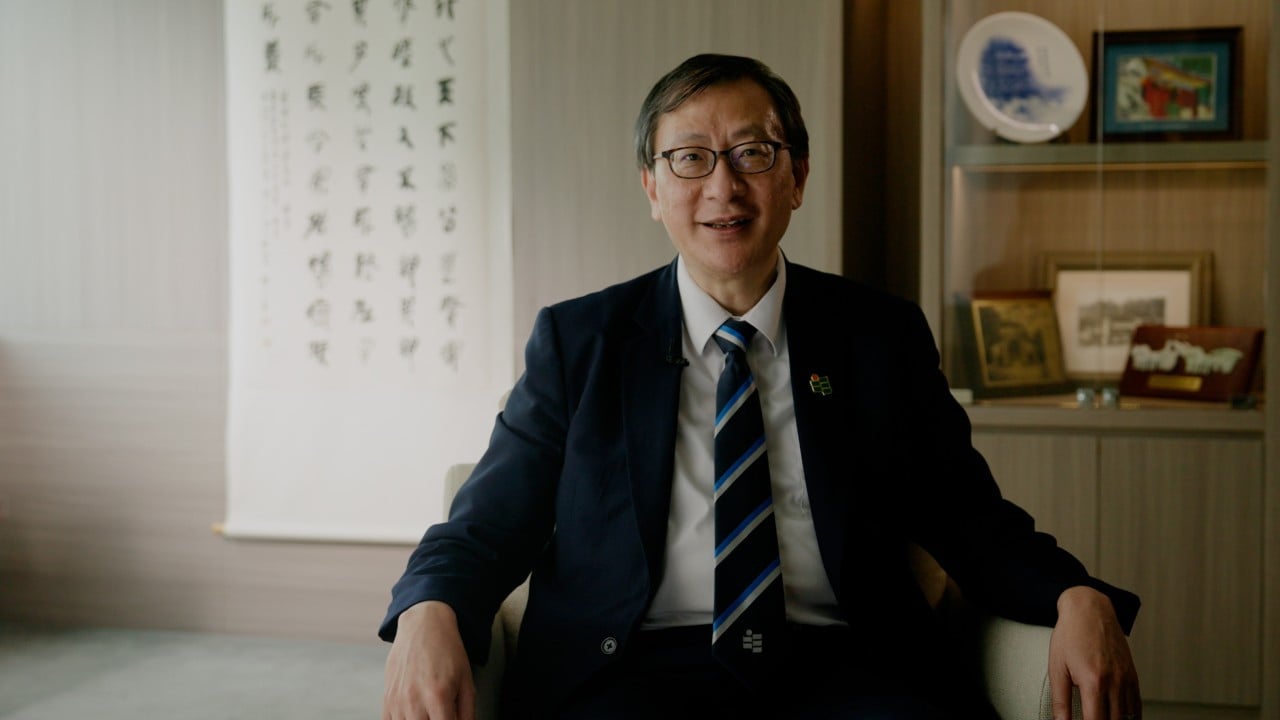
“Education and technology, as well as talent development, is really a discussion about the possible future of Hong Kong and the Greater Bay Area, to stay competitive and innovative,” says Professor John Lee Chi-kin, president of EdUHK.
“We must think of how we nurture people – not just what they know, but how they use AI wisely and effectively, how they resolve problems across disciplines and how they hold on to integrity,” he adds, noting that this year marks a significant milestone for the institution.
“EdUHK is celebrating the 10th anniversary of its retitling,” Lee explains. “The growth in the last decade mirrors the expanding role of education in the modern world.” In 2016, the former Hong Kong Institute of Education became the city’s eighth publicly funded university and officially changed its name to reflect this status.
Lee notes that the university is broadening its role: “It is moving beyond traditional teacher training to lead in education, research culture, innovation and multidisciplinary solutions that create real social impact.”
EdUHK expanded its undergraduate programme to include what the institution categorises as “non-teacher education programmes” in arts and humanities, social sciences, management, sciences and health technologies. The university offers bachelor’s degrees in creative and digital arts, digital Chinese culture and communication, and heritage education and arts management, as well as artificial intelligence and educational technology, speech pathology and rehabilitation, and sports science and coaching.
Through the teacher education programmes, graduates are eligible to apply to become a registered teacher with the Education Bureau of Hong Kong. These programmes are structured as five-year “co-terminal double degree” courses of study, which allow students to combine a bachelor’s degree in education with another degree in arts, science or social science.
Lee explains: “Our society needs to develop people who can cross disciplinary boundaries, so all 13 of our education degrees are now called co-terminal double degrees. A future science teacher is also a graduate in environmental management; a future math teacher is also equipped in artificial intelligence.”
This focus on meeting the practical needs of society also drives EdUHK’s approach to its research work, with teams at the university developing AI-powered projects for the education field. One is a robot called Joey, which teachers can use to customise English language learning for kindergarten and primary school pupils. Another is EmoCare, a mobile app aimed at helping children manage their mental well-being, which combines an AI-powered chatbot with the “Perma” model for positive psychology developed by renowned psychologist Dr Martin Seligman.
“I think education for society means lifelong learning and professional development, as well as turning research into real-world social impact,” Lee says.
In addition, EdUHK is complementing its undergraduate and postgraduate degree offerings and initiatives through new partnerships established with educational institutions in Asia, the Middle East and Europe – such as the memorandum of understanding (MOU) that the university signed with Nazarbayev University in Kazakhstan, the University of Groningen in the Netherlands and Emlyon Business School in France. And across the border, EdUHK has established its Shenzhen Research Institute and Shenzhen Educational Development Centre.
“These venues allow our researchers to work with partners in the Chinese mainland in different areas including knowledge transfer and sharing, research and other training activities,” Lee says.
EdUHK’s efforts to expand its academic and research programmes are reflected in the latest edition of the QS World University Rankings, where the university is ranked No 7 globally and No 2 in Asia in the subject of education and training.
Looking back on what EdUHK has achieved in its first 10 years as a full-fledged university, Lee says: “The 10th anniversary is a comma, not a full stop. Our next decade is about education with impact. We are dedicated to talent development that adapts to a changing world.”
Watch the video to learn more about EdUHK’s mission, and the ways in which innovation is expected to drive the future of education.