
Business & Finance
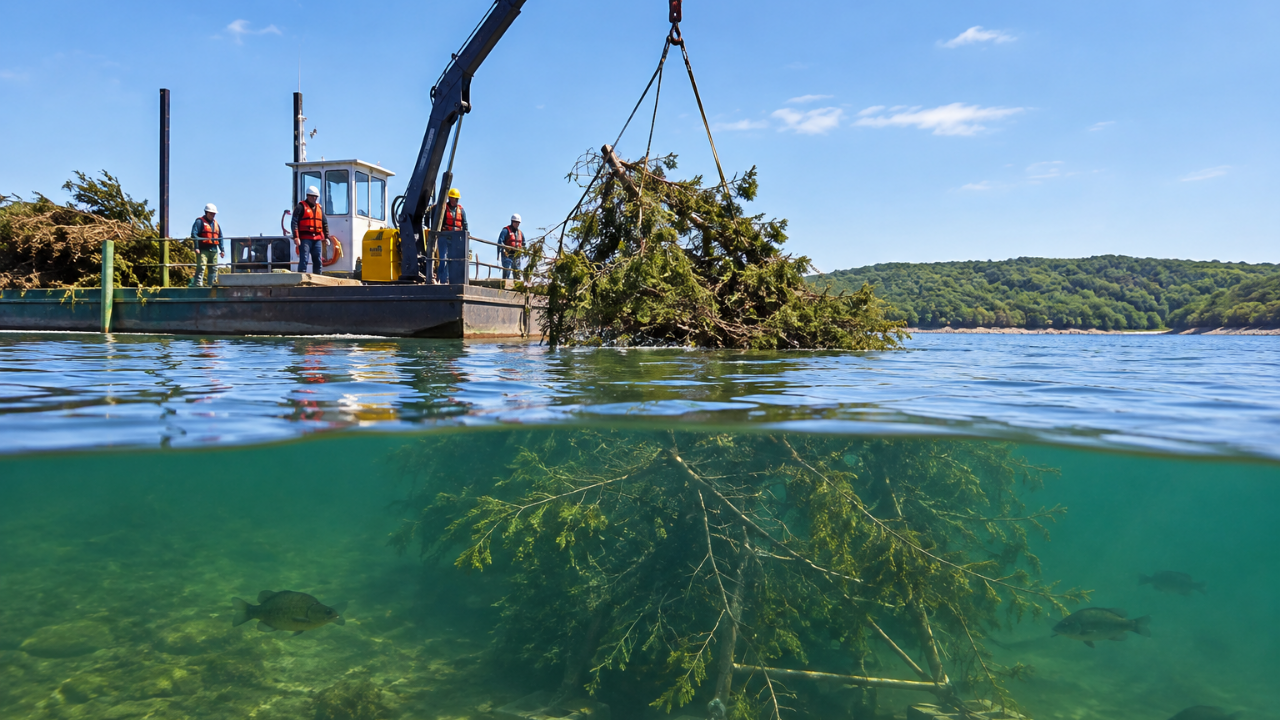
Missouri volunteers sank 93 cedar piles to rebuild fish habitat in Truman Lake
Key Points
Truman Lake in Missouri is getting a major boost to its underwater habitat through a project designed to create more places for fish to shelter, feed and gather. According to the Missouri Department of Conservation’s (MDC) Annual Review for Fiscal Year 2025, MDC and the U.S. Army Corps of Engineers, working with private-sector volunteers, placed 93 cedar brush piles in the lake during spring 2025. The work forms the first phase of a larger effort to install 450 fish habitat structures across...
Truman Lake in Missouri is getting a major boost to its underwater habitat through a project designed to create more places for fish to shelter, feed and gather. According to the Missouri Department of Conservation’s (MDC) Annual Review for Fiscal Year 2025, MDC and the U.S. Army Corps of Engineers, working with private-sector volunteers, placed 93 cedar brush piles in the lake during spring 2025. The work forms the first phase of a larger effort to install 450 fish habitat structures across the reservoir. Supported by a $75,000 grant, the project is intended to improve aquatic habitat and, ultimately, fishing opportunities for anglers.
Why cedar trees are being placed underwater
The brush piles are designed to provide fish with physical structure in parts of the reservoir where natural cover may be limited. Underwater trees and branches can create sheltered areas where fish can rest, avoid predators and find food. According to MDC, the hard cover such as logs, brush and rocks is an important component of fish habitat. Woody structures can provide resting areas, shade and escape cover, while also serving as fish attractors. As smaller organisms gather around the structure, the habitat can also become useful feeding grounds for fish.
For Truman Lake, cedar trees were selected as the material for the new structures. The trees are sourced from public land surrounding the lake and are anchored with concrete blocks before being placed on the lakebed. This allows the structures to remain in position underwater and provide a relatively durable form of fish cover. Therefore, the project is not simply about adding objects to the lake. The broader aim is to establish underwater habitat that can support fish populations and improve the areas available to anglers.
First phase puts 93 structures in the lake
The Harry S. Truman Lake Habitat Project officially began in January 2025. Its long-term target is 450 fish habitat structures made from cedar trees. During the spring phase, crews placed 93 cedar brush piles in the reservoir. The operation required specialised equipment, with the habitat structures deployed from a barge equipped with a hydraulic lift. According to MDC, the first phase was completed in April 2025, while field operations resumed in the fall.
The project involves several organisations and community groups rather than relying on a single agency. MDC and the U.S. Army Corps of Engineers are working alongside private-sector volunteers and other local contributors. Osage Bluff Marina helped with staging, preparing and loading the cedar trees. The Finey Homeowners Association cut trees and provided space near its boat ramp for staging. Students from the University of Central Missouri also volunteered their time to support the effort.
$75,000 grant supports the habitat work
Funding has played an important role in getting the project underway. A $75,000 grant from the Bass Pro Shops Outdoor Fund, administered and passed through the Reservoir National Fish Habitat Partnership, formed the financial foundation of the project. MDC also contributed to the effort. The investment is aimed at creating habitat that can have benefits beyond the immediate installation work. By increasing the amount of underwater structure available to fish, conservation officials expect the project to improve habitat quality and potentially increase angler catch rates. MDC's wider fish-management guidance notes that the location of an underwater structure is important, with factors such as water depth, nearby drop-offs, coves and submerged channels influencing how useful a fish attractor can be.
What the project means for anglers
The habitat work is expected to become increasingly significant as more structures are added to Truman Lake. MDC's 2026 fishing prospects report states that a multi-year brush-pile project, which began in 2025, will continue through 2027, adding substantial new habitat across the reservoir. The agency also notes that brush piles and standing timber already provide dependable structure for fish throughout the year. Crappie, bass and other species use these areas, while anglers often target them because fish tend to congregate around underwater cover.
The locations of the new and existing habitat structures are available through the MDC website and its free MO Fishing app. Downloadable GPX files are also provided for anglers who want to transfer the locations to GPS devices. With 93 structures already installed and a target of 450, the Truman Lake project represents a multi-year effort to reshape parts of the reservoir's underwater habitat. The combination of public agencies, funding partners, local groups and volunteers is helping turn discarded or available cedar trees into long-lasting fish cover beneath the lake's surface.
Missouri (LOCATION)
Truman Lake Truman Lake (LOCATION)
the Missouri Department of Conservation’s (ORG)
MDC (ORG)
Annual Review for Fiscal Year 2025 (ORG)
the U.S. Army Corps of Engineers (ORG)
Truman Lake (LOCATION)
The Harry S. Truman Lake Habitat Project (LOCATION)
Osage Bluff Marina (LOCATION)
The Finey Homeowners Association (ORG)
the University of Central Missouri (ORG)
the Bass Pro Shops Outdoor Fund (ORG)
the Reservoir Nation (ORG)